
How to use a Beko washing machine
 Understanding the basic controls of a new washing machine purchased to replace an old one is easy: most models operate according to a standard setup. However, many modern home appliances have additional features, unique functions, and modes, the details of which can only be learned from the manufacturer's instructions. This includes some BEKO units. To avoid sifting through paperwork and struggling to understand the official language, we offer a quick guide on how to use a Beko machine.
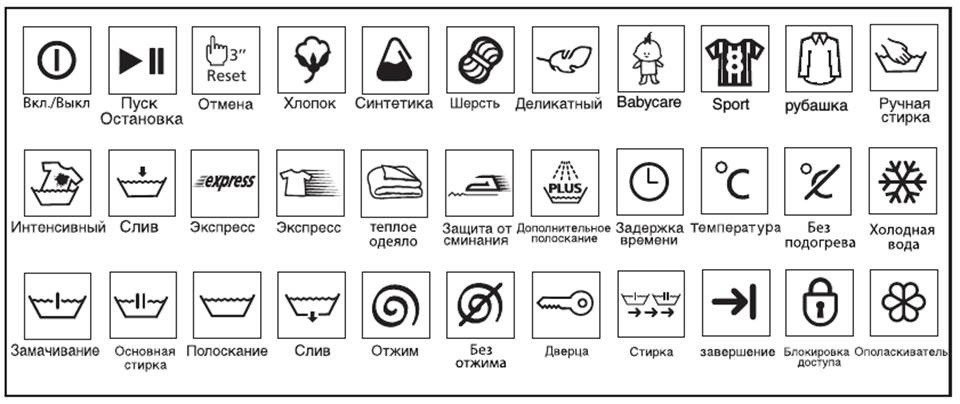
Let's describe the main modes
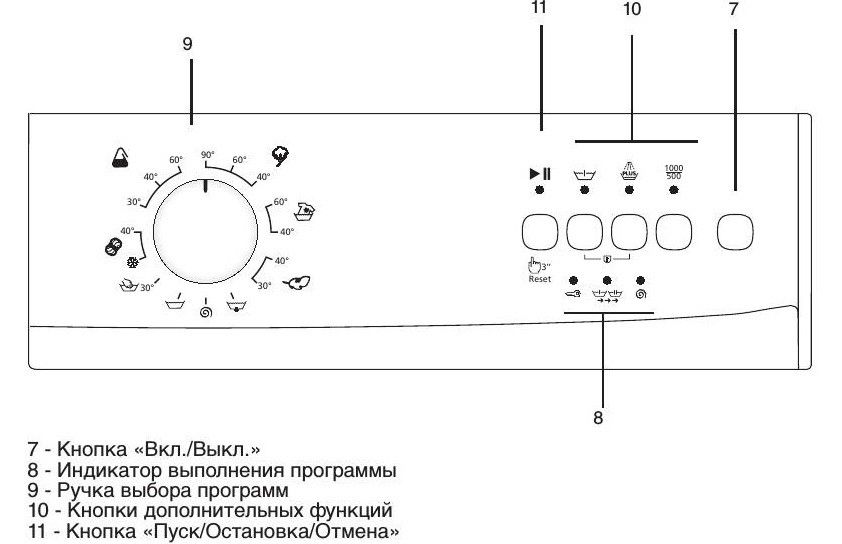
The first question that concerns all housewives concerns the available modes. Knowing what preset programs your washing machine has makes it easier to plan your wash and avoid damaging your laundry with too high a temperature or excessive spinning. Familiarity with the main buttons on the dashboard will help you avoid mistakes.
- "40`40°." This mode cuts washing time in half, delivering clean laundry in 40 minutes instead of 80. This speed is achieved through increased spin speed and maintaining a temperature of 40 degrees throughout the entire cycle.
Important! Temperature ranges and spin strengths may vary between VEKO models, so please read the included instructions first.
- "Delicate Wash" features gentle spins, minimal spinning, generous water intake, and low temperatures to protect delicate knitwear and viscose from color fading and abrasion.
- "Children's Clothing." The name speaks for itself: this program is designed for washing children's clothing. It's also recommended for allergy sufferers. The secret lies in multiple rinse cycles.
- "Dark Fabrics." To preserve rich blacks, we recommend using a wash cycle with a large amount of water and a low spin cycle. Another recommendation is to use liquid detergents for dark items.
- "Hand Wash." For particularly delicate fabrics, such as silk and cashmere, it's best to select the hand wash cycle with a reduced water level. A half-filled drum prevents excessive absorption, deformation, and stretching.
- "Wool." For woolen garments, select the appropriate button to gently clean the fabric without pilling.
- Down. Washing machines with a capacity of 9 kg or more offer special care for items filled with down and feathers. This ensures high-quality cleaning, removing feather mites and their debris.
- "Shirts." The shirt shown on the panel is a program that washes problem areas without damaging the fabric or causing excessive creasing. It maintains the perfect balance: minimal spin and a low temperature of 30-40°C.
- "Fitness." Provides a thorough clean for sportswear made of cotton and synthetics. Washes for one hour at 40°C.
- "Eco 20°C" is designed for lightly soiled cotton fabrics. It removes stains faster and saves up to 80% energy compared to the standard "Cotton" cycle. A gel-based powder enhances the cleaning effect.
Most VEKO models also feature a self-cleaning program. It lasts approximately two hours, during which the drum, hoses, debris filter, and dispenser are thoroughly cleaned. The cycle runs without laundry or detergent, and the high level of cleaning is achieved by heating the water to 70°C.
The fastest programs
Most of the main programs mentioned have a significant drawback - their duration ranges from one to three hours. A long cycle isn't always worth the time, water, and energy consumption, so Beko machines offer express wash. The following modes will take the least amount of time:
- Mini. Cotton fabrics with light stains can be washed in 39 minutes. The standard temperature is fixed at 30 degrees, but can be adjusted from 0 to 90 degrees. A full drum can be easily loaded.
- "Mini 14". To complete a cycle in 14 minutes, you'll need to limit the load to 2 kg and the temperature to 30 degrees Celsius.
- "Mix 40°C." The fabric type isn't important here, as it's a universal range with a medium spin and a temperature of 40°C.
Some BEKO models feature a 17-minute refresh wash button on the control panel. This cycle is designed for lightly soiled items and is essential for adding freshness, an extra rinse, or eliminating unpleasant odors from stale clothes. It's considered universal and suitable for all types of fabric.
Functional set
To get the most out of your washing machine, it's best to familiarize yourself with its features in addition to the modes. Special options make washing much easier and safer, which is always a plus for consumers. BEKO washing machines boast several distinct features:
- removal of lint and wool, for which a special mode with an increased number of cycles and rinses is provided;
- panel lock to prevent children from accidentally pressing it;
- aquafusion or economical consumption of detergent with uniform use of powder throughout the entire washing process;
- aquawave, also known as imbalance control, designed to distribute laundry evenly along the walls of the tank without lumps or bunches;
- automatic restart of the started cycle after a power surge or power outage in the house;
- a touch sensor that monitors the water level in the tank to prevent overflow;
- half load, allowing you to wash a small amount of laundry faster and more economically.
Beko washing machines are also attractive due to their Silent Tech technology. The secret lies in the specially designed housing walls, which reduce vibration and noise during operation. This also results in additional “advantages”: reduced energy costs and an increased service life of the machine due to smoothness and stability.
Machine equipment
Beko appliances have become even more convenient thanks to several improvements. Among the first innovations is an LCD display, allowing you to monitor temperature, spin speed, remaining time, and many other indicators. The expanded door, while still maintaining the machine's compact size, also makes washing more convenient. For example, a 35 cm depth allows for a 5 kg load, while a 45 cm depth allows for up to 7 kg. The powder dispenser has also been improved, with a special compartment for pouring liquid detergents.
The Hi-Tech heating elements, with their revolutionary nickel coating, are also worth mentioning. Compared to older heaters, they offer many advantages, including an extended service life, a smooth surface, faster heating, and resistance to scale and corrosion.
Self-diagnostic system database
Self-diagnostics help ensure proper and safe operation of the BEKO washing machine. The system regularly scans the device for potential problems and alerts you to any malfunctions via a digital display. All the owner has to do is decipher the error code and fix the problem. The database contains a number of combinations.
- H1 – The temperature sensor is damaged. Repair involves testing the thermistor with a multimeter to measure resistance.
- H2 – Fixing problems with the electric heater. Most likely, scale or voltage surges are interfering with the heating element.
- H3 – Problems with the thermistor or a control system failure. This is accompanied by the temperature exceeding the set point and the first two lights flashing.
- H4 – Water pressure problems. The inlet valve's thyristor may be malfunctioning or the wiring may be damaged.
- H5 – Drainage is obstructed. If there is a blockage, clean the pump; if there are defects, replace the pump.
- H6 – Short circuit in one of the triacs. There are several possible causes: a burnt-out switch due to a current leak, damaged wiring in the unit, or a faulty board or motor.
- H7 – Water inlet error. Causes may include a faulty pressure switch, a broken door lock, a shut-off water supply valve, or a burned-out control module.
- H11 – Motor stalled. A non-functioning tachogenerator, worn bearings, brushes, loose wiring, or a burnt-out triac can cause the motor to stall.
The signal generated by the system will help narrow down the troubleshooting. The key is to correctly decipher the code displayed on the screen and resolve the issue as quickly as possible.
Let's set up the machine before washing
Once you've thoroughly familiarized yourself with the machine's capabilities and functionality, you can begin using it. First, we recommend setting up the machine. This is done according to the manufacturer's instructions and the following procedure:
- If the machine is new, run an “empty” cycle to rinse the drum;
- We study the labels on dirty clothes and determine the required washing parameters;
- we select the appropriate mode using the selector;
- With another switch we vary the temperature and cycle time.
Next, sort the items, check the pockets, pour the detergent into the dispenser, and press "Start." Remember, it's important to monitor the washing process and not overload your "home assistant" with laundry.
Interesting:
Readers' comments
Headings
Washing machine repair




For buyers




For users


Dishwasher




Add a comment