
How to use a tumble dryer correctly?
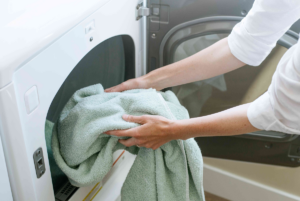
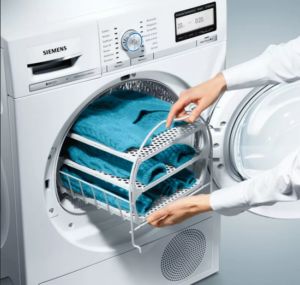 Dryers for household use are becoming increasingly popular. Despite their high cost and space requirements, homeowners are increasingly equipping their homes and apartments with them. After installing a dryer, owners aren't always sure how to properly use it to avoid damaging clothes, confusing the settings, or damaging the appliance. The operating instructions are simple and can be applied to most models.
We arrange the laundry in piles
To dry laundry efficiently and evenly, it should first be sorted and then carefully spread out. When sorting, it's best to focus not on the type and color of fabric, as with washing, but on the moisture level and drying speed.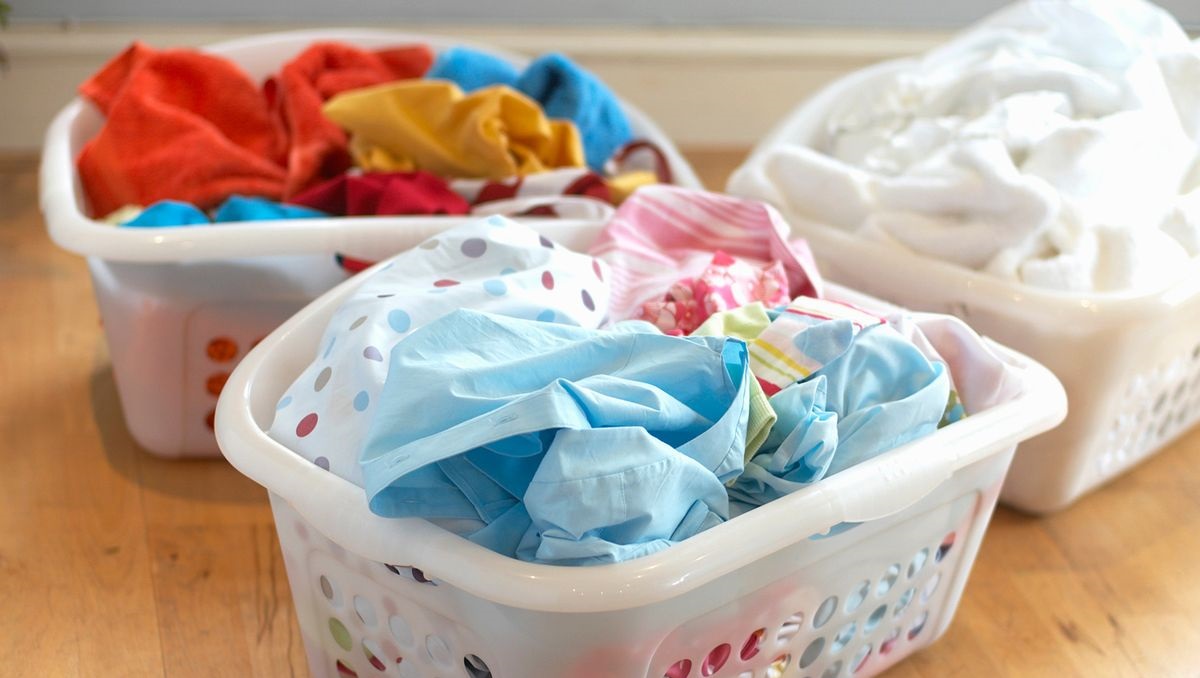
Before loading items into the washing machine, you can also sort them by size. Avoid throwing underwear, bedding, or clothing in the same pile. To prevent small items from getting lost among larger ones, check bedding and clothing, fastening buttons, hooks, or zippers on duvet covers, pillowcases, blouses, sweaters, and other items. It's also best to tie belts and ties together.
Set the drying mode
To ensure that your laundry is not only dry but also feels pleasant to the touch, retains its shape, and prevents damage, it's important to choose the right drying mode. All drying programs are divided into two groups. One allows you to set a specific drying time, while the other takes into account the residual moisture content of the items. The latter group, moisture-based drying modes, is primarily used in modern models. The other programs are often offered as an additional feature.
Dryers come with a variety of programs. Owners most often use the "cupboard" and "iron" modes. The first allows you to remove the item from the drum and wear it immediately or hang it in the closet. The "iron" program leaves the laundry slightly damp, making it easy to iron.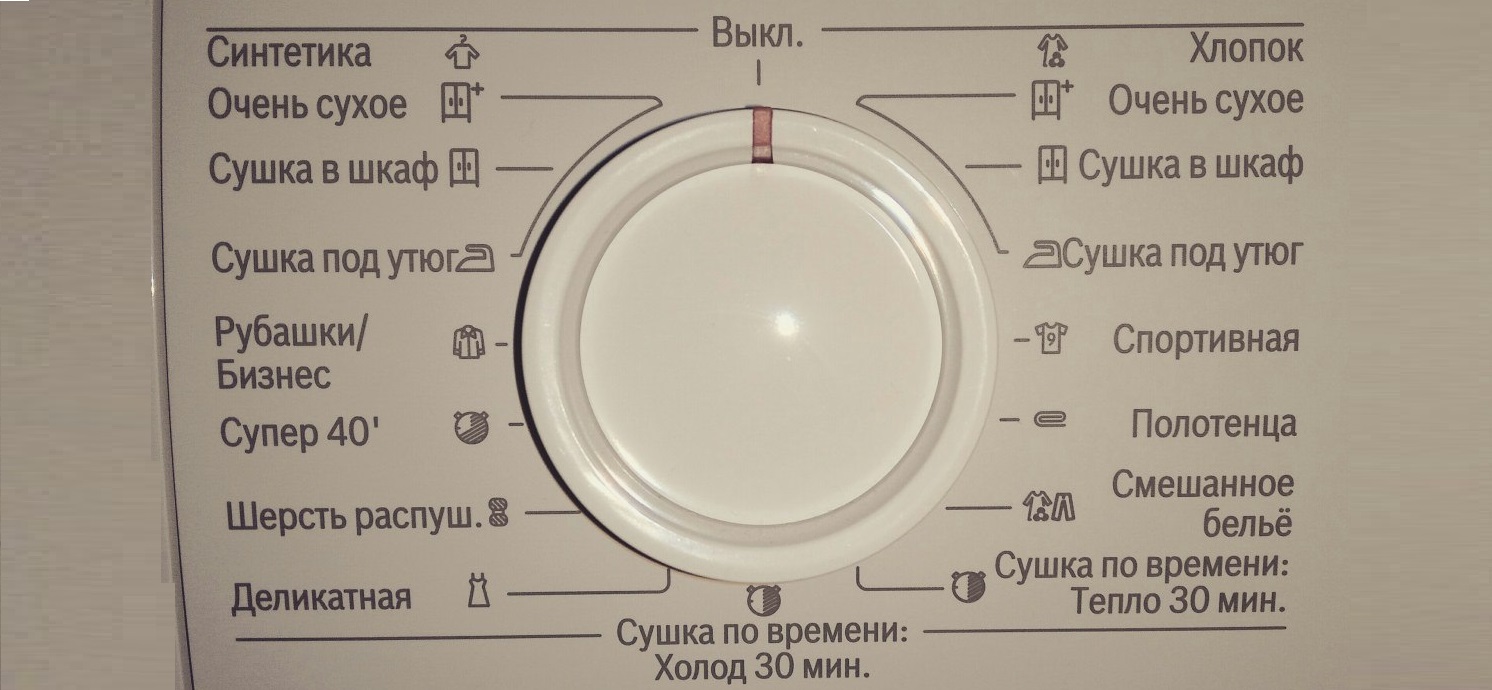
Many machines have super- or extra-drying settings. These shouldn't be used for drying cotton or linen, as they can shrink and stiffen the fabric. Dry them only on delicate settings.
Important! The Super Dry program is suitable for thick fabrics or multi-layered items.
Drying machine operating modes can be classified by the type of item, such as sportswear or jeans, and also by fabric composition:
- cotton;
- linen;
- woolen;
- synthetic.
Some models, such as those produced under the Miele brand, have other operating modes. Before using such appliances, be sure to read the instructions. These typically include tables describing the programs and corresponding laundry types and fabric compositions.
Use auxiliary functions
One useful auxiliary program is ventilation, or "cold air." While the appliance is running, a stream of air is blown around items inside the appliance. This mode helps remove unpleasant odors or stubborn pet hair without having to wash the clothes.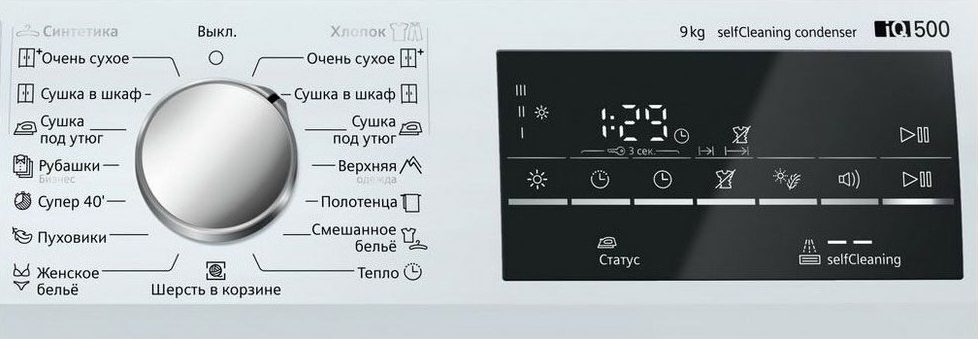
Some Miele, Bosch, and Siemens models are equipped with an anti-crease function. After the machine's main cycle is complete, the drum continues to rotate at set intervals for 1-3 hours. This prevents fabrics from pilling and creasing. However, this feature has one drawback: laundry left in the drum for too long may become overdried. Therefore, experts advise removing items immediately after the washing machine cycle has completed.
Manufacturers such as Gorenie, Miele, Bosch, and Siemens equip their machines with special baskets designed for laundry that cannot withstand mechanical stress. They dry the laundry using warm air. The baskets are installed inside the drum and can be used to store woolen clothes and toys. The baskets prevent items from shifting around inside the drum, eliminating intense mechanical stress.
Dryer maintenance
Once your clothes are dry, it's important to take care of the machine's condition. Condenser models are most commonly used for domestic purposes. After use, empty the condensate container. If your dryer is equipped with a drain hose, this procedure is not necessary.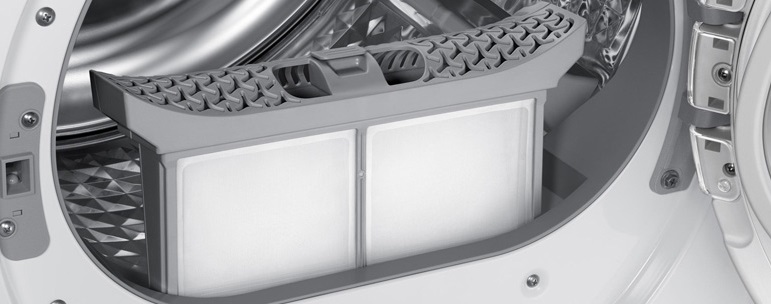
Cleaning the lint filters is a must for maintaining your dryer. They trap small particles of fabric blown out of your laundry during drying. If the lint filter becomes clogged, the dryer becomes less efficient and takes longer to dry, consuming more energy. Filters can be cleaned manually or with a vacuum cleaner. Care should be taken when doing so.
Caution: If the lint filter is heavily soiled, rinse it with water and then dry it thoroughly.
After completing one cycle, let the dryer sit for about 40 minutes before adding another load of laundry and pressing the start button. If the dryer is used frequently, the heat exchanger should be cleaned. It is recommended to do this at intervals of 100 cycles. The heat exchanger should be rinsed with water and thoroughly dried. If the appliance is used infrequently, cleaning the heat exchanger twice a year is sufficient. The appliance's instructions provide instructions for cleaning the heat exchanger. Please read these instructions before using the machine.
Interesting:

Readers' comments
Headings
Washing machine repair




For buyers




For users


Dishwasher




Add a comment