
How does Aquastop work in a dishwasher?
 Today, all washing machines and dishwashers are equipped with the Aquastop system. Protection against accidental leaks can be partial or complete, depending on the model. What is this feature and how does it work? Let's explore the details.
What are the purposes of the system's existence and how does it work?
Not all sales assistants understand how Aquastop works. When describing a dishwasher, store managers will definitely mention this feature, but only a few can explain how it works. So why is such a system necessary in a dishwasher?
The pipes that supply water to multi-story buildings are under very high pressure. Water hammer is also common. Therefore, a leak can suddenly appear, causing fluid to spill out of the equipment. The Aquastop system was designed to protect your dishwasher from leaks. Special sensors immediately react to the gust and block the operation of the device.
The main task of the Aquastop is to detect a leak in time, stop the water from filling the dishwasher, and drain the liquid from the system.
The principle of Aquastop is simple. It works as follows:
- water flows out of the appliance and collects in the tray provided under the dishwasher;
- the float rises when the water level reaches 200 ml;
- the electric sensor transmits a signal to the control board;
- The "brain" stops the dishwasher and starts the drain pump;
- water is pumped out of the system.
If a leak occurs during the water intake stage, the inlet hose becomes the primary "caregiver." If a leak is detected, a special valve shuts off the water flow. This action prevents liquid from entering the system.
According to statistics, the Aquastop system prevents damage from leaks in 992 cases out of 1,000. The likelihood of this system failing is extremely low. However, protection cannot be 100% guaranteed, so users must take steps to prevent potential problems.
What should dishwasher owners do to protect their appliances from leaks?
- Clean your dishwasher's dust filter at least once a month.
- Wash and dry the detergent drawer daily to prevent the dispenser from becoming clogged.
- Periodically check the sealing rubbers for defects and damage.
- Buy high-quality detergents created specifically for dishwashers.
The Aquastop system can provide full or partial protection of the dishwasher from emergency leaks.
What dishwasher parts perform protective functions? What's the difference between a full and partial Aquastop? Let's take a closer look at these points.
What types of security systems are there?
Most dishwashers today have an Aquastop feature. Moderate-priced models feature a bottom tray with a float, while more expensive models also have an inlet hose with a special sensor. The former provides partial leak protection, while the latter provides complete protection.
Partial protection is the most basic option. This solution involves placing a special tray with a float underneath the dishwasher. An electric sensor is embedded in the foam. If water begins to collect under the appliance, the float rises. When it reaches a certain height, the Aquastop system is activated.
The sensor instantly transmits information to the control module. It disables the dishwasher, stopping the cleaning cycle. The drain pump then takes over, draining the appliance.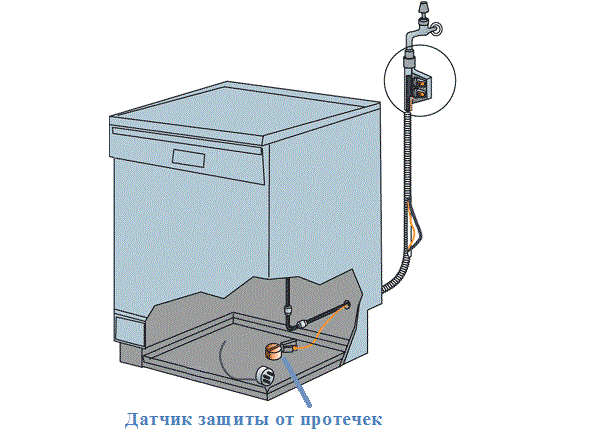
The machine thus automatically performs all necessary actions to prevent flooding. After all the water has drained, the user should empty the tray and begin troubleshooting. If the leak cannot be identified independently, a service center will be required.
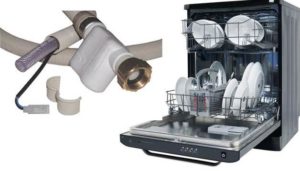
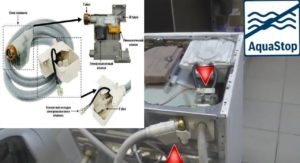
The ideal option is one with a completely leak-proof dishwasher. This Aquastop system is found on more expensive, mid-range, and high-end models. These dishwashers, in addition to the drip tray, also feature an inlet hose with a special electromagnetic valve.
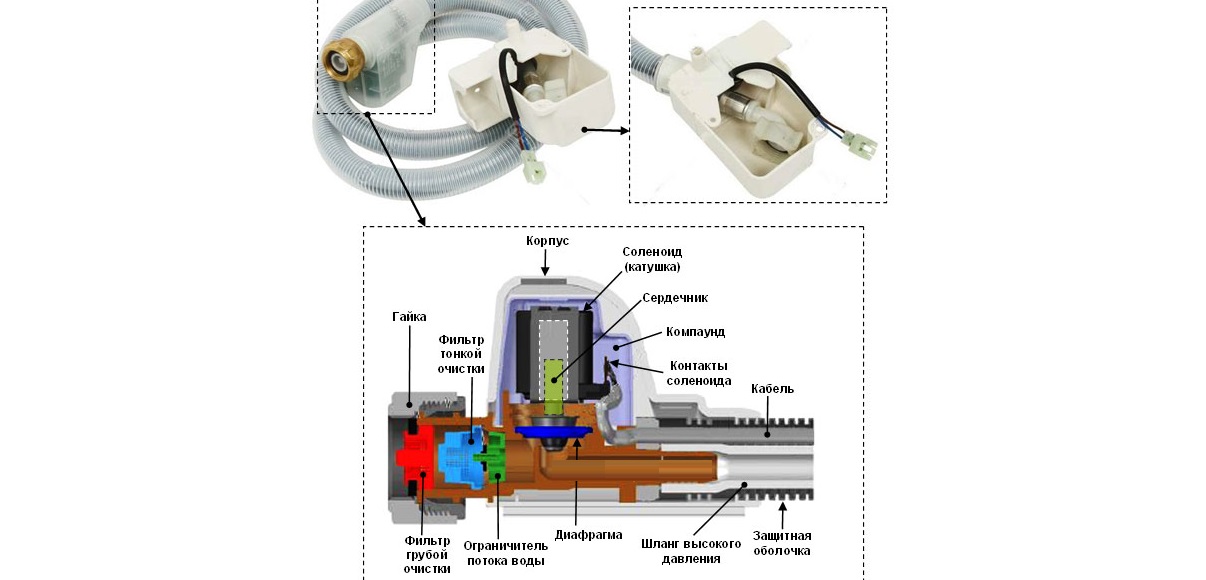
The solenoid opens when water is poured in. When the dishwasher reaches the required level, the module closes the inlet membrane. This helps prevent overflow. With full protection, aquastop elements control both internal and external leaks.
In addition to the hose, these machines also feature the familiar tray with a float. This acts as the second level of the Aquastop. Experts recommend purchasing dishwashers with full leak protection.
If a leak is detected and the Aquastop system is activated, the user will also need to empty the water from the tray and determine the cause of the problem. Once the cause is identified, it must be corrected. Only then can the dishwasher be used again.
Inlet hose protection mechanisms
The operating principle of the Aquastop has been explained. While the tray is more or less clear, how the inlet hose prevents leaks isn't always clear. Therefore, we'll explain the different types of corrugated hoses and how they prevent leaks.
Today, you can find inlet hoses with one of three types of protection systems:
- mechanical;
- using an absorbent substance;
- electromagnetic.
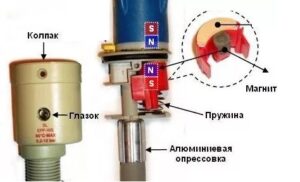
Mechanically operated corrugated pipes are installed on budget dishwashers. They use a valve and a spring as safety elements. This design is adjusted to operate under a specific pressure. If a leak occurs, the pressure drops, the spring expands, and the flap shuts off the water flow.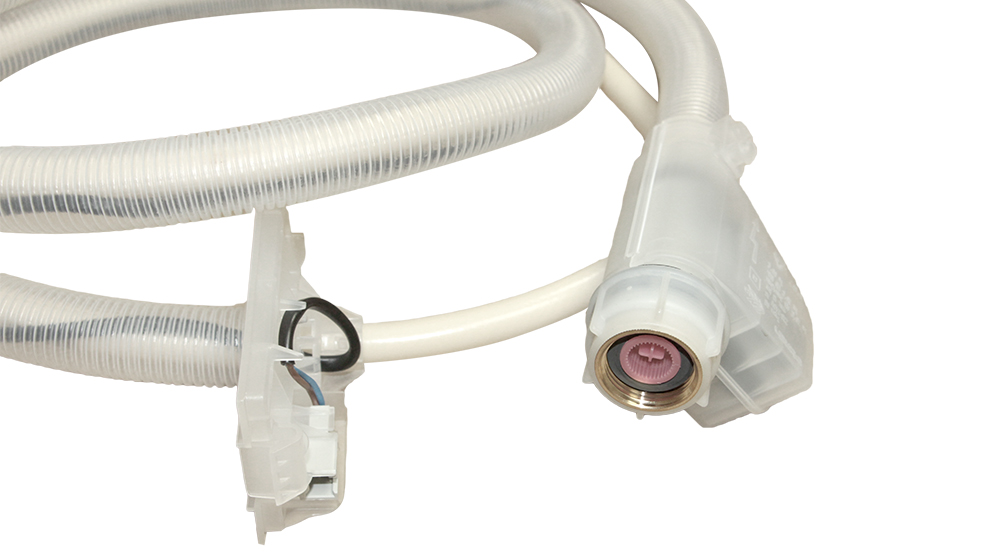
The main advantage of such hoses is their low cost. The main drawback is the system's inability to detect minor leaks, which can also cause damage. According to statistics, mechanical protection detects up to 85% of accidents, which is below regulatory limits.
A protective system based on an absorbent substance is quite common in dishwashers. If a leak occurs, water is poured into the detergent reservoir. When wet, the granules swell, lift the valve, and shut off the water flow.
The disadvantage of filling hoses with an absorbent substance is that they are disposable; after the first leak, the element will become unusable.
The absorbent expands and hardens, holding the valve tightly in place, making the hose impossible to reuse. The advantage of this protection system is that the substance detects even minor leaks. When wet, the powder changes color—the user can see the color change on the indicator on the hose itself.
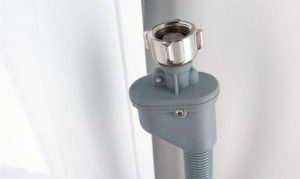
Filler hoses with an electromagnetic valve are the most modern solution. In this case, a special valve is installed at the end of the hose. The device is connected to a faucet on the water pipe.
As with the absorbent, this one uses a double hose. If the inner casing that supplies water to the dishwasher ruptures, the liquid will remain inside rather than spill onto the floor. The solenoid valve will be activated, stopping the filling of the chamber. The drain pump will then start.
When purchasing a machine with full leak protection, be sure to measure the distance from the location where the dishwasher is planned to be installed, i.e. the connection point to the water supply. The main problem with inlet hoses with Aquastop is the inability to extend them to the required dimensions.
Today in stores you can find dishwashers equipped with:
- only with a filling hose with aquastop;
- only a container with a float and an electric sensor;
- and a special hose and a tray.
When choosing a dishwasher, pay attention to whether it has a full or partial Aquastop. This is crucial. It's best to buy equipment with complete leak protection.
Interesting:


Readers' comments
Headings
Washing machine repair




For buyers




For users


Dishwasher




Add a comment