
How a drain pump works in a washing machine
 Almost every home has automatic washing machines these days, but not everyone understands how they work. Many people only have a superficial understanding of how a washing machine's drain pump works. Users know that it pumps soapy water from the drum into the drain, and that's it. We'll explain what parts it consists of and how it works.
How does the pump work and where is it located?
Washing machine users rarely consider the processes that occur after the cycle starts. They load the laundry into the drum, pour detergent into the dispenser, press the "Start" button, and calmly go about their business while waiting for the program to finish. Understanding how an automatic washing machine works will help you quickly respond to problems and identify the cause. Therefore, it's worth understanding how your "home assistant" functions. So, after starting a wash cycle, the following processes occur:
- the inlet valve opens, water under pressure begins to flow into the system: through the pipes it is poured into the powder receiver, mixed with the detergent and “goes” into the tank;
- The pressure switch is activated. It measures the water level in the tank and, when sufficient, sends a signal to the control module;
- The "brain" closes the electromagnetic valve, the flow of fluid stops;
- The main cycle begins – the washing machine spins the laundry in soapy water.
The pump is activated several times during a standard cycle – at the time when it is necessary to drain water from the tank.
The drain pump operates not only at the end of the cycle, but also after pre-cleaning (if this option is set) and during rinsing. Without a pump, an automatic machine will not be able to perform any washing program. When the module signals the need to drain the tank, the element immediately begins operating. The wastewater path is as follows: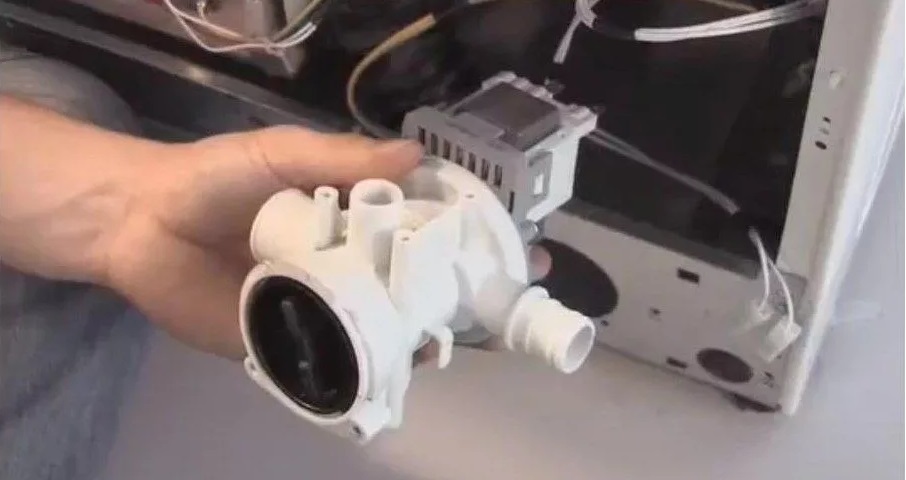
- water from the tank “passes” through the drain pipe;
- enters the pump through the filter element (it protects the impeller from debris and other objects that accidentally end up in the drain);
- flows through the drainage hose connected to the snail into the sewer.
The process continues until all the waste water has been drained from the tank. When the pressure switch detects the centrifuge's "zero" filling level, it notifies the control module. The "brain" then shuts off the pump. The pump's operating principle is clear. When the machine is running, the water is stored in the lower part of the machine, where the pump and all the pipes are located. This is why it's important to properly secure the drain hose—it should be located at least 50-60 cm above the floor. This will prevent any unintentional leakage of liquid from the system.
The end of the drain corrugated pipe must be secured above the level of the washing machine's drain pump, otherwise the water will drain away by gravity.
The pump is mounted underneath the machine body, under the tank. It is connected to the volute with three bolts. The plastic volute itself is attached to the front panel of the machine, allowing easy access. For example, you can easily clean the debris filter or manually drain any remaining liquid from the system by removing the false panel or opening the access door.
Types of pumps
If you'd like to delve deeper, you can find out what type of pump is installed in your automatic washing machine. There are only two types. These can be:
- A circulation pump. It is installed in conjunction with the standard pump on modern premium washing machines from Indesit, Ariston, and other brands. This ensures that water is constantly circulated within the system, improving washing efficiency.
- Standard pump. Most washing machines are equipped with this type of pump. In this case, dirty, soapy water is simply drained from the tank into the sewer.
If the pump installed on your washing machine burns out, repairing the part is impractical. In this situation, you'll need to buy a new pump and install it in its place. Fortunately, finding and ordering parts for most brands of washing machines is now quite easy. If the part is simply clogged, you can clean it yourself. To do this: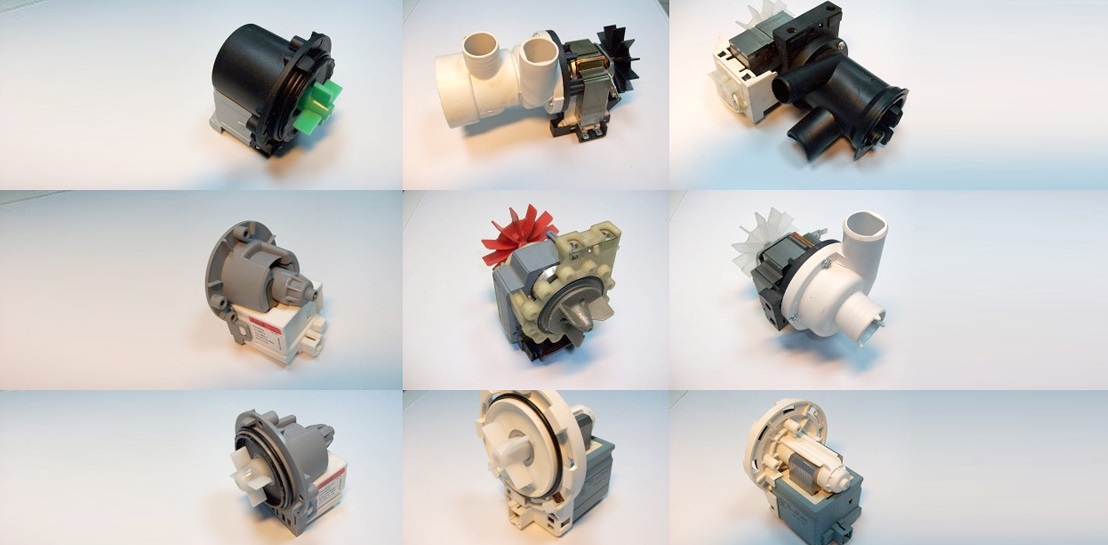
- de-energize the machine;
- turn off the valve responsible for the water supply;
- drain the remaining liquid from the system through a waste filter;
- lay the machine on its side;
- remove the tray, if present;
- disconnect the connected pipes from the element;
- remove the pump from the housing by unscrewing the bolts holding it;
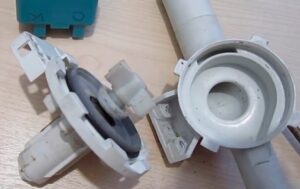
- disassemble the pump body, clean the insides from debris and dirt, remove threads, lint and hair wound around the impeller.
The pump is then reassembled and installed in its original location. Debris can be removed from the impeller without removing the pump from the housing. Simply unscrew the debris filter and remove any debris tangled around the impellers through the resulting opening.
What elements does the part consist of?
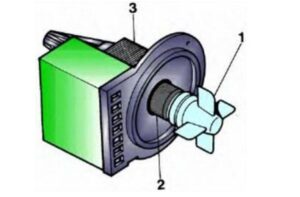
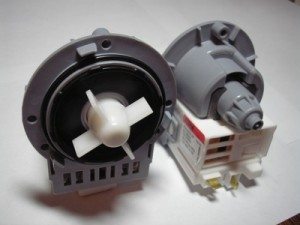
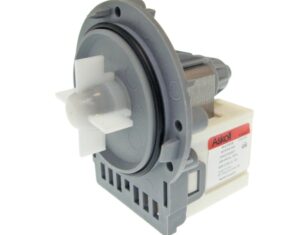
There's nothing complicated about the design of a drain pump. The pump rotor is a cylindrical magnet, "hidden" in a plastic casing. After the system is started, the rotor is activated first, then the impeller located on the shaft begins to rotate.
The magnetic core has an insulating winding. The pump's design is similar to an asynchronous motor, which also has a moving part (the rotor) and a stationary part (the magnetic core with the winding). This is how the pump operates. If any of its components is damaged, for example, the impeller breaks, a new pump will have to be installed. Repairing the part is pointless—it would only be a temporary solution.
The circulation pump also has a sealing lip. This prevents water from entering the bearing assembly. These pumps are additionally equipped with a rotor shaft passing through a sealing lip bushing, which is compressed by a spring ring. A standard SMA drainage pump has the following technical specifications: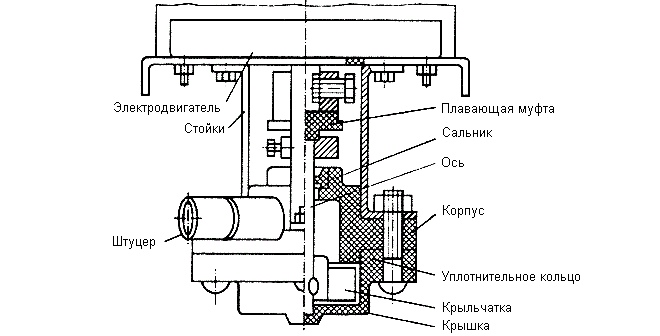
- power – 25-40 Watts;
- contact placement: paired or separate;
- type of connection to the snail: screw or using snap fasteners.
If your automatic washing machine's pump needs replacing, you should purchase a new part based on the specifications of the old one. Otherwise, the pump you buy may simply not fit, and your money will be wasted.
Washing machine drain pumps vary in power and contact arrangement, as well as the type of volute and filter element inside. Therefore, when selecting replacement components, be sure to consider your machine model. Keep in mind that if the waste filter is clogged, water may not drain completely from the tank. Dirty liquid remaining in the system causes an unpleasant odor. To resolve this issue, clean the waste filter.
Cleaning the dust filter is easy. To do this, unplug the machine, turn off the water supply, and cover the floor around the washer with dry cloths. The plug is located in the lower corner of the machine, behind the decorative panel or the access door. Unscrew the element from the machine, rinse it in warm water, wipe the walls of the opening, remove any accumulated debris, and replace the coil.
What can I do to make the pump last longer?
The water pump is an integral part of any washing machine. Manufacturers guarantee that if the operating instructions are followed, the pump will operate reliably for 9-10 years. Whether a "pumping station" will last that long depends largely on the user. Many factors can shorten the component's lifespan:
- debris (paper, hair, lint, threads) getting into the drainage system;
- accumulation of dirt on clothes loaded into the drum;
- voltage fluctuations in the network;
- paper clips, hairpins, candy wrappers and other foreign objects from pockets of clothes getting into the pump.
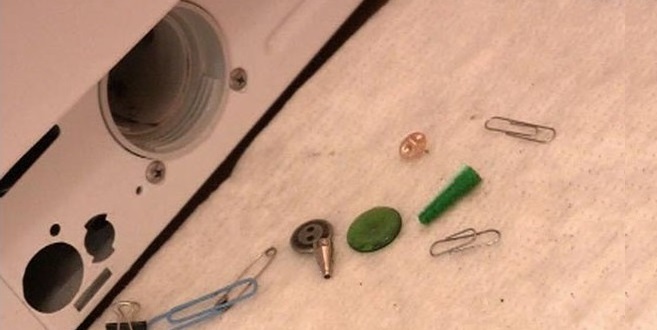
To ensure your drain pump works perfectly, it's important to follow a few rules:
- shake out the laundry before placing it in the drum;
- check the pockets of your things - they should be empty;
- pre-soak heavily soiled laundry in a basin and only then load it into the machine;
- use special water softeners to reduce the likelihood of scale formation;
- Make sure that the water is completely drained from the tank at the end of the wash cycle.
It is advisable to install a filter in front of the washing machine's inlet hose - then the hard water entering the system will be additionally purified and softened.
If you feel like your washing machine is draining less efficiently, it's best to get it diagnosed immediately. Identifying a problem early can help you fix it cost-effectively. If you let the problem get out of hand, you might need to replace not just a single part, but the entire washing machine. You can hire a technician to repair your machine, or you can try understanding the machine and fix it yourself. It's important to remember safety precautions, which are essential when working with electrical appliances.
Interesting:
Readers' comments
Headings
Washing machine repair




For buyers




For users


Dishwasher




Add a comment