
How a tabletop dishwasher works
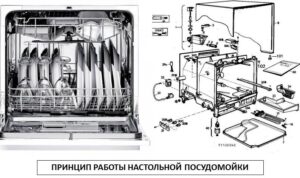 Buying a dishwasher is an important step that should be approached with the utmost care. It's ideal to not only explore all available dishwasher options before purchasing, but also learn the intricacies of how this appliance works. The more you learn upfront, the fewer questions you'll have down the road, and the more you'll be able to choose the perfect "home helper" for your needs, choosing between a standard or compact unit. Therefore, today we'll take a detailed look at how a tabletop dishwasher works, so you can uncover any unanswered questions before purchasing.
How does PMM function?
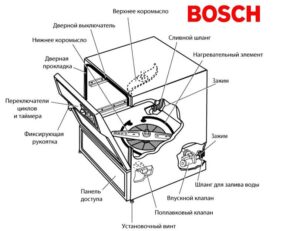
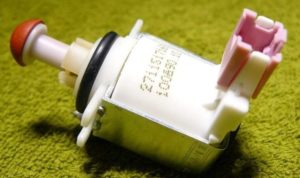
Immediately after activating the working cycle, the machine's control electronic board will send a command to open the electromagnetic valve so that the machine can begin filling with water. As soon as there is enough liquid in the system, the pressure switch will register this, close its contacts, and the control board will receive a message that it is time to close the solenoid valve to complete the water intake.
Water doesn't immediately enter the dishwasher's tray; it first passes through a heat exchanger and an ion exchanger. We'll discuss the heat exchanger in detail at the end of this section, but we'll discuss the ion exchanger now. This is one of the most important components in a dishwasher, as it softens extremely hard tap water. Failure to do so will not only compromise dishwashing performance but also the dishwasher's internal components, which can fail due to scale and other deposits. The ion exchanger consists of two interconnected chambers: one with a filter, which stores a special ion exchange resin for softening the water, and the other, which serves as a salt reservoir.
Water is softened through an ion-exchange process, in which calcium (Ca2+) and magnesium (Mg2+) cations, which are excessively abundant in poor-quality tap water, are replaced by much more harmless sodium ions supplied by an ion-exchange resin. The resin's key feature is its ability to be regenerated, which is why it requires special dishwasher salt, which contains a high concentration of sodium cations.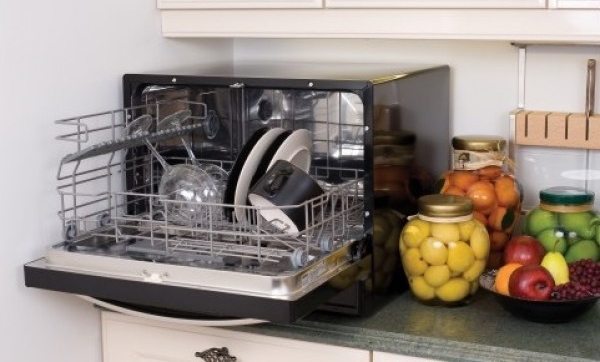
Naturally, salt granules won't restore the resin to its original condition when you purchased the dishwasher, but they are sufficient for the ion exchanger to continue to effectively combat water hardness. The ion exchanger often successfully performs its functions for 5-8 years, depending on the quality of the tap water and the intensity of dishwasher use.
Because salt plays such a vital role in your dishwasher, it's important to use a top-quality product specifically designed for your appliance, so never use regular table salt.
Let's return to the standard operating cycle. After the water enters the appliance's tray, it must be heated to the user-selected temperature. This can be done in two ways:
- using a water heating element, which is located at the bottom of the tray;
- using a flow-through water heater.
The second method is widely used in the latest dishwashers. Heating elements are gradually becoming a thing of the past, as a tankless water heater saves the user time by eliminating the need to wait for the water to heat up. In this case, the wash begins almost instantly, and the water heats up gradually as it runs.
After heating, the circulation pump activates, circulating water throughout the dishwasher. A special filter is located at the very bottom of the circulation system, removing food residue and other contaminants from the dishes. This filter protects the machine's key components from debris and blockages.
In order for the spray arms, also known as impellers, to clean the dishes with a powerful stream of water, a circulation pump creates pressure in the dishwasher. The sprinklers themselves are made with a hollow body containing special holes, also known as nozzles, through which jets of water are emitted to clean the dishes placed in the baskets. The impellers rotate actively throughout the working cycle to ensure that water reaches every item placed inside the washing chamber.
Remarkably, sprinklers have no motors, so their active rotation is achieved by the jet thrust of water ejected from the nozzles. Because of this, their nozzles are angled relative to the sprinkler's axis of rotation, which ensures active rotation during operation.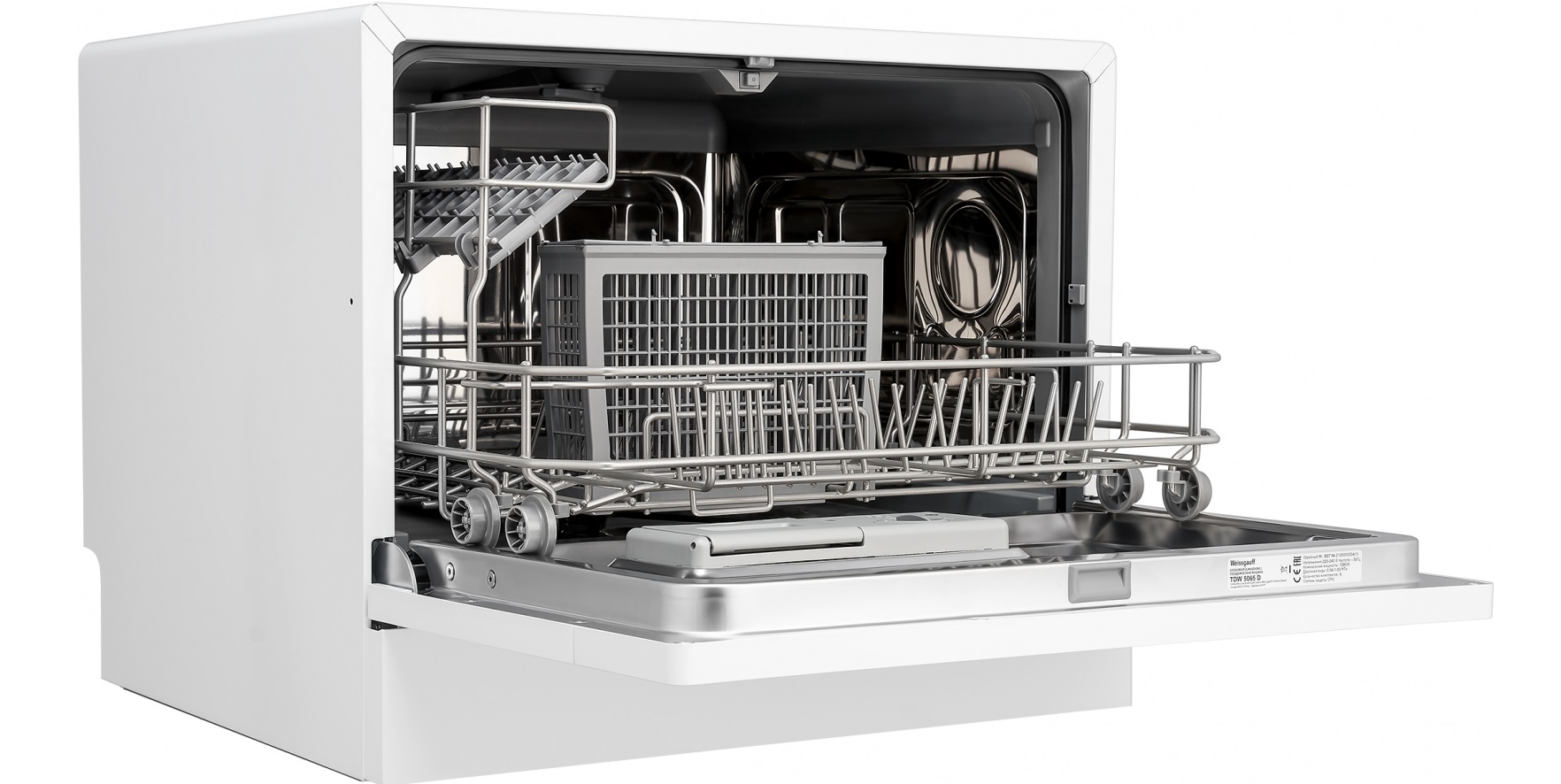
While the dishes are being washed, the machine activates the detergent compartment lock using the control board. The dishwashing detergent then dissolves in hot water, creating a cleaning solution that washes all the dirty dishes. All the water in the washing chamber will actively circulate until the first stage of the wash is complete, after which all the liquid will be drained into the sewer via the drain pump.
So, the dishes are washed to a crystal shine, all that's left is to dry them. This is where the heat exchanger mentioned at the beginning of this section finally comes into play. Manufacturers typically implement condensation drying in dishwashers.
It works by naturally evaporating moisture from hot dishes after they've been washed in boiling water. Convection movement of moist air occurs in the dishwasher's wash chamber, drawing it toward a heat exchanger filled with cold water. When the air contacts the heat exchanger's walls, excess moisture condenses from the hot air, dropping into the dishwasher's tray, and the cooled air returns to the wash chamber. This continues until either the set drying time has elapsed or until the humidity sensor, found in the most modern and technologically advanced dishwashers, is activated.
This type of drying is time-consuming, so some brands equip their products with a fan heater that forces ventilation into the washing chamber, significantly speeding up the process. Once the dishes are dry and at least slightly cool, they can be removed from the baskets, completing the cycle.
What actions does the PMM perform?
To summarize very briefly, the general operating principle of a PMM consists of just four points. Let's review them again for clarity.
- Pre-soak. During this stage, the spray arms will remove food particles and other debris from the dishes, preparing them for washing.
Rather than overusing the pre-wash function, it's always better to thoroughly clean your dishes of food debris, bones, napkins, coffee grounds, and other debris that shouldn't even end up in the wash chamber.
- Washing. At this stage, the dishwasher treats dishes with hot jets of water containing special detergents.
- Rinse. Hot water completes the cleaning of dishes, removing not dirt, grease, or grime, but household chemical residue. The duration of this step may vary depending on the machine's control module and the data transmitted by the sensors.
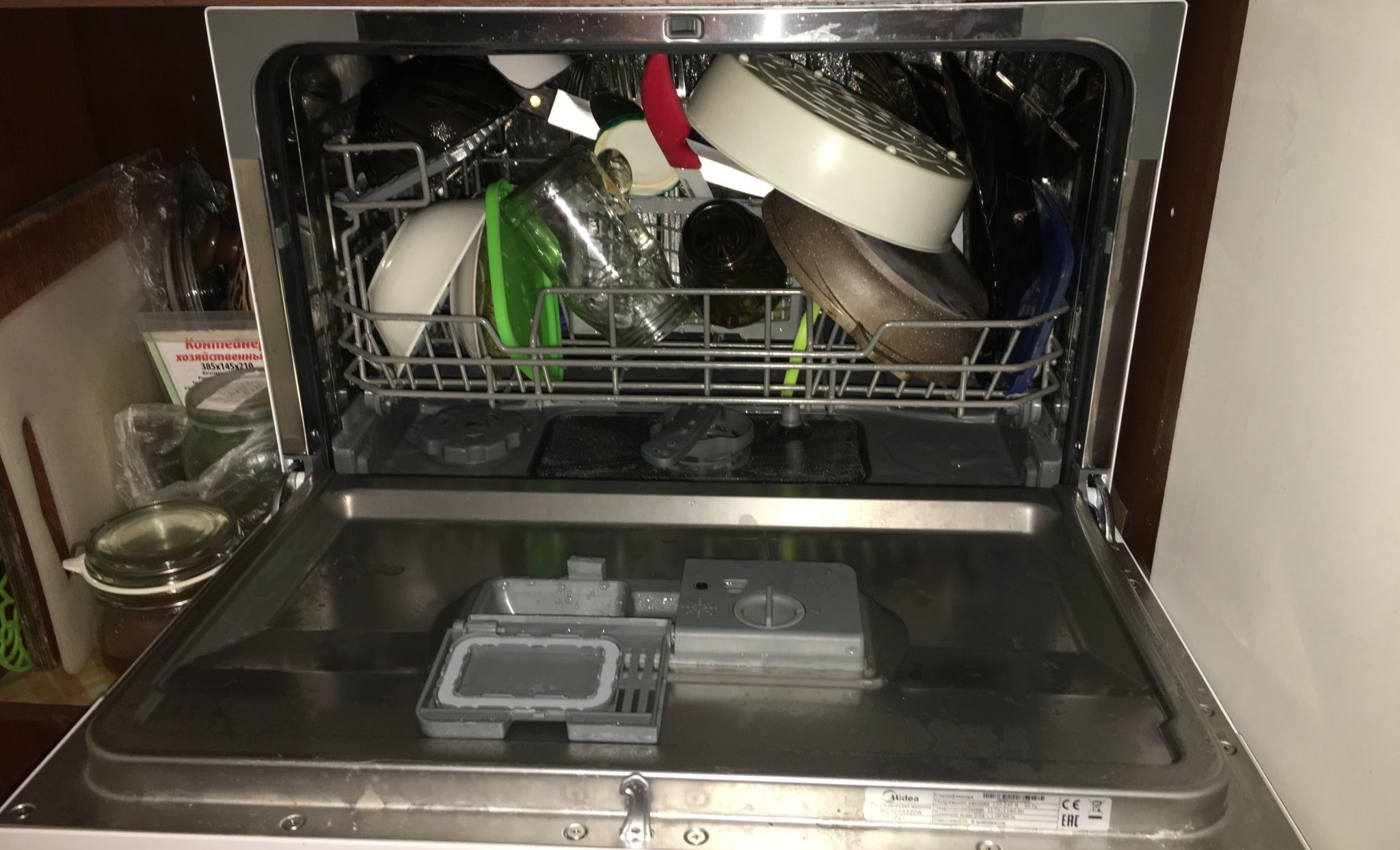
- Drying. Finally, the dishwasher removes moisture from the surface of the cutlery, ensuring that the user receives not only crystal-clear dishes but also completely dry ones that can be immediately put away.
Most dishwashers operate according to the described algorithm, but in some cases, pre-soaking can be omitted. Now that you're familiar with how a dishwasher works and understand its design, you're ready to use your "home helper" wisely.
Interesting:



Readers' comments
Headings
Washing machine repair




For buyers




For users


Dishwasher




Add a comment