
How a Bosch dishwasher works
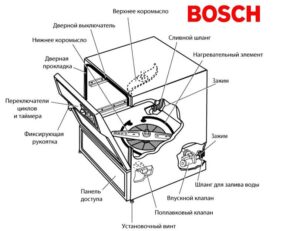 Many users are trying to figure out how a Bosch dishwasher works. Generally speaking, the process is quite simple: the dishwasher draws water, washes the dishes, and drains the waste water down the drain. But what parts does the appliance consist of? Which element does what? Let's delve into the details.
How does PMM function?
A dishwasher is a technically complex household appliance. It consists of numerous parts, each of which performs its assigned function.The control module coordinates the operation of the PMM units. The "brain" gives commands, receives signals, and controls the execution of the cycle.
Let's break down how a dishwasher works. We'll explain how a cycle begins. We'll explain the steps the machine takes to complete a user-defined program.
First, the human performs the main work. They must ensure the machine is stocked with regenerating salt, detergent, and rinse aid. Next, the user must correctly load the dishes into the appropriate racks and press the "Start" button.
The control module, having detected the button press, locks the door and opens the inlet valve. The machine begins to fill with water. This is where the pressure switch comes in – it monitors the amount of liquid drawn in. Once the level reaches the required level, the sensor closes its contacts, signaling the electronic unit. The microcontroller closes the solenoid valve.
Before moisture enters the working chamber, it passes through an ion exchanger, which is necessary for softening hard tap water.
The quality of dishwashing is significantly improved with soft water. Using softened water is also beneficial for the dishwasher itself, preventing scale and limescale buildup on the internal parts.
The ion exchanger consists of two interconnected compartments. One compartment contains a special filter filled with ion-exchange resin. The second reservoir contains regenerating salt (the user is responsible for ensuring it is always kept in the reservoir).
Ion-exchange resin has the ability to regenerate. By releasing its particles during the water softening process, it comes into contact with the salt, restoring its chemical composition. The average service life of the resin is 6-8 years, depending on the water hardness level in the region and the frequency of dishwasher use.
The next step is heating the collected water. There are two options for this:
- using a heating element;
- through a flow-through water heater.
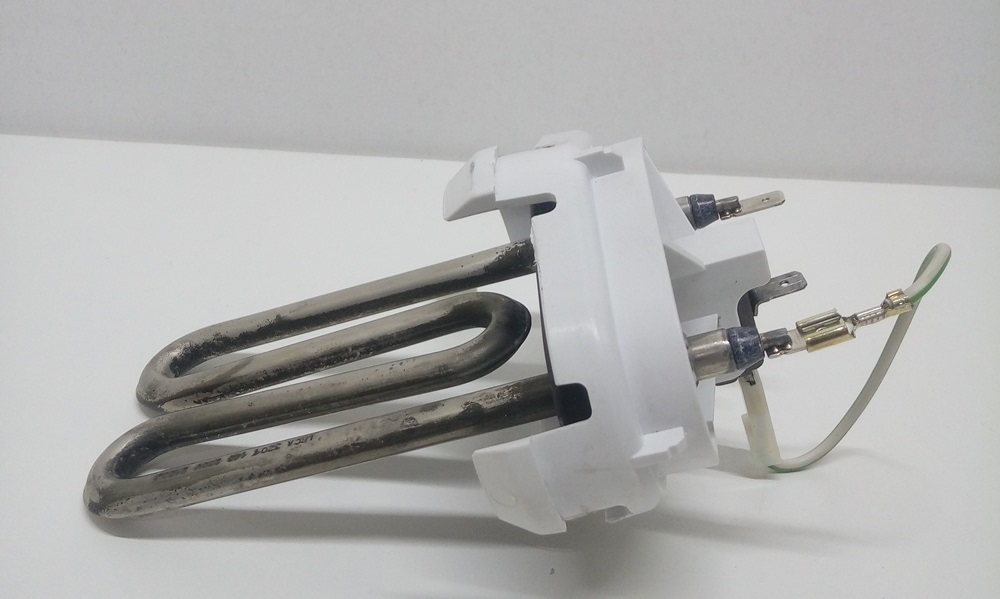
Modern dishwashers are equipped with a flow-through water heater. This solution reduces cycle time by eliminating the need to wait for the water to heat up. Washing begins within a few minutes, and the water temperature is adjusted to the desired temperature during the process.
The movement of water inside the dishwasher is provided by a circulation pump.
The pressure generated by the pump lifts water to the sprinklers (also known as impellers) and into the washing chamber through multiple openings called nozzles. During operation, the sprinklers rotate, directing the jets around the entire perimeter of the hopper.
A filter is installed at the bottom of the wash chamber. This unit collects all debris, purifying the water. The filter element protects the system from clogging and also protects the circulation pump.
The impellers are spun by water sprayed from the outer nozzles. To ensure this, manufacturers position the holes at an angle to the sprinkler's axis of rotation.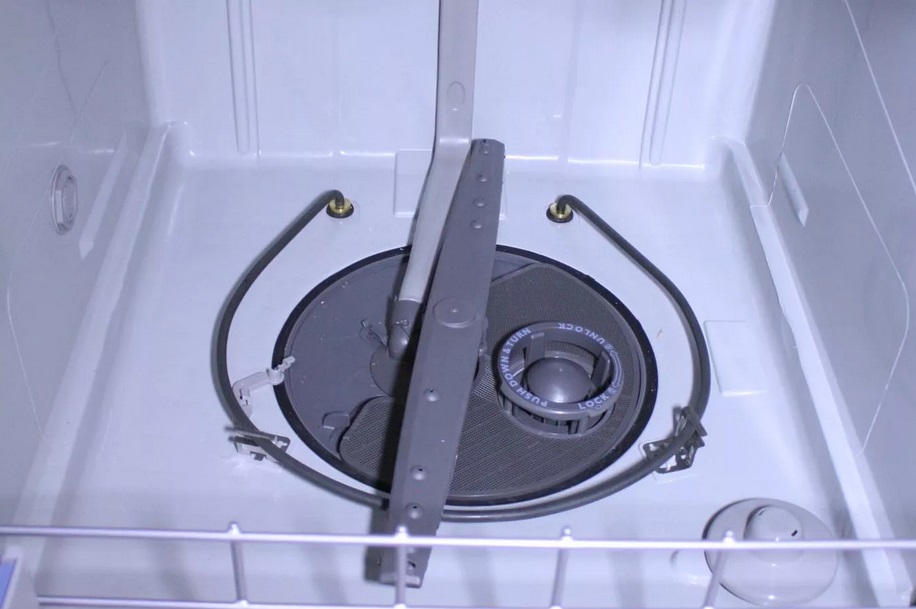
As water flows into the tank, the dispenser lock is activated by a signal from the control module. The detergent dissolves, and the soapy solution is directed toward the dishes.
The cleaning solution circulates in the hopper until the end of the wash cycle. The dirty water is then removed by the drain pump. The pump transfers the liquid from the dishwasher to the sewer.
The dishwasher then begins rinsing the cutlery. The "brain" opens the inlet valve again, allowing clean water to flow to the dishes. A standard cycle typically includes 2-3 rinse stages.
The next step is drying the washed dishes. This is where the heat exchanger comes into play. Modern dishwashers typically use condensation drying.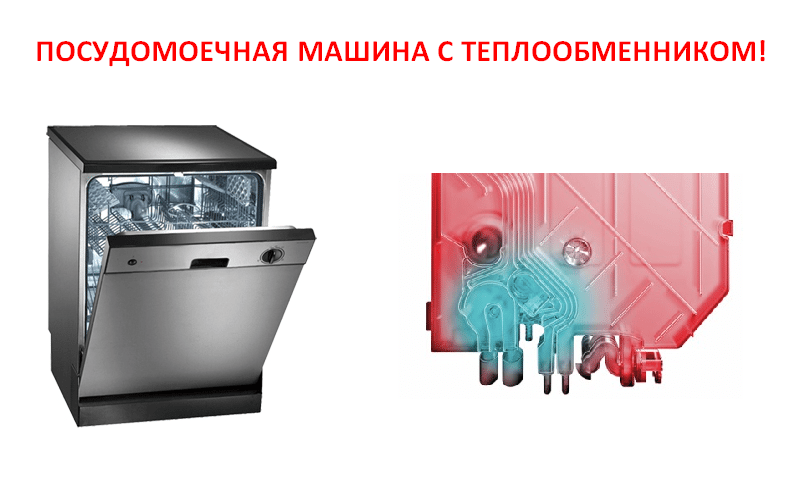
How does drying work? Moisture evaporates from the surface of the cutlery naturally because the dishes are hot. Moist air begins to accumulate inside the dishwasher and is directed through pipes to the heat exchanger (filled with cool water).
Condensation forms from the moist air after contact with the heat exchanger. The droplets flow through a special chute into a tray. The cooled air then flows back into the bin. The process continues for several minutes (drying time may vary depending on the selected program).
Some Bosch dishwashers are equipped with a fan heater. This significantly speeds up drying by providing forced ventilation of hot air in the bin. Check your dishwasher manual to determine if your model is equipped with this device.
Several components are responsible for the safety of the washing process:
- pressure switch – a sensor that monitors the water level in the washing chamber and transmits this information to the control module;
- door locking device - if the lock does not work and the system remains leaky, the wash will not start;
- A leak protection system. This consists of an inlet hose with a special sensor and a float in the tray. If a water leak is detected in the dishwasher's hydraulic circuit, the device is activated, preventing flooding of the apartment.
More sophisticated machines may also be equipped with other sensors that optimize the washing process. For example, a device that detects the water's turbidity. Based on the information it transmits, the control module decides when to stop the rinsing process or change the water.
This is how Bosch dishwashers work. Many parts are responsible for the result. If one element fails, the appliance will no longer function properly. Let's take a closer look at how modern dishwashers work.
What components does a Bosch dishwasher consist of?
It's important to understand not only the operating principle but also the design of your "home assistant." This information will be useful when diagnosing the dishwasher and troubleshooting any problems. The main volume of the machine is occupied by the working chamber, into which dirty dishes are loaded.
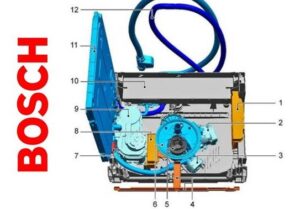
The washing chamber contains two baskets for dishes and a cutlery tray. Depending on the dishwasher model, the bin may also include a glass holder. A typical dishwasher layout is shown in the figure.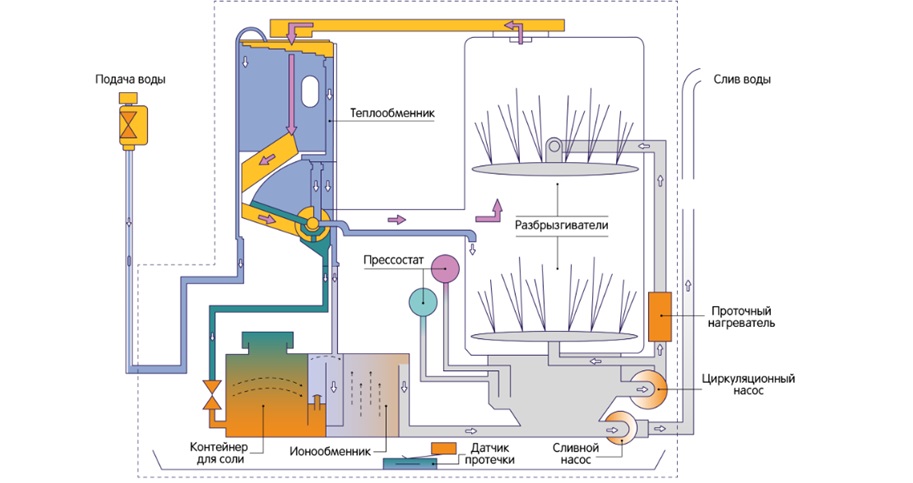
Bosch dishwashers have two separate circuits: one for water circulation and the other for air movement during drying of dishes.
Generally speaking, any Bosch dishwasher includes the following system:
- water treatment (hard tap water is softened in an ion exchanger);
- water circulation (several elements are responsible for this, starting from the inlet hose and the electromagnetic valve, ending with the sprinklers);
- filters (filter elements clean the water from debris and food particles, protecting the machine);
- sensors that monitor all cycle parameters (elements ensure uninterrupted execution of the user-defined washing program);
- drain (several elements are also responsible for draining water into the sewer: a pump, various pipes).
Understanding the machine's structure and operating principles allows users to perform simple repairs. For example, at home, you can clean the filtration system, replace the pressure switch or inlet valve, or fix the door lock.
What processes occur in a dishwasher?
After closing the dishwasher door and selecting the desired mode, the most interesting part begins to happen inside the machine. The user won't be able to observe the process – the dishwasher's body is opaque and doesn't have a glass hatch like a washing machine. The "home assistant" sequentially starts:
- Pre-soak. At this point, jets of water begin to emerge from the nozzles. Dried-on food residue is washed away from the dishes.
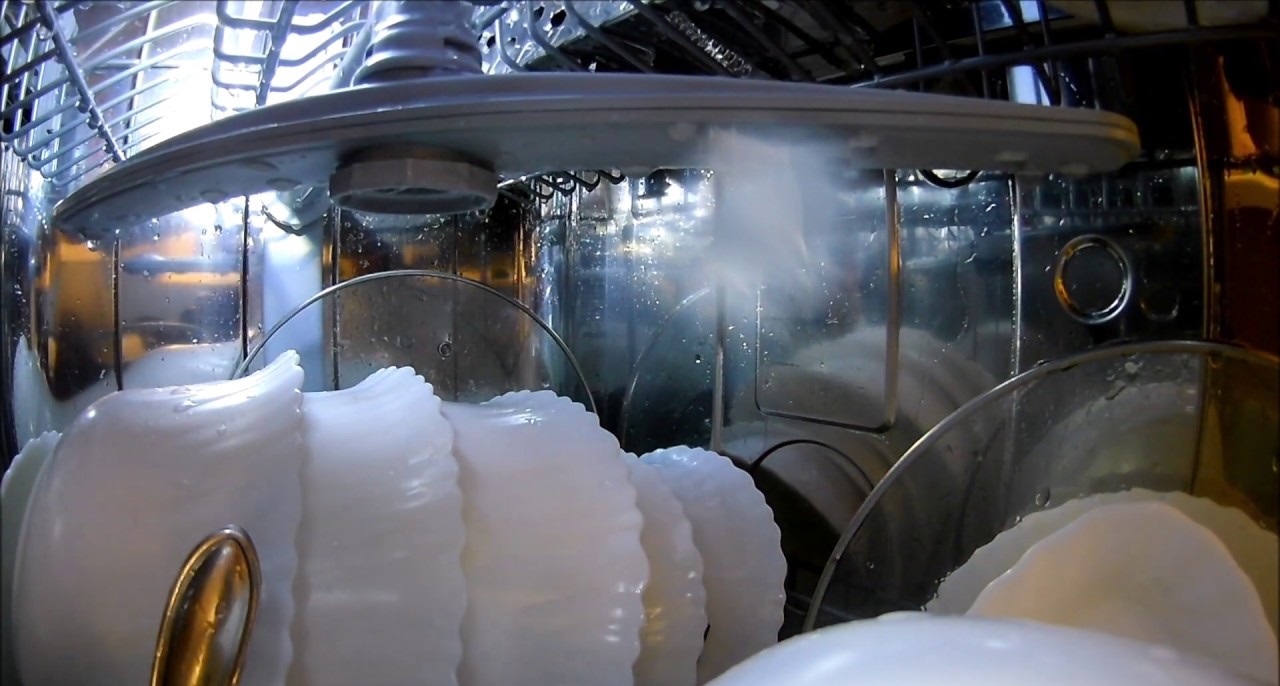
- Sink. Cutlery is washed with hot water containing a solution of detergent.
- Rinsing. Dishes are rinsed with warm water, removing any remaining detergent. The water in the washing chamber is changed several times.
- Drying. At this stage, moisture evaporates from the dishes.
As a result, the user removes fully washed and dried cutlery from the dishwasher. All that remains is to empty the baskets and put the dishes back in their proper places. It's also important to leave the dishwasher door slightly open for ventilation—this will prevent mold from forming inside the machine.
Interesting:

Readers' comments
Headings
Washing machine repair




For buyers




For users


Dishwasher




Add a comment