
How a clothes dryer works
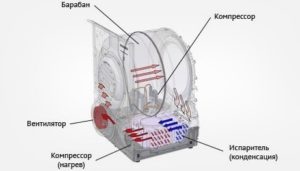 Few people understand how a clothes dryer works, considering it unnecessary. But in reality, a clothes dryer is a great addition to a washing machine, saving time on hanging clothes and pinning them. This trendy appliance is especially useful for those who do large loads but can't dry all the items. So, there's no reason to avoid a clothes dryer—it's better to get to know it better.
What types of drying equipment are there?
Hanging clothes is far from the only way to dry them in the 21st century. In fact, manufacturers of large household appliances offer several types of electric dryers. Their main difference lies in the drying technology used: maximum spinning, steam treatment, or hot air drying. There are three main types of these units.
- A washing machine with a dryer. It's easy to use, economical, and space-saving, but it has a significant drawback: it can't dry all the laundry, which slows down the washing process.
- Drying cabinets. These units are bulky, expensive to maintain, and designed for large volumes of laundry, so they are primarily used in large homes or businesses.
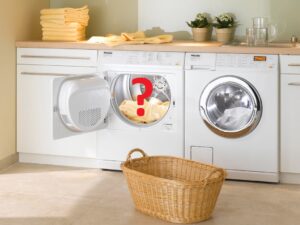
- A tumble dryer. It resembles a washing machine and is considered the "golden mean" among dryers.
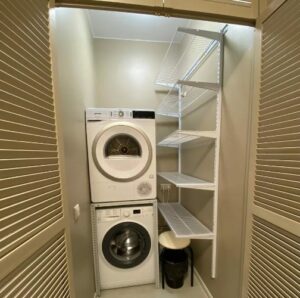
Many dryers can be installed in a column and mounted on the wall using special brackets.
Each unit has its pros and cons, but most often, homemakers choose a tumble dryer. These dryers come in a variety of styles. Let's explore which ones are available and how they work.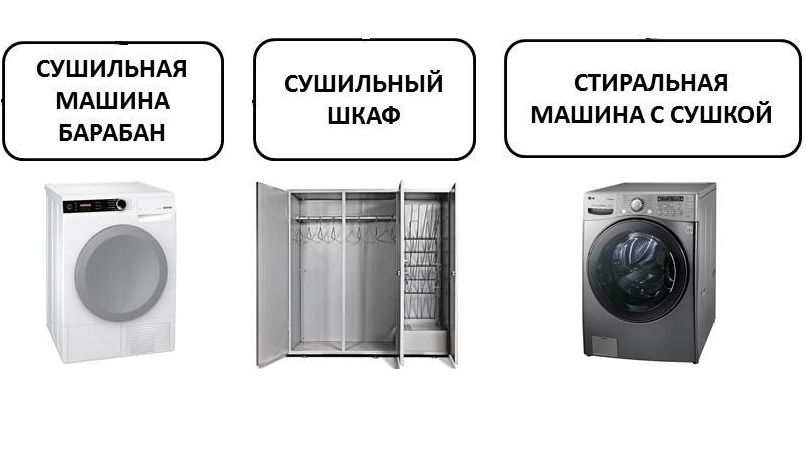
Types of drum dryers
The main division of drying machines is based on the principle of removing moisture from clothes placed in the drum. Water from the laundry can either escape as moist air or accumulate in a special container.There are three main types of tumble dryers.
- Ventilation systems. These are now considered obsolete because, while simple, they are inconveniently designed. Moisture released during the cycle is discharged into the ventilation system through a special hose. However, this requires additional installation work during installation, which reduces their popularity among consumers.
- Condensation. In these machines, moisture isn't exhausted but accumulates in a separate compartment, making them much more practical than their predecessors. However, even here, things aren't perfect: waste water must be regularly dumped, and the slow condensation process requires the machine to generate significant heat. As a result, the drying cycle takes a very long time and consumes a lot of energy.
- Heat pump dryer. This is an improved condensation dryer. It features a cooling circuit, providing intensive cooling that accelerates the release of moisture from clothes. This technology not only reduces cycle time but also lowers energy consumption by 20%.
Heat pump models are more expensive, but they use less electricity, so the price difference quickly pays for itself.
The higher the drying class, the more expensive it will be for the consumer. The cheapest will be ventilation models, and the most expensive will be models with a heat pump. But you shouldn't rely solely on the price of the machine; it's better to evaluate the other components of the device as well.
Components of a dryer
A more detailed understanding of how a dryer works can be gained by reviewing its main design elements. While the included components may vary depending on the model and brand, most dryers are manufactured using a standard template. Each model includes:
- the instrument panel, which contains a digital display, a mode selector, as well as buttons for programs and additional functions;
- a drive belt that is hidden inside the unit and connects the tank shaft to the engine, ensuring the rotation of the drum;
- A tumble dryer, which is virtually identical in design to a washing machine. It often has a light that allows you to monitor the drying progress of your clothes;
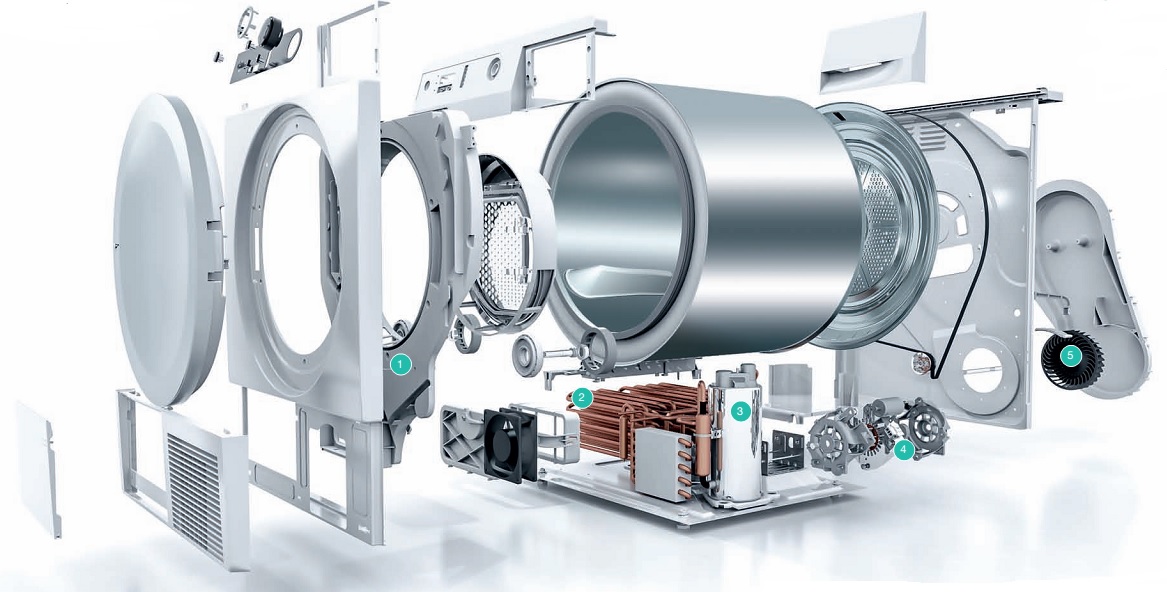
The presence of drum lighting simplifies the process of loading and unloading laundry.
- A heat exchanger is a compartment in which cooled and heated air moves in an isolated manner. This creates condensation and dries laundry;
- a heating element, which is also called a heating element, it heats the air before it directly enters the drum to wet items;
- A fan is used to direct cold air in the desired direction, allowing the flow to reach its target more quickly.
That's not all, of course. Dryers also have a moisture collection container, which can be located at the bottom or top, in the same location as the powder drawer on a washing machine. It has a pull-out mechanism and needs to be emptied regularly, otherwise condensation will seep into the machine and cause leaks. Some modern models can be connected directly to the sewer system, allowing the accumulated water to drain automatically.
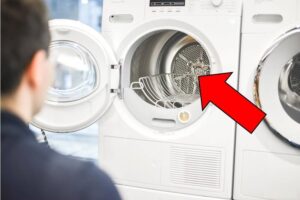
Dryers also have air intakes, which are additionally equipped with lint filters and collect dust and other debris that enters the machine. These need to be cleaned at least once a month.
The "heart" of the dryer is the electric motor. It determines its power and the speed at which the drum spins. The "brains" are the control board, which ensures the timely delivery of commands and the smooth execution of the program.
How does drying laundry work?
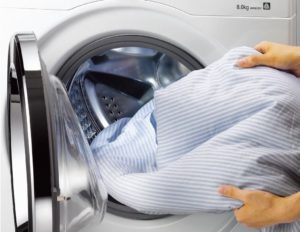
For the owner of the dryer, its operation will resemble that of a regular washing machine. Simply open the door, load the laundry according to the permitted capacity, and start the process by selecting the appropriate mode. True, instead of water, warm air will enter the tank, and the rotation of the drum will not exceed 100 revolutions per minute.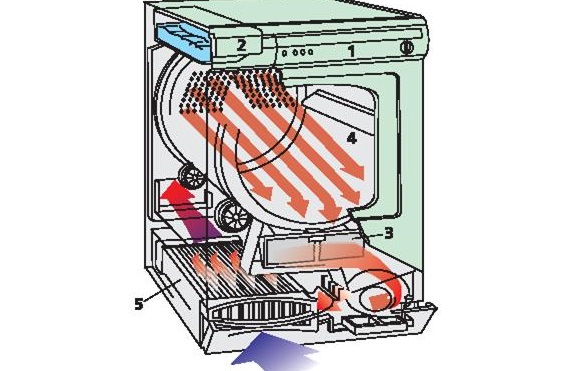
Many dryers offer users over 10 different drying programs designed for specific fabrics and garment types, allowing them to select the duration and efficiency of the cycle. If you look inside the dryer, you'll see the following after starting the cycle:
- the running fan will begin to move air masses through the lint filters to the heating element;
- the machine will heat up to 50-70 degrees, and the second fan will blow hot air into the drum;
- Having taken its “portion” of moisture from the wet laundry, the air from the drum will go to the heat exchanger, “dump” the water, cool down and go back to the heating element;
- The action will be repeated continuously until the user stops the cycle or the clothes are completely dry.
The maximum power of a dryer is 4000 watts, but most machines are capable of 1500-2300 watts.
Once the selected program has finished and the machine has played the appropriate melody, the items are removed and sent to the closet or to be ironed. The main thing is not to forget to clean the lint filter so that next time air circulates freely through the machine. We also remember about the moisture container, which also needs to be emptied, as leaving water inside the unit is strictly not recommended.
Also, don't rush into a second cycle immediately after the first. Manufacturers recommend letting the machine "rest" for 20 minutes before repeating the drying process.
Interesting:


Readers' comments
Headings
Washing machine repair




For buyers




For users


Dishwasher




Add a comment