
How a clothes dryer works
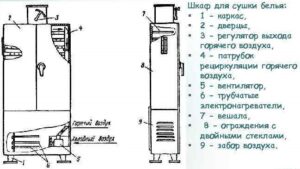 Some modern families prefer to buy a drying cabinet rather than a washing machine with additional features or a tumble dryer. Not everyone knows how a clothes drying cabinet works, but its impressive appearance, spaciousness, and functionality make it a real eye-catcher. Let's take a closer look at how it compares to traditional tumble dryers, and also learn how to choose one.
How does this device work?
First, it's important to understand how this useful "home assistant" works, which will help you determine whether you need one at all. Modern cabinets can be divided into two categories:
- Models that remove moisture along with the air. This is accomplished through a drain pipe that either exits outdoors in a private home or into a ventilation duct in a multi-story building. These units offer limited installation flexibility, as they can only be installed in rooms with existing ventilation vents.
- Models that condense moisture, which remains in a special container. This container can either be emptied manually, or the resulting liquid will be drained into the sewer. Depending on the model, the device may notify the user when the container is full and needs emptying.
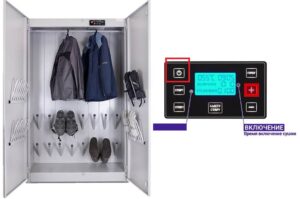
How does the drying itself take place? First, the housewife hangs up the clothes, then selects the appropriate operating cycle and starts it, then the heating element installed at the top or bottom of the closet is activated, as well as the built-in fan. If we're talking about a natural convection oven, it activates only the heating element. This causes moisture to evaporate from the items, followed by moisture removal or condensation.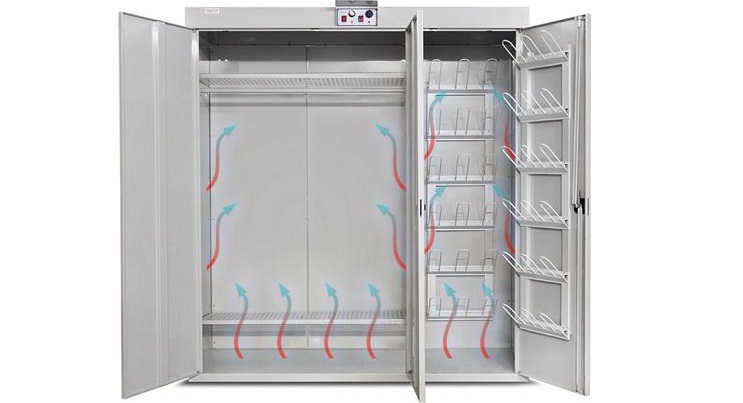
You can also find equipment on the market that can monitor the moisture level of clothes using expensive sensors. This technology helps complete the drying cycle when the humidity of the clothes and the air are equal. To speed up drying, it's best to spin the clothes until they're as dry as possible. However, it's important not to overdo it, as items that are too dry will be difficult to iron.
Finally, it's worth mentioning dryers that operate using infrared radiation. Their operating principle is almost identical—moisture is removed using heat—but it's crucial to position items carefully so they don't block the infrared rays.
Let's compare a washing machine with a cabinet
The most effective ways to dry clothes using household appliances are a drying cabinet and a tumble dryer. A tumble dryer is typically the same size as a washing machine, so it can be conveniently placed side by side. Even visually, the two units are similar, featuring a rotating drum with multiple openings. However, tumble dryers typically include additional elements to more effectively agitate the laundry, which could become damaged inside the drum without water.
Drying cabinets and washing machines differ in their capabilities, making it difficult to compare them. Drying machines dry faster because the rotating drum effectively removes moisture from freshly washed clothes. While a drying cabinet can dry an item for one to six hours, a drying machine on its fastest setting can dry in just a third of an hour. Drying machines also have a wider range of operating modes, although the basic ones are usually sufficient for most users.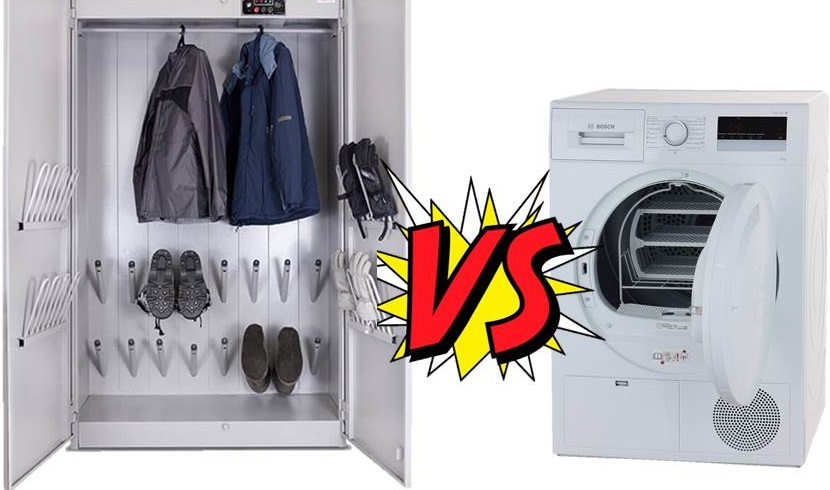
- Cold cycle for items that may be susceptible to shrinkage at high temperatures.
- Fast intensive mode for maximum user time savings.
- Long-lasting program for thick items such as jeans and sweaters.
- The longest cycle with moderate temperature, suitable for outerwear.
It may seem like a dryer is inferior to a washing machine in every way, but more expensive dryers have their undeniable advantages. You can safely dry even items that some manufacturers advise against machine drying, such as winter jackets, coats, winter and fall shoes, and large blankets and throws. Not everything described above is machine-safe, and items such as knitted lace scarves, wool and down stoles, hats, and elegant beaded items are generally not recommended for machine drying, as they could be damaged by the friction of the drum.
When choosing a wardrobe, you need to be prepared for the fact that freshly washed items will have to be dried several times, especially if the maximum allowable weight for processing in one working cycle is exceeded, which will cause the clothes to remain damp longer.
Furthermore, a closet can hold significantly more items at once than a dryer. While a washing machine typically holds just three kilograms of clothing, a closet can hold four, five, or even more. You don't have to remove items from the closet immediately after use, as they can hang perfectly unwrinkled on hangers. Finally, a dryer is virtually silent, making it safe to leave overnight even in a home with small children. It's also relatively inexpensive, which is a plus for some brands.
Choosing a good wardrobe
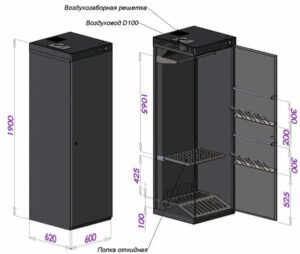
Understanding how a drying cabinet works is easy, but choosing a quality unit is much more difficult. It's important to consider not only the manufacturer's reputation and price, but also the size of the equipment—buyers typically base their decisions on the number of potential users, as well as the washing machine's capacity. Drying cabinets are typically 60 centimeters long and wide and 180 centimeters high, but alternatives are available. For example, larger "home helpers" with two sections reaching 120 centimeters in width, or, conversely, compact models with a width of just 50 centimeters. These units also come in non-standard heights, for example, 200 centimeters or more, which is ideal for drying fur coats and evening dresses.
Another parameter that users often pay attention to is energy efficiency. Most cabinets have a power rating of 2 to 4 kilowatts per hour. This parameter is crucial, as the worse the energy efficiency rating, the higher your utility bills will be. Therefore, it's best to purchase appliances with an energy efficiency rating of at least "A," and preferably "A+" or higher.
The selected mode also has a significant impact on energy consumption, as the economy program uses fewer resources, while maximum modes dry better and faster, but have a negative impact on energy consumption.
It's also worth noting that drying cabinets typically have a minimalist, even austere, design, making them easy to install in any home and seamlessly blending into the interior. Manufacturers devote much more attention to the interior layout, as the placement of hangers and perforated shelves can increase or decrease drying efficiency. This is because the airflow from the fan must reach every area of the garment to ensure uniform drying. Therefore, the entire distance between the hanger shelves is carefully measured during the design stage, along with a laundry load calculation that ensures the necessary clearance between garments.
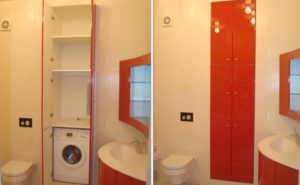
Most often, a "home assistant" is installed in a hallway, bathroom, or a separate utility room, which in a private home is usually planned in advance. Stores typically offer white or silver models, so you have to choose between these two colors.
Interesting:


Readers' comments
Headings
Washing machine repair




For buyers




For users


Dishwasher




Add a comment