
How does a washing machine dryer work?
 Housewives often have doubts about how to dry their laundry. Of course, if your apartment has a balcony or is at least spacious enough, drying issues can be avoided by simply hanging clothes outside or in a separate room. But what if you're desperately short on space and don't have a balcony? A washer-dryer can help alleviate this headache. Let's explore how a washing machine dryer works and discuss the advantages and disadvantages of this type of equipment.
How does it work?
2-in-1 appliances are great not only for washing clothes but also for drying them quickly. Washer-dryers take up almost as much space as regular washing machines, but they completely solve the problem of subsequent care of wet clothes.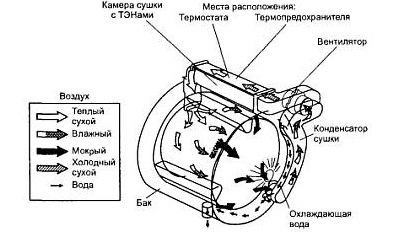
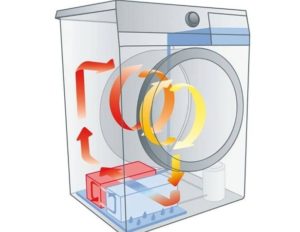
The drying function in a washing machine operates very simply. A second heating element is located behind the drum, whose main function is to heat the air. Warm air currents are directed at the laundry, causing moisture to evaporate from the fabric. During the drying process, the drum rotates slightly, shaking the items and, consequently, ensuring uniform drying. The heated air, supersaturated with steam, then undergoes a cooling process. The moisture condenses and flows into a separate container.
Once drying is complete, you can take completely or almost dry items out of the machine, smooth them out slightly if necessary, and put them away in a closet.
Specific settings?
Some modern washer-dryer models allow the user to customize the drying process. The owner can optimize the procedure based on their own preferences and wishes. Adjustments are made based on one of the following parameters.
- Timed drying. This involves setting the drying time before starting the program. When the timer signals the end of the allotted time, the machine will stop. The main drawback of this method is the difficulty in determining the optimal drying time. If you set the wrong number of hours and minutes, you risk getting wet or, conversely, overdried clothes.
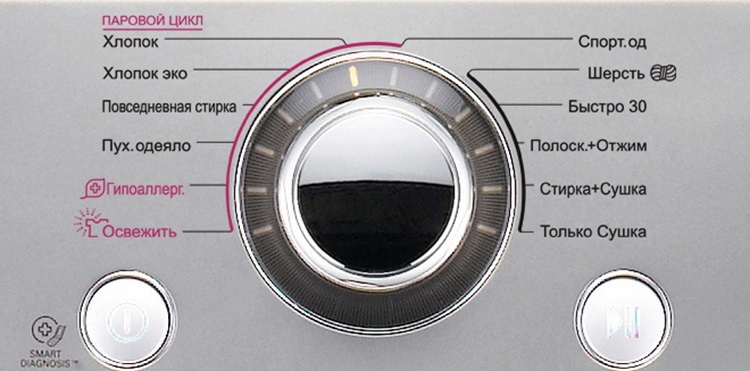
- By residual moisture. A more preferable setting, this one allows the user to decide how dry their clothes should be. When starting the dryer, the user sets the optimal level of residual moisture for the clothes, and the intelligent machine does the rest.
For the convenience of users, some 2-in-1 machine models, instead of the standard residual moisture values (3-10-15%), have easy-to-understand indicators: “In the closet,” “Very dry,” “For further ironing,” etc.
Advantages and disadvantages
Today, few homeowners choose washer-dryers over traditional automatic machines. Despite the apparent advantages of combined models, buyers often view them as unreliable. In fact, 2-in-1 machines have few drawbacks. The following disadvantages become apparent during use:
- If the drum is fully loaded, you won't be able to dry all the laundry in one go. You'll have to transfer some clothes to a basin and run the drying cycle twice. This increases energy consumption;
- Low energy efficiency rating. Combined units consume significantly more kilowatts than single-task washers. When choosing a washer-dryer, pay attention to the energy efficiency rating; it's best to choose one above Group B.
In fact, there are only two obvious downsides to washing machines with dryers. The benefits of owning and using these machines far outweigh the disadvantages:
- Eliminate the need to hang laundry from the drum and search for unoccupied spaces in the apartment. Once you buy a washing machine, you can forget about laying out laundry on the balcony, a bulky dryer, etc.;
- Saving personal time for the housewife. Owners of dryers don't have to wait for their favorite clothes to dry. Drying takes just over an hour;
- No need to allocate separate meters for the dryer. The 2-in-1 appliance fits perfectly in the space previously reserved for the washing machine;
- preventing excess humidity in living rooms.
Soberly evaluate all the pros and cons regarding the purchase of washer-dryer equipment. If you live in a tiny one-room apartment without a balcony, purchasing a drying rack can be a lifesaver when it comes to solving the problem of limited drying space.
The myth about the high cost and unreliability of such equipment
In most cases, fearful stories from friends and colleagues prevent homeowners from purchasing a tumble dryer. This makes the decision to purchase a dryer difficult.
- High price. Washer-dryers are approximately 50% more expensive than their automatic counterparts. However, when comparing a 2-in-1 machine and a tumble dryer, it's better to choose a combination machine;
- Unreliability. This is the argument service center technicians hear most often. Hybrids can actually fail much faster than their counterparts.
If the unit is operated correctly and serviced on time, it can ensure long-term, repair-free operation of the equipment.
When choosing a model, be sure to understand all the details of using a washer-dryer. Understand the unit's features and consider whether it meets your family's needs. Consider whether the cost is reasonable.
Interesting:



2 reader comments
Add a comment
Headings
Washing machine repair




For buyers




For users


Dishwasher




You forgot to mention one important downside: Over time, the machine's drum, fan, condenser, and heating element become clogged with lint. All of this rots, and after drying, the laundry smells musty.
How do I collect the dust that forms after drying? The entire drum is covered in dust.