
How a washing machine lock works
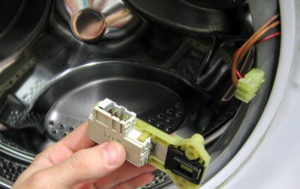 Despite its compact size, the door lock is a crucial component of a washing machine. It ensures the machine maintains a tight seal throughout the wash cycle, and if any problem occurs, it automatically stops the cycle and displays an error message. Knowing how a washing machine lock works can not only broaden your horizons but also help you prepare for potential problems. Therefore, we recommend familiarizing yourself with the locking mechanism and its operating principles in advance, as we'll discuss in detail below.
How does the door lock work?
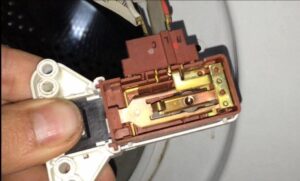
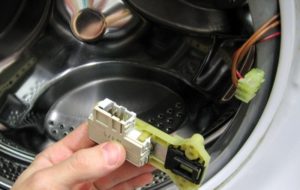
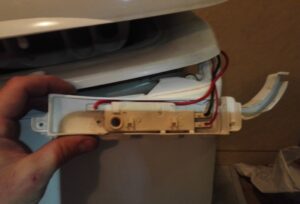
A malfunctioning door lock doesn't necessarily require a complete replacement. Firstly, such a replacement is expensive, and secondly, finding an alternative part is difficult. Therefore, it's best to understand the door lock's structure and attempt to diagnose the cause of the malfunction. A minor repair may be possible. The lock is a small piece that looks like a cassette. If you remove the plastic case, you can see:
- a metal plate connected to the spring of the loading hatch lid (the spring passes through a special hole and is attached to the door body);
- thermistor;
- a bimetallic element that can react to temperature by changing color;
- contact connectors;
- pin.
Important! The appearance of the locking device may vary depending on the washing machine model.
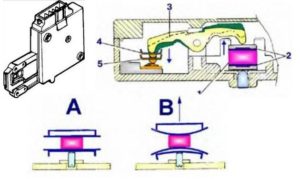 Now we can imagine how the hatch lock operates. The door closes, and the hook engages the latch and engages the plate. Everything locks in a specific position, after which a signal is sent to the control board. An electric current is then sent to the thermistor, which changes the shape of the bimetallic part. This, in turn, presses the pin, which causes all the door lock components and the hatch itself to lock completely into place.
At the end, the internal contacts close, and the triggered mechanism is reported to the control module. Resetting occurs as follows: the voltage to the thermistor is disconnected, the contacts move away, and the pin and plate return to their original positions.
What if the device breaks?
A non-functioning door lock, among other problems, can prevent the washing machine from starting a new cycle. To accurately determine whether the lock needs repair, just take a few steps.
First, open the door, expose the lock, and locate the sliding plate. Move it to the "operating" position and connect the multimeter probes to the contacts. Assess its functionality by comparing the displayed values with the required standard. Then, keep your eyes open and pay attention to how the locking mechanism behaves after the power is removed. If the click does not occur automatically, there is a problem.
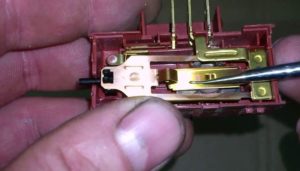 A faulty latch can lead to unpleasant situations. For example, after a wash cycle, the door won't open, and washed items can't be removed from the drum. To resolve this issue, you'll need to:
- Disconnect the washing machine from the power supply and water supply.
- Unscrew the screws from the back of the case and remove the top panel.
- Tilt the machine gun back.
- Use your hand to move the metal bolt from the hatch hook.
The exact opposite situation also occurs: even with strong pressure, the door lock fails to engage and the door won't close. Consequently, the wash cycle doesn't start, as the control board doesn't receive a signal that the drum is sealed. In such cases, the lock is most likely worn and weakened. To find out, you need to unscrew the hatch door and check the condition of the blocker with a multimeter and visual inspection.
If a defect is detected, the door lock system must be replaced. This will require removing the lock and installing a similar one in its place. The procedure is as follows:
Important! It is recommended to record the disassembly on the camera to facilitate the assembly process and avoid errors and confusion.
- We open the hatch.
- We remove the outer clamp from the cuff.
- We insert the rubber seal inside the drum.
- Carefully unscrew the bolts holding the lock.
- We take out the UBL.
- We install the new device in reverse order.
By understanding how your washing machine's door lock works, you can avoid panicking when the door is locked and quickly and accurately assess the extent of the problem yourself. The key is to maintain proper operation and remember to perform preventative maintenance and thorough care. This will ensure long-lasting service and protect owners from accidents, flooding, mold, and unpleasant odors.
Interesting:
Readers' comments
Headings
Washing machine repair




For buyers




For users


Dishwasher




Add a comment