
How to drain a Bosch dishwasher
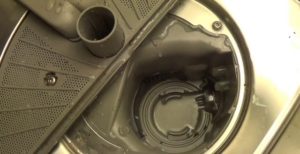 A dishwasher is constantly in contact with water while in use. Even when turned off, there's still some water in the system, so experts recommend leaving the door slightly open after washing to allow at least some of the water to evaporate and prevent stagnation. Sometimes, when the water needs to be completely removed, users wonder how to completely drain a Bosch dishwasher. Let's discuss this.
What is this for?
Most often, a forced drain is required when a dishwasher is experiencing a technical issue and requires repair. In this case, the water should be drained completely and as carefully as possible. The repair process requires turning the dishwasher upside down, and if the water isn't drained, it could leak onto the power board or control module, causing further damage.
A short circuit on the power board can cause current leakage to the housing, which in turn poses a direct threat to the life and health of users.
In slightly rarer cases, people drain the water from the machine in order to preserve it for the winter. If a Bosch dishwasher is used only in the summer in an unheated room, leaving it with water over the winter is dangerous. Frozen water inside will burst the plastic hoses, and the machine will require serious repairs in the spring. So, now that we've identified the causes of the water draining, let's look at how to fix it.
Removing liquid from the working machine
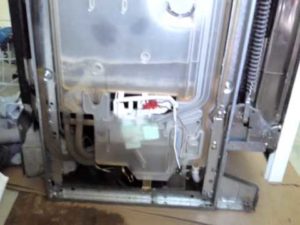 We've determined that draining a working dishwasher is only necessary if we've decided to store it until spring. We'll proceed from there. To remove all the water, follow these steps.
- Select the water drainage program on the control panel.
- We wait until the machine completes it.
- We de-energize the dishwasher.
- We turn off the water supply and remove the hoses.
- We lay rags on the floor near the right wall of the dishwasher.
- We unscrew the debris filter and the cap of the salt reservoir.
- Carefully tilt the machine onto its right side. Some water may still drain out.
- We move the dishwasher to a warm, well-ventilated place and open the door to let the inside of the machine dry.
After the above steps, you can put the machine away in a dry place. Let it sit quietly until next season; nothing bad will happen to it now.
Removing liquid from a broken washing machine
If The dishwasher does not drain water. If you do it yourself, then the above method cannot be used. Well, hypothetically, you could also tilt it on its side, but then a whole liter of water would leak out of the machine, which would inevitably flood the power board. However, this measure doesn't guarantee that all the water will drain out of the system, so we suggest another solution. What should I do?
- We de-energize and disconnect the machine from the water and sewerage system.
- We open the door wide.
- We remove the lower basket and take out the trash filter together with the mesh.
- We unscrew the cap from the ion exchanger reservoir, where salt is usually poured.
- Take a basin, an IV tube, and a syringe. Connect one end of the tube to the syringe, and lower the other end into the salt reservoir.
The trick might not work the first time. Try again; after two or three tries, it's sure to work.
- We suck up water with the syringe, remove the syringe from the end of the tube, and lower that end into the basin. The water should flow by gravity from the salt reservoir into the basin.
- As soon as we manage to drain the water from the ion exchanger tank, we throw the end of the tube into the niche of the waste filter and perform the same operation.
This simple method removes almost every drop of water from the dishwasher. A subsequent drying will complete the job, and the next day, you can confidently carry out repairs yourself or take the dishwasher to a service center.
Why doesn't the machine remove liquid?
Why is there water left in my Bosch dishwasher? Why does the machine suddenly stop draining? This is usually due to either blockages or faulty elements responsible for draining water, most often the former. The problem is that many users neglect basic care of their "home helper." This leads to food debris clogging the waste filter, and water stops circulating, remaining in the wash chamber. Under these conditions, draining the water becomes impossible.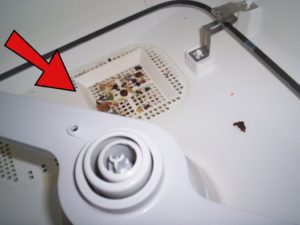
This problem is solved very simply. Roll up your sleeves, open the wash chamber door, unscrew and rinse the filter and the adjacent strainer. After this "general cleaning," the machine should work normally. The problem is worse if the dishwasher isn't draining due to a malfunction:
- pumps;
- circulation pump;
- water flow sensor;
- control module.
In this case, you should immediately contact a repairman. A professional will quickly diagnose the problem, determine what's broken, and repair your "home assistant," providing valuable recommendations along the way. Avoid attempting repairs yourself, especially if you have no experience with such matters.
So, draining water from a dishwasher turns out to be quite simple. You just need to know a few tricks, and the rest is a matter of technique. We hope you find our tips helpful. Good luck!
Interesting:




Readers' comments
Headings
Washing machine repair




For buyers




For users


Dishwasher




Add a comment