
How to wash a tent in a washing machine?
 It often happens that a camping trip doesn't end well. You have to pack up for home in the rain, packing your wet and dirty tent and other gear into the car. If you don't dry the tent, it will soon start to smell damp and moldy, making it very unpleasant to live in on your next trip. Many campers consider washing their tents in the washing machine. Is this safe or is it better to use other care methods? Let's discuss this in more detail.
What if the tent is dirty and smells?
If you've unfurled your tent and discovered it's completely covered in dirt and smells foul, a thorough cleaning is essential. At first glance, washing it seems like the easiest and most reliable cleaning method. Washing the tent will remove both the odor and the dirt. But the problem is, along with the dirt and odor, you risk washing away the protective layer—the special chemical treatment that makes the tent waterproof and windproof.
Tent manufacturers do not recommend washing their products or subjecting them to any intense mechanical stress to avoid damaging the protective layer. Experienced campers are also skeptical about washing tents, advising only as a last resort. What about machine-washing a tent?
A good-quality tent can easily survive a single machine wash, provided everything is done properly. The worst that could happen is the protective coating on the folds of the fabric will wash off, but that's not a problem; it can be restored with a special spray.
Rules
How to properly wash a tent in a washing machine?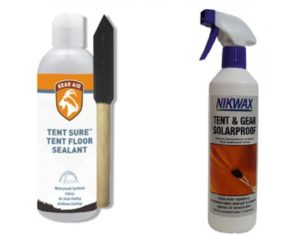
- Make sure the tent fits into the washing machine drum and that its weight is less than or equal to the machine's maximum load.
- Pitch the tent somewhere clean and dry, such as on the grass in your yard.
- Spray the tent fabric first on one side and rub it with a bar of laundry soap, then do the same procedure on the other side.
- Place the soap-rubbed tent into the washing machine drum without rolling it up.
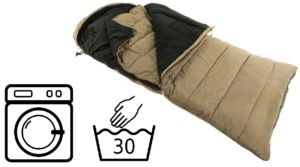
- Set the washing mode to no heat or spin, and the drum should not rotate at a speed exceeding 500 rpm. Do not use powder and gel.
- Wait until the wash cycle is complete, then remove the tent from the drum, let the water drain and dry the tent. It is very important that the tent is completely dry.
- Carefully inspect the tent; all suspicious areas should be treated with a spray that restores the protective layer of the fabric.
Important! Even a high-quality tent can only be machine washed once or twice during its lifespan. Washing it more often will likely ruin it, and even spray won't help.
Now let's look at what products can be used to restore the tent's protection if you do damage it during washing. There are many options on the market, but only a few are the best:
- Nikwax. One of the best tent impregnations. It should be used with caution and away from
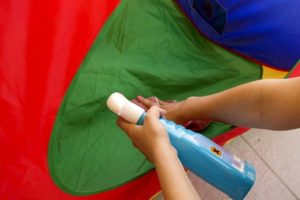 Keep away from open flames. Nikwax can be applied to the damaged area using a spray bottle, a cloth, or a sponge. Using impregnation Nikwax can be used to restore tents, backpacks, overalls, jackets, gaiters, and the like. The average cost is $7 for a 500ml bottle, which will saturate about 7m2 material.
 - Mcnett Tentsure. A very good sealant for restoring damaged protective layers on tent fabric. It can be applied to damaged areas with a brush or a small roller. Apply a thin layer to the fabric, let it dry, then apply a second layer and let it dry again. Avoid applying a thick layer—it's ineffective.
- Waterproofing spray. A universal silicone impregnation that's great for restoring tent fabric. The only drawback is that the impregnation wears off fairly quickly, and the can is small—just 300 ml. It's enough to cover about 2 m.2 damage. The average cost of a 300 ml can is $4.7.
Manually
Machine washing a tent is either rare or impossible. So what should campers who use their tents frequently do? What should they do if they need frequent maintenance? Experts advise using dry cleaning or, as a last resort, hand washing.
Please note! Hand washing your tent should be done very carefully and very rarely, approximately once every two to three camping seasons.
If you want to save the item, it is better to do without washing it at all, but if this is not possible, proceed as follows.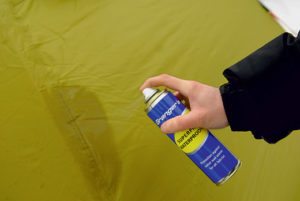
- We pitch a tent on the grass.
- We pour water on the tent and then, without any unnecessary mechanical action, rub it with a bar of laundry soap.
- Then you need to get someone's help: one person will water the tent, while you rub it with a sponge.
- Next, turn the tent over to the other side and do the same, rub with soap and wash it off along with the dirt.
- Let the tent dry and then spray it thoroughly with an anti-odor spray.
There are quite a few odor-control sprays available, including Toko Proff. It will eliminate mildew and laundry soap odors from your tent fabric, but if you're not bothered by such odors, you can skip the spray altogether. Also, remember that washing your tent isn't the only problem; you should also check its protective layer after washing and, if necessary, restore it.
Let's do without washing
If you're concerned about the safety of your tent, it's best to clean it rather than wash it. Dry cleaning, without excessive mechanical stress, is the safest method, but it doesn't remove dirt and odor as well as washing. What should you do?
After a hike, a wet and dirty tent should be hung in a dry, ventilated place and allowed to dry thoroughly. The fabric of a good tent is coated with sun protection and moisture-resistant impregnation, so you can dry it even in direct sunlight, but it is better if you find a shaded place for this.
So, the dry tent should be unfolded and inspected. Any dried dirt or debris should be brushed off using a very soft brush or cloth. If there are still stains in several places, you can treat them with a sponge soaked in soapy water. After these procedures, the tent should be thoroughly dried again and then stored away until the next trip.
So, theoretically, you can machine wash a tent, and a single wash might not damage it. However, remember that washing a tent carries a significant risk. Washing can damage the protective layer of the fabric, rendering the tent unusable. So, whether to wash or not is up to you. We recommend washing only as a last resort, after dry cleaning has failed. Good luck!
Interesting:



Readers' comments
Headings
Washing machine repair




For buyers




For users


Dishwasher




Add a comment