
How to remove limescale from a washing machine
 A washing machine makes life easier for both housewives and single men. It washes, rinses, and spins laundry automatically. All you have to do is throw dirty laundry in the drum, set the desired program, add detergent, and get fresh, freshly washed, pleasantly scented, and spin-dried laundry! Some washing machines even come with a dryer. So you don't even have to hang your laundry and wait for it to dry.
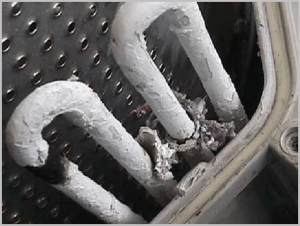
But the machine itself can become contaminated with limescale over time. This limescale, in turn, can damage our household appliances. In this article, we'll discuss how to prevent limescale buildup or descale your washing machine.
These days, you can buy both expensive and budget-friendly washing machines. Fortunately, appliance stores offer a wide selection of different brands. While the price of your washing machine may not be a big deal, you don't want it to break down quickly. To ensure it continues to perform well, you need to follow the operating instructions and maintain it. Let's look at the main cause of limescale buildup.
Poor water quality and increased water hardness
 The quality of water in the water supply systems of most large Russian cities is very low. Don't even think about drinking such water without additional purification. Better yet, order water from clean sources with home delivery. After all, the water in our pipes can even harm household appliances! Let alone us humans.
Tap water can contain various impurities, salts, chemicals, rust particles, and other unpleasant contaminants. It's also quite hard. Washing with hard water at high temperatures can cause scale buildup on the heating element. How can you protect your washing machine from these negative factors?
Water filters and softeners
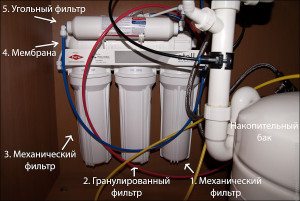 To soften and filter running water, you can use special water softener filters. They simultaneously soften hard water and filter it. These devices are installed directly on the water pipe. They purify all the water used by household appliances or coming from the faucets in your apartment. High-quality filters are quite expensive. The service life depends on how much water you use and the filter's functionality. There are mechanical and magnetic filters. Both of these options are suitable for softening the water going into your washing machine.
You can also add various water softeners to your wash cycle. There are quite a few available. Some are more expensive than others. They generally do a fairly good job of preventing limescale buildup in your washing machine. However, some of these products are considered ineffective.
Frankly, we haven't independently tested this issue. We're judging their usefulness solely based on information available online. So, we can't guarantee they're 100% effective.
To preserve the washing machine's heating element, you can also clean it manually. To do this, remove it from the washing machine and carefully remove any buildup. This method isn't suitable for everyone, as not everyone wants to mess around with the insides of their appliance. Many simply don't want to get into the machine and mess with parts, bolts, and other components.
The simplest, most proven, and cheapest method for removing scale is suitable for them: cleaning with citric acid!
How to descale a washing machine using citric acid
 You already know that hard tap water can cause scale to build up over time on parts that come into contact with water. Scale doesn't do any good to our appliances. In fact, it's actually harmful. It can damage the heating element and impair the proper functioning of the machine.
So, next we'll figure out how to remove it using citric acid. Make sure you have some on hand beforehand. We'll need about 100-200 grams. You can buy it at any grocery store. And it's not expensive. So just go and buy the required amount. A rag might also come in handy.
Let's go through the entire cleaning process step by step.
- First, you need to remove everything from the tank. If it's empty, you can safely skip this step. But if there are items, be sure to remove them. The citric acid can ruin them.
- After this, pour 100-200 grams of citric acid into the detergent dispenser slot. If you prefer, you can pour it directly into the drum instead of the dispenser. This won't change the essence of the matter.
- Next, start the program. Set the temperature from 90 to 95 degrees. Perform a long spin. And start the wash.
- During the wash cycle, scale particles will come out of the drain hose. If you're willing and able, you can watch them as they leave the inside of your appliance along with the water.
- Once the wash cycle is complete and the washing machine can be opened, you should carefully check for scale deposits under the rubber seal. If you find any, carefully remove them with a cloth. Then, thoroughly wipe the inside of the drum. Scale deposits may also remain on the drain hose, or more precisely, inside it. The presence of such residues will confirm that the washing machine was indeed scaled and that the citric acid has done its job.
Safe washing methods
 Incidentally, washing at a temperature below 50 degrees Celsius will also protect you from limescale buildup. At this temperature, limescale doesn't settle on the insides of the machine. If you regularly wash only at these temperatures, your washing machine won't be at risk of this problem. Furthermore, using our appliances this way is very energy-efficient. After all, the heating element doesn't have to work as hard to heat the water. This means you'll save on electricity! However, there's a chance that particularly dirty laundry won't come out clean, or you'll need to use a special detergent.
Frequent washing of old or lint-laden items can also contribute to scale buildup. During washing, these items can shed small particles, which turn into a kind of film and stick to the interior of the machine. Avoid washing very old items. It's better to buy new ones. This will make your washing experience more enjoyable and will help your machine function properly for longer.
We hope our tips have helped you solve the limescale problem in your washing machine and prevent it in the future. Thank you for your attention, and please continue exploring our website. You'll find much more interesting and useful information about washing machines here!
Interesting:


4 reader comments
Add a comment
Headings
Washing machine repair




For buyers




For users


Dishwasher




My washing machine water goes through a filter.
I haven't had to deal with limescale yet, thank God. I just do preventative measures. I add Calgon when washing, and always wipe it down and air it out afterwards. Everything's clean and working properly.
I also like Calgon, because our water is hard, it needs to be softened in any case, it’s better for the things themselves.
Calgon's price doesn't match its effectiveness.