
How to install a Bosch washing machine yourself
 Bosch washing machine prices have risen again, and shelling out even more money for a technician to install your "home helper" is definitely not an option. Installing a Bosch washing machine is entirely possible, but before you get started, you need to familiarize yourself with a number of rules, which we'll detail in our post. Let's get started!
Preparing for installation
Before installing and connecting your newly purchased washing machine, you should prepare it. You also need to prepare the connection points and utilities. If you plan to install a Bosch washing machine in the bathroom, kitchen, or anywhere else, you should take care of this during the rough-in stage of the renovation. But let's not get ahead of ourselves.
If you've decided to install your new Bosch washing machine yourself, first remove it from its original packaging and carefully read the instructions included in the box. Open the packaging carefully, as you'll be storing it for the entire warranty period.
- Immediately after delivery of the washing machine, check that the box contains all the components listed in the instructions.
- Unscrew the transport bolts, turning the machine with the back wall facing you.
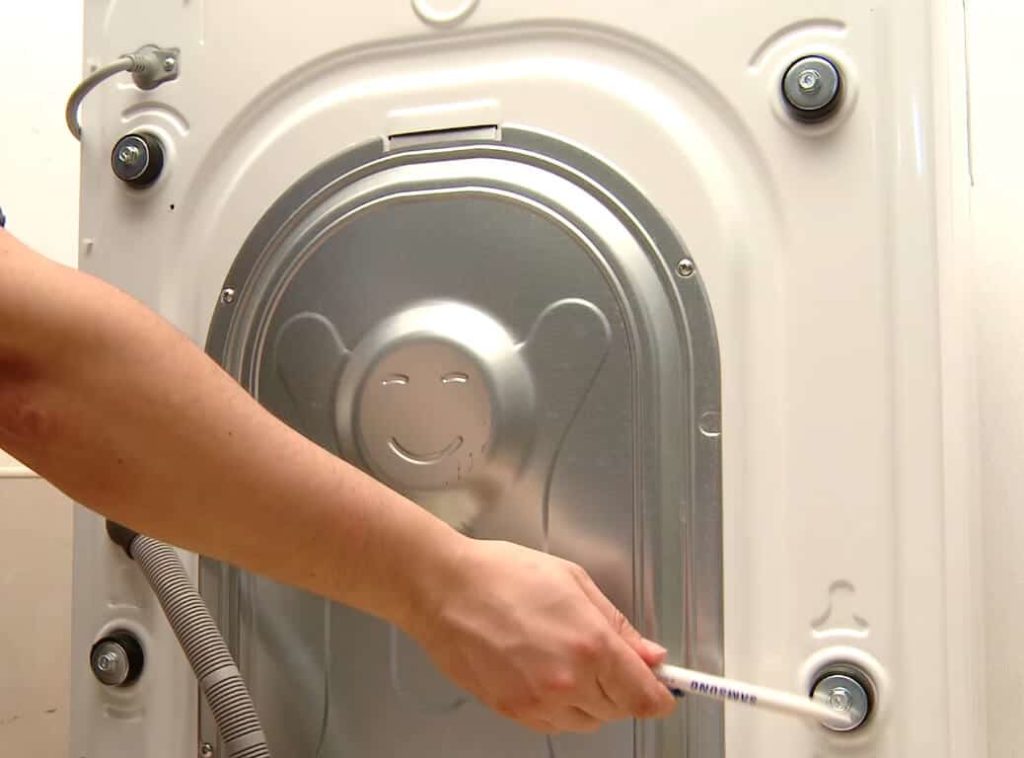
- Plug the holes left by the bolts with special plugs, which should be included in the kit.
- Open the hatch door and check that there are no foreign objects in the machine drum.
- Open the powder tray and check that there is nothing inside.
- Make sure the debris filter located at the bottom of the housing is screwed in all the way.
There's a small hatch on the front of your Bosch washing machine, right at the bottom. Open it and you'll find the dust filter.
At this point, you should already have a place for the washing machine ready. The base should be level and sturdy.The connection points to communications must be located no further than 1.5 m from the machine body. There should be no furniture or other objects in front of the washing machine that could interfere with opening and closing the door. Prepare an adjustable wrench, FUM tape, pliers, a spirit level, and automotive sealant, and begin connecting the Bosch washing machine yourself.
Connection to water supply and sewerage
 The washing machine body must be installed strictly level. Tighten the machine's feet and check the machine's position with a spirit level until it is perfectly level. Once this is achieved, proceed to connecting the machine to the water supply and sewer system.
When installing the plumbing for your Bosch washing machine, you should have installed a tee specifically for connecting the inlet hose. The tee has a ¾-inch outlet. First, screw the free end of the Aquastop hose to the free outlet of the tee. Don't open the faucet yet. There's a plastic screw at the end of the inlet hose. Tighten it firmly, but don't overtighten. Don't use an adjustable wrench, as this could strip the threads.
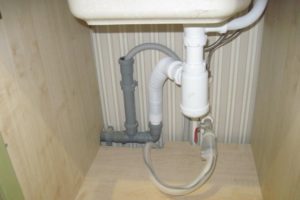
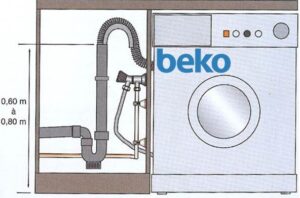
In our example, we'll use the following connection diagram: tee tap – siphon nipple – outlet. Other connection options for a Bosch washing machine may be available.
After ensuring the inlet hose is securely connected, remove the plug from the trap fitting and attach the free end of the drain hose to the fitting. To prevent the hose from slipping off during use, apply a small amount of automotive sealant to the fitting. You can also secure the connection with a clamp. Some DIYers create a direct drain by dropping the end of the drain hose into the bathtub or sink. This solution is perfectly acceptable, although highly unsightly.
Organization of power supply and testing
When planning the installation of your "home assistant" in advance, you should doan outlet for a washing machine in the bathroom Or in the kitchen, depending on where the unit will be installed. A special outlet with a moisture-proof housing is required. The outlet installed in the bathroom should be of particularly high quality. The electrical cable should have three wires: phase, neutral, and ground. Be sure to ground the outlet, this is for your safety. The phase and neutral must be connected first to the circuit breaker and residual current circuit breaker, and only then to the electrical panel.
Do not connect the washing machine to extension cords or multiple outlets. The machine is a major consumer of electricity, and a poor connection can cause a fire. Let's check the machine. Plug the power cord into the outlet. Open the multiple outlet and run a test wash on a quick cycle. Do the first run without detergent or laundry. If the program completes correctly, everything is fine, and you can put your "home helper" into full operation.
As we can see, connecting a Bosch washing machine isn't all that difficult, provided all the utilities have been prepared in advance. If you attempt the connection without proper preparation, you'll likely fail. Bottom line: prepare the area properly, following the instructions, and everything will go quickly and smoothly!
Interesting:

Readers' comments
Headings
Washing machine repair




For buyers




For users


Dishwasher




Add a comment