
How does an automatic washing machine work?
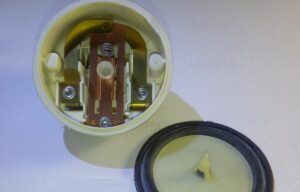
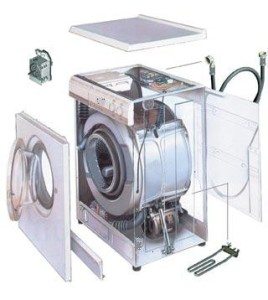 A washing machine begins by filling with water. This is done through an inlet hose connected to the water supply. A pressure switch, also known as a level sensor or level relay, ensures that the required amount of water is drawn in. Incidentally, smart machines can detect how much laundry is in the drum and fill it with exactly the amount of water needed to wash that amount.
Water movement during washing
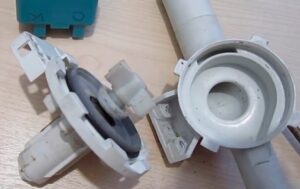
During the washing process, water not only fills but also drains when needed. This is accomplished by the drain pump. It's located at the bottom of the washing machine. To prevent foreign objects from getting inside the pump, a filter is installed in front of it. It's designed to protect the pump from small objects, such as:
- Coins,
- Paper clips,
- Buttons,
- Pins,
- And so on.
These items often end up inside the washing machine along with the laundry.
It is advisable to clean the drain pump filter at least once every six months. It's quite simple. The filter is located at the bottom of the washing machine, on the front. To access it, remove the bottom panel, then unscrew the filter. Clean it and replace it. While you're removing the filter, water will leak out of the machine, so be sure to have a rag or small container ready.
To demonstrate the entire filter cleaning process, we've added a video. Watch it:
The drain pump can also assist in the washing process in other ways. For example, it can circulate water upwards in the drum or towards the dispenser. Some models use a separate pump for this purpose.
The movement of water in the lower part of the washing machine's drum dissolves any remaining detergent. This helps improve wash results and prevents some of the detergent from being dumped down the drain.
An additional amount of detergent and water solution is released onto the laundry from the fins located on the inside of the drum. These fins exert a mechanical force on the laundry, lifting and dropping it as the drum rotates. In many washing machine models, the fins also spray additional solution onto the laundry.
Once the required amount of water has been drawn into the drum, the heating element is activated. It is located under the drum of the machine. In some models, it is located at the front, in others at the back. The heating temperature is controlled by a special device that heats the water to the desired temperature, as set in the wash program.
Heating water and rotating the washing machine drum
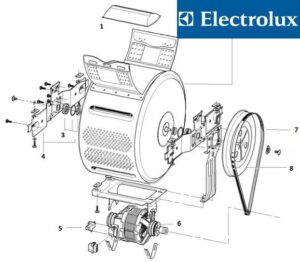
 A normal wash requires warm water, detergent, and mechanical action. A heating element heats the water, detergent is used, and the mechanical action is achieved by rotating the drum. The washing machine's motor, located at the bottom of the machine under the drum, is responsible for the rotation of the drum.
A pulley is mounted on the rear of the drum. A drive belt connects it to the motor. The motor turns the belt, which in turn causes the drum inside the drum to rotate. This type of machine design is considered standard and perfectly acceptable. However, it does have its drawbacks. The constant contact of the belt with moving parts creates friction, which eventually wears out. This design can also cause unnecessary vibrations in the machine.
That's why some models of washing machines do not use a belt drive. It was replaced by a direct drive (DD). LG (LG) is actively producing similar washing machines. In them, the motor is mounted directly to the drum. This design reduces the energy required for rotation, reduces vibration, and saves space inside the machine.
The motor used is less noisy and, by minimizing the required space, allows for more compact machines.
Spinning and washing
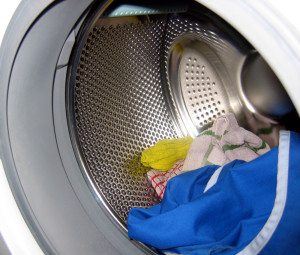 During the wash cycle, the drum rotates slowly, sometimes in one direction, sometimes in the other. During the spin cycle, the drum speed reaches its maximum. A high number of revolutions is necessary to ensure the laundry is as dry as possible. Due to centrifugal force, water from the spin-dried items flows into small holes in the drum. It is then discharged by the drain pump.
The spin speed increases gradually. This ensures that the laundry is evenly distributed across the drum's interior, preventing unnecessary vibrations.
If the balance inside the drum is suddenly disrupted, the rotation speed slows down again and the laundry is redistributed inside the drum. The washing machine then picks up speed again and resumes spinning.
Control module
The control module is responsible for monitoring all processes during washing programs. It decides when to turn the heating element on or off. It turns on the drain pump when water needs to be removed from the drum. It decides when and at what speed the drum should spin. It also monitors the readings of various sensors provided during the wash cycle. No modern washing machine can function without such a control system.
The control module is one of the most expensive parts of the washing machine. Its high price is due to its highly complex design. We also do not recommend attempting to replace this part yourself if it is damaged. In this case, it's best to contact a professional. They will select the appropriate part and replace the faulty one.
Tank and drum
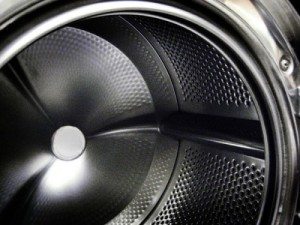 The washing machine drum is located inside the tub. This is where we load our dirty laundry. Water and detergent are poured into the tub. Small holes allow the water and detergent solution to come into contact with the laundry in the tub.
The drum is made of stainless steel. The tank can be either stainless steel or plastic. It's usually made in two pieces. There are also tanks that can't be disassembled and are made of a single piece. Some craftsmen, if necessary, saw non-disassemblable tanks into two halves. Then, during reassembly, they join them together with bolts and waterproof sealant.
Plastic tanks are lighter and cheaper, but they also have their drawbacks. For example, they are more fragile than metal ones. Some washing machine models have tilted tanks, but they are usually positioned strictly horizontally.
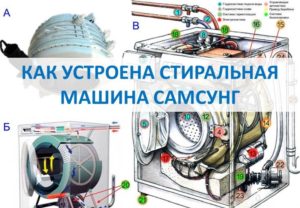
For those who prefer a visual demonstration of a washing machine's design, we've added a video. This video will show you not only the design of washing machines but also a brief history of them. Watch the video:
Interesting:

11 reader comments
Add a comment
Headings
Washing machine repair




For buyers




For users


Dishwasher




Is it possible to connect the machine if there is no water supply through the container?
Most likely, it's possible. Read the instructions. Or, better yet, consult a specialist. If you're seriously interested in washing machine mechanics, read some literature on the subject. You might even be able to do it yourself.
It's possible, but you need pressure like a water main. I solved this problem by installing a pump. As a result, my water flows through a 200-liter tank, through the pump, into the washing machine, and into the faucets, just like in an apartment.
Yes
Water leaks from the bottom of the powder container when pouring water.
Water is leaking from the powder container
Hello everyone, my name is Olya. I called a mechanic through a friend to fix my Beko dishwasher; the drum wasn't turning. The mechanic took a look, removed some motor, and then it was gone forever. Now I don't know what to do? I have another Indesit dishwasher. Could you please tell me if the motor can be transferred from one to the other?
The drain pump contacts are burnt, what should I do???
If the pump is working properly, clean the contacts and reconnect it.
Water is coming in, but the spin cycle switches to 4E, which means there's not enough water. What should I do?
Could you tell me what a plumb line or hanger is in a washing machine? Thanks in advance 🙂