
How to turn on a washing machine and start a wash cycle
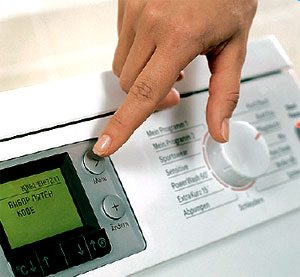 If you're wondering, "How do I turn on my washing machine?" it's likely you've never tried to start a wash cycle yourself. Perhaps you just bought this large appliance and want to do some laundry. Or perhaps you've had the washing machine for a while, but someone else has been doing the laundry for you. In this case, you simply want to understand what you need to press to start the machine. We'll discuss both options here, starting with the former.
Installing the machine
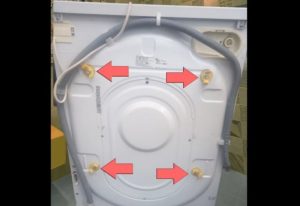
To connect the washing machine, you'll need to unpack it. Remove the packaging. Next, unscrew the shipping bolts. They're located on the back of the machine. Once you remove them, you'll be left with holes. Plastic plugs are included specifically for these holes; insert them into the holes.
After this, install the machine in the pre-selected location. By the way, It is better to choose a place for the machine with a flat and hard floor. There's no need to place anything underneath the washing machine (except for an anti-vibration mat, which is fine). Then, adjust the height of the machine's feet so that it's as stable as possible. The feet are located at the edges of the bottom of the machine. Their height can be adjusted by twisting them.
It's also a good idea to ensure the machine is level. To ensure this, we'll need to use a spirit level.
Connecting a washing machine
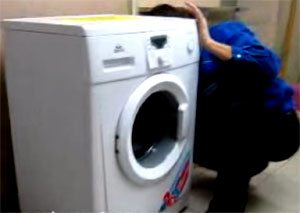 After this, we'll connect the machine to the water, sewer, and electricity. If you're installing the washing machine in its current location, that is, if you've previously installed a machine, all the necessary connections are already in place. A branch pipe with a faucet is already installed in the cold water pipe for the machine's inlet, and a drain point is already prepared. There's also a connection point for the electrical cable.
If you don't have anything like this prepared, you'll have to do some work. You'll need to install a separate outlet to connect the wire. It's highly recommended to equip it with a separate circuit breaker and RCD (residual current device). This will protect you from potential problems, such as a short circuit in the washing machine.
You can drain the washing machine into a sink or bathtub using the special part included with the washing machine. It resembles a plastic hook. Attach the end of the drain pipe to this "hook." Then, attach the resulting structure to the sink or bathtub. You can also use a pre-purchased siphon to connect to the sewer system. This allows you to connect directly to the sewer pipe.
To connect to the cold water supply, you need to install a tap and a special branch from the cold water line. Be sure to use an additional valve when connecting to the water supply. This will allow you to shut off the water if necessary.
You can watch the entire installation process, connecting the washing machine, and removing the transport bolts in the video:
Starting the wash
Here we finally get to the point of turning on the washing machine. Make sure the machine is connected to electricity and the tap is not blocking the water supply. Next, place the dirty laundry in the machine drum. Close the door tightly. Pour detergent into the dispenser (the plastic pull-out container). The amount of detergent should not exceed 100 grams. Often, a smaller amount is sufficient. Now it's time to start the wash. To do this, let's look at the most common wash start options on different control panels:
- Standard panel. Select the desired mode. This depends on the type of items you're washing. Cotton, wool, silk, and other fabrics have their own specific programs that take into account the washing temperature and other characteristics. Next, set the spin speed and start the wash by pressing the "Start" button.
- Some machines require you to manually set the washing temperature and speed. Others allow you to simply select a program and press the "Start" button, and the remaining settings will be used automatically. The advantage of the latter option is its simplicity. The advantage of the former is that you can fine-tune all washing parameters.
Interesting:


Readers' comments
Headings
Washing machine repair




For buyers




For users


Dishwasher




Add a comment