How to choose and install a power outlet for a washing machine
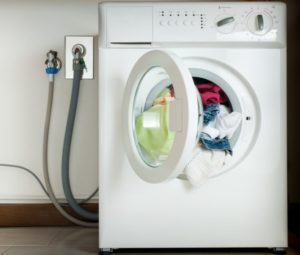
When installing a washing machine, it's crucial to connect it correctly. It must be connected to water, sewer, and electricity. A high-quality connection will ensure your appliance lasts a long time and performs efficiently. This article will discuss the best way to connect your washing machine.
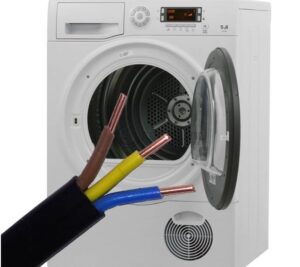
In order to do this efficiently, it is necessary to use special circuit breakers that automatically switch off when short circuits occur. It is also important to select high-quality wiring and use a special socket.
Washing machine power
First, we need to determine the power our washing machine uses. If you plan to connect any other electrical appliances to this outlet that will operate in parallel with the washing machine, these must also be taken into account. We'll find the power ratings of all electrical consumers on this outlet group, then add them together to get the total power. Based on this, we need to decide what wire size is appropriate for our group and which circuit breaker to install.
If you don't want to do all the calculations yourself and figure out all these things, you can simply visit a specialized store and ask a consultant. Reputable stores have highly qualified staff. If you're lucky enough to find one, they'll answer all your questions and help you choose the right wires, sockets, circuit breakers, and more.
You can also call a specialized online store. They usually deliver goods directly to your home. In this case, you won't even have to go anywhere.
Let's start calculating
A typical washing machine uses around 2,000-3,000 watts. If a water heater is connected to the same outlet, which also requires 2,000-3,000 watts. Additionally, a hair dryer is periodically used, which requires 1,500-2,000 watts. The total power consumption will exceed 6 kW. Such an abundance of electrical appliances can lead to excessive heating of standard wires. Standard wires used for wiring are copper and have a cross-section of 2.5 square mm. Therefore, we will need a wire with a larger cross-section.
By the way, the best way to maximize the safety of the washing machine's wiring is to install a separate, dedicated circuit breaker (RCD). A grounded mains cable is also ideal. You can install a separate circuit breaker in the electrical panel. Even better, install a 20-amp circuit breaker and residual-current device (RCD).
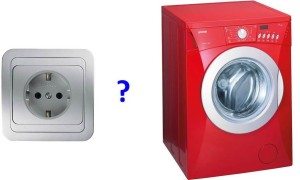
What kind of socket is suitable for a washing machine?
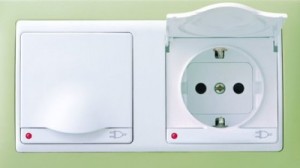
The outlet for our washing machine must be water-resistant. When purchasing one, ask for one with the highest level of moisture protection. For example, a product with an IP55 rating would be suitable.
Typically, these outlets include a special protective cover and curtains. They have additional sealing material to prevent water penetration. You can also find outlets with a built-in RCD (residual current device).
When choosing a location for the outlet, it's best to choose one that's away from the sink, bathtub, faucets, and water pipes. According to safety regulations, these items should be no closer than 60 centimeters from the outlet. Also, avoid placing the outlet on walls that are prone to condensation. The outlet location should be at least fifteen centimeters higher than the washing machine itself. This is the safest option.

 When installing a washing machine, it's crucial to connect it correctly. It must be connected to water, sewer, and electricity. A high-quality connection will ensure your appliance lasts a long time and performs efficiently. This article will discuss the best way to connect your washing machine.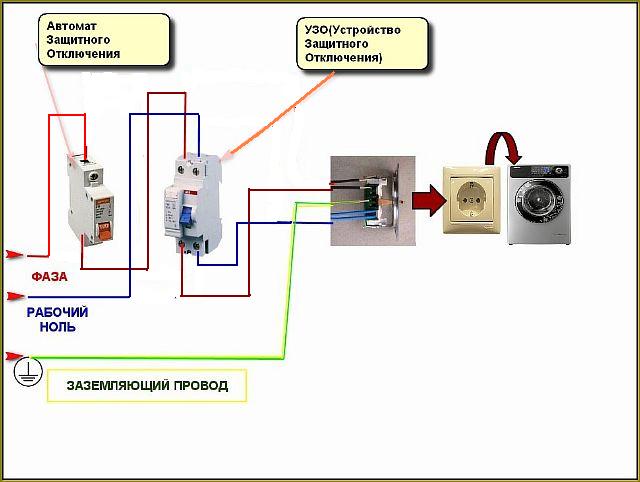














Add a comment