
How to choose and install a dishwasher trap
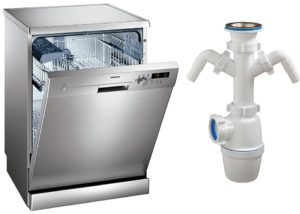 Many experts say the best way to connect a dishwasher to the sewer is through a trap with a dishwasher outlet. We don't intend to refute this assertion; in fact, this article is intended to encourage people to use this connection method when the sink is nearby. But let's not get ahead of ourselves; let's address each issue in turn.
A question of choice
When choosing the right drain trap for your dishwasher or washing machine, you should first get a rough idea of the different types of drain traps available. This will make it easier to navigate and make the right choice. This article isn't about sink drain trap types, so we'll limit ourselves to a brief description.
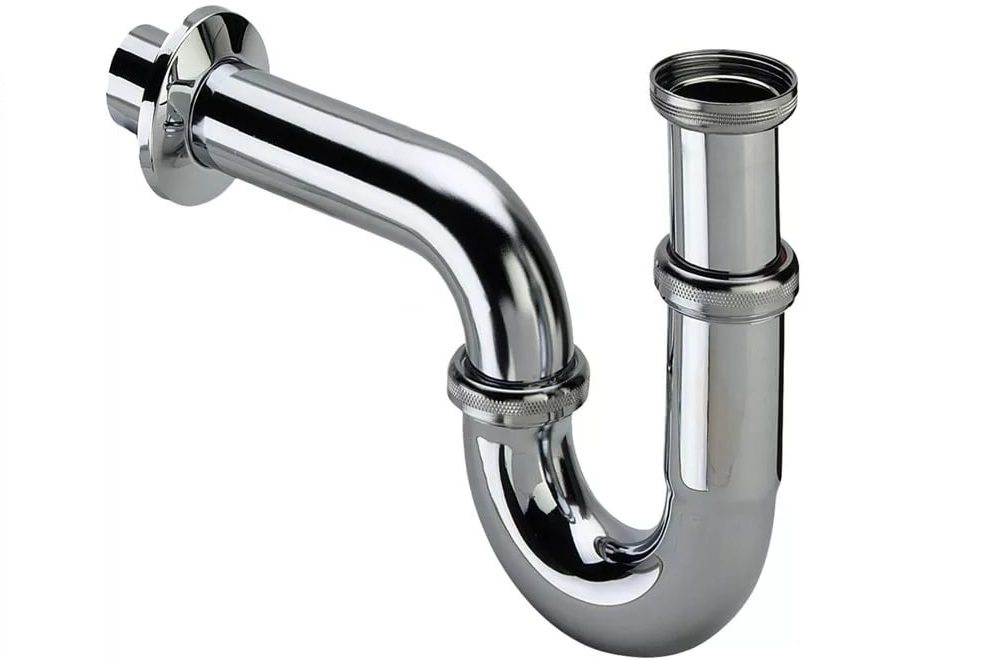
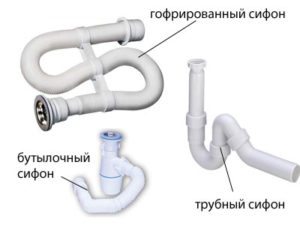
- A pipe trap. This is essentially a curved pipe that runs from the sink drain to the sewer pipe. This type of trap won't work for us because it's impossible to connect the dishwasher drain hose to it.
- Bottle trap. Unlike a pipe trap, a bottle trap has a more complex design, is made of plastic, and is very commonly used. It is potentially suitable for connecting a dishwasher, as it has one or more side outlets for connecting a drain hose.
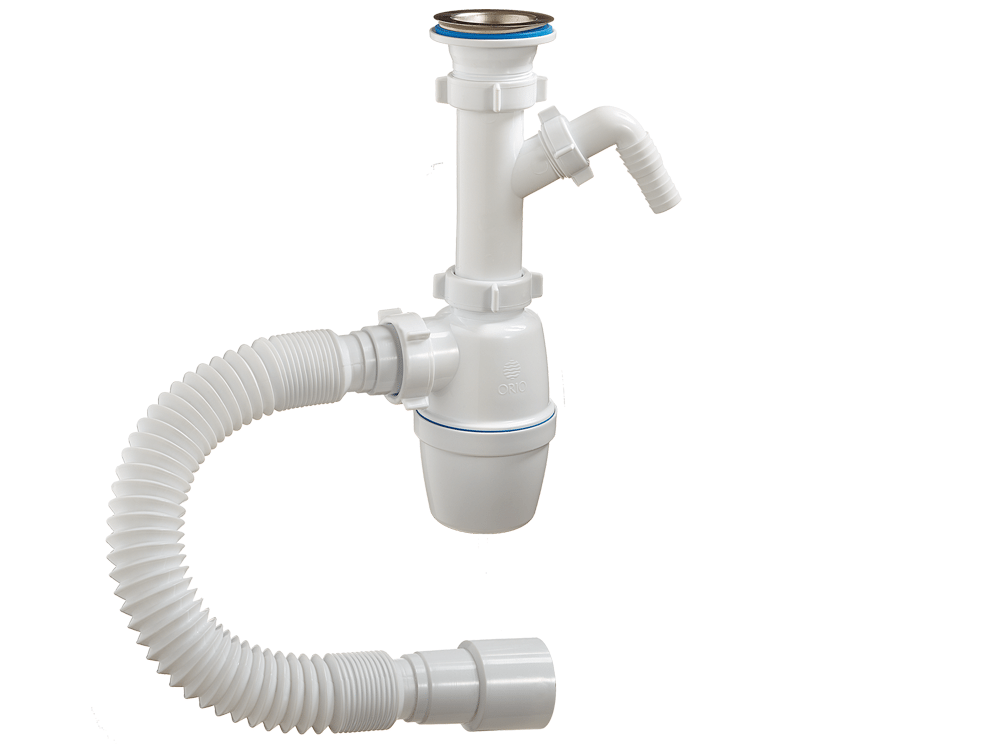
The bottle trap has a settling tank at the bottom that can be easily unscrewed. If the trap becomes clogged with debris, this settling tank can be unscrewed by placing a bucket underneath to clear the blockage.
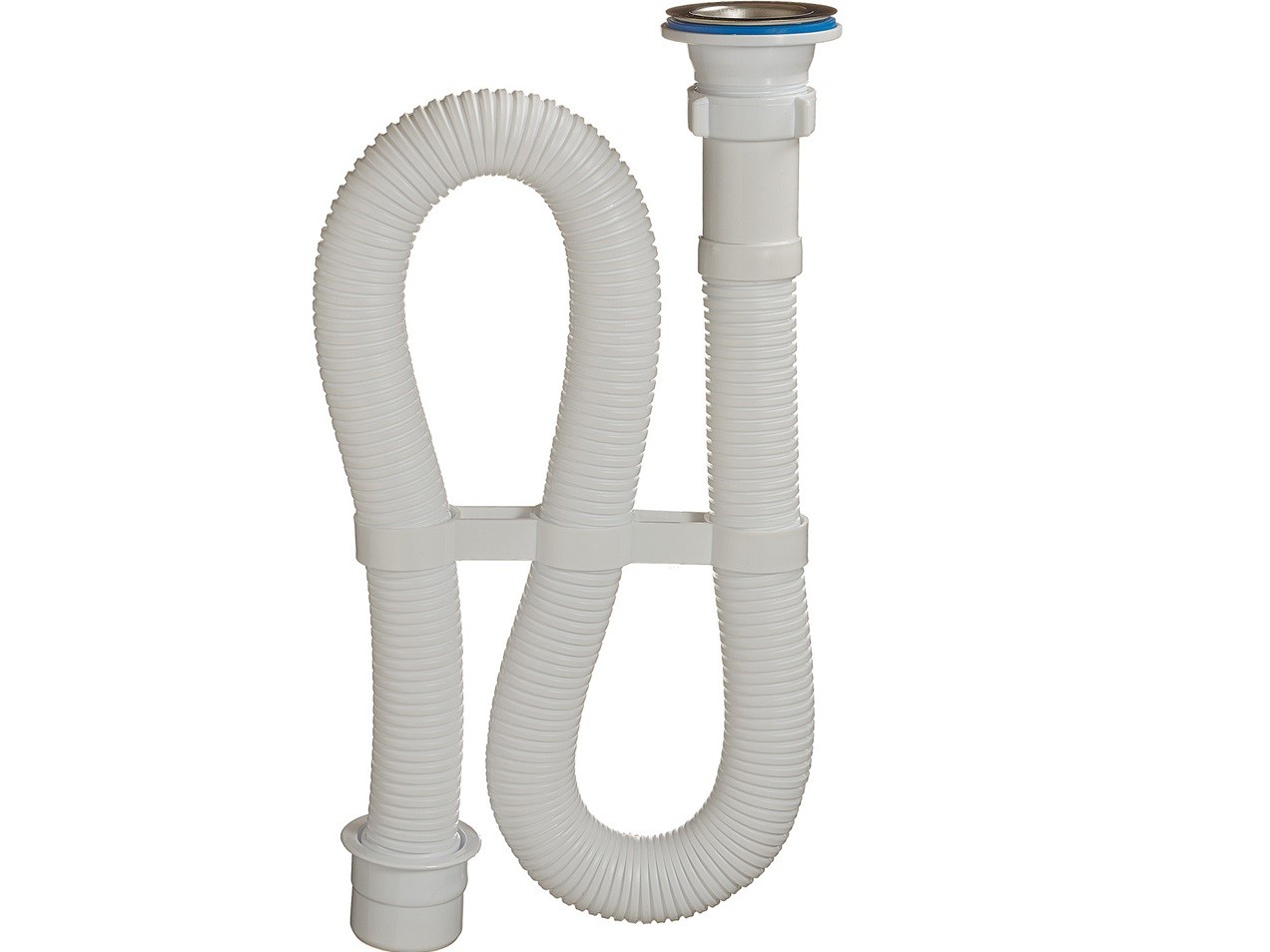
- Corrugated trap. The cheapest and easiest to install trap. It's essentially a flexible plastic tube, one end of which is installed on the sink drain, and the other is connected to the sewer pipe. A simple corrugated siphon won't work for us, but there are modified versions with one or more side outlets that can be used for our purposes.
- A concealed trap. The most expensive trap, it's only practical when the sink is installed without a sink, which is rare, making them extremely rare in kitchens. The body of this trap is made of metal, and most of it is hidden in the wall, hence the name. This trap is only suitable for connecting a dishwasher if it has at least one side outlet.
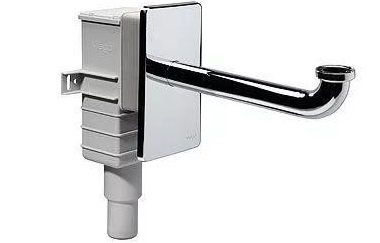
To summarize our discussion, any trap equipped with side outlets that can accommodate a drain hose is potentially suitable for connecting a dishwasher. However, when choosing such a trap, keep in mind that if your kitchen will house a washing machine in addition to a dishwasher, the trap must have two outlets.
A dishwasher drain trap with a check valve can also be installed. A dishwasher drain trap with a specially designed check valve protects the appliance from waste. What is this?
Imagine a situation where a deep, dense clog develops in a sewer pipe. In this case, waste quickly fills the pipe to the point of clogging, and with nowhere else to go, it begins to flow back into the dishwasher, washing machine, or simply the sink. If the drain trap is equipped with a check valve, even under pressure, waste will never flow back into the dishwasher.
Installation Features
So, we've selected a dishwasher drain trap, now it's time to install it. But first, remove the old one and check the new one for completeness. If any parts are missing, contact the seller immediately.
When removing the old trap, place a bucket or basin underneath it to prevent the accumulated waste from spilling onto the floor. Removing the old trap and installing a new one usually doesn't require any tools, but we'll grab a small adjustable wrench, a screwdriver, sealant, and a roll of electrical tape just in case. Here's what to do.
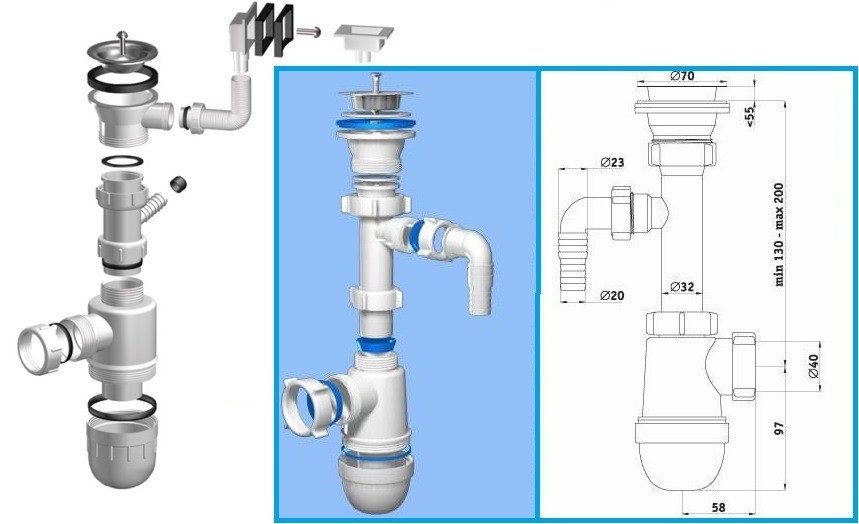
- We put a rubber gasket on the sewer pipe, and then an adapter.
- We put a branch pipe for the sewer pipe (usually made of plastic) on the adapter and carefully seal the connection.
- We take the rubber gasket, strainer, screw, and nut from the kit, and then begin to arrange the drain hole. Place the rubber gasket around the sink opening, place the strainer on top, then insert the screw into the center hole, extending downward under the sink.
- Take the nut. Hold the screw head against the inside of the sink with one hand, then thread the screw from underneath with the other hand. Then tighten it with an adjustable wrench, but not too tightly so as not to strip it.
- The nut we screwed on is unusual. There is a thread on the bottom onto which we will screw the siphon body.
- Next, we need to insert the hose into the sewer pipe outlet we arranged earlier and secure it there.
You can simply tape the connection between the trap tube and the drain outlet with electrical tape; it will be quite secure. While it may not look very aesthetically pleasing, it's not visible under the sink anyway.
- We check all the connections and then run water into the sink to make sure that the siphon is not leaking anywhere.
Connecting the dishwasher
The siphon is ready, all that's left is to connect the dishwasher. This process is quite simple, but first, you need to understand a few rules that will help you avoid mistakes and their consequences.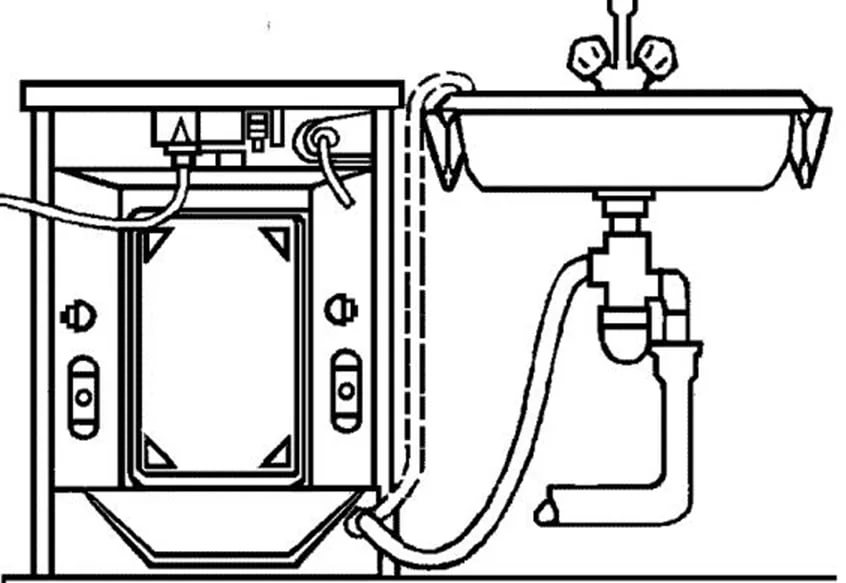
- It's not recommended to locate the drain trap more than 1.5 meters from the dishwasher. This is because the dishwasher pump is a relatively weak component. The further the machine is from the drain connection, the greater the load on the pump, which significantly impacts its service life.
- When attaching the drain hose to the siphon outlet, secure it with a clamp. This will prevent the hose from coming loose and you from flooding.
- The drain hose connection to the siphon should not be located higher than 80 cm from the floor. Failure to comply with this requirement may result in a "siphon effect."
- The dishwasher drain hose should not be run directly from the dishwasher to the trap. Bend the hose to allow some water to remain at the bend. This will prevent foul odors from the sewer system from entering the dishwasher, although this precaution is less necessary if the dishwasher is connected to a trap.
If all the above requirements are met, you can remove the plug from the siphon outlet pipe and put a drain hose with a clamp on it. The clamp should be tightened tightly to ensure a tight and airtight connection.
That's basically it. If you don't have enough information about connecting your dishwasher to the sewer via a siphon, but need to find out,How to install a dishwasher yourself From A to Z, please read the article with the corresponding title, which was previously published on our website. We bid you farewell and hope this information will be of practical use. Good luck!
Interesting:
Readers' comments
Headings
Washing machine repair




For buyers




For users


Dishwasher




Add a comment