
How to level a washing machine
 Installing a washing machine involves not only properly connecting it to the utilities but also leveling it relative to the floor. Few people pay attention to this issue, thinking the washing machine will work just fine. In fact, it makes sense, and we'll explore why leveling a washing machine is necessary and how to do it correctly.
Alignment instructions
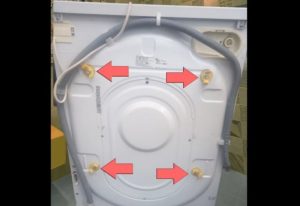
Having chosen the place for installation, unscrew transport bolts Once the washing machine is installed, you can begin its installation. First, connect the appliance to the utilities, as all the hoses are connected from the back and will be difficult to access if the appliance is pushed against the wall. Once the appliance is connected and in place, you can begin leveling it.
Before installation, check the levelness of the floor itself. It shouldn't have any significant unevenness, protrusions, or holes. If any, leveling the washing machine will be very difficult. Level the floor first.
To level the washing machine, you just need to adjust the height of the feet. All washing machines have these feet. Some models only adjust two feet, while others allow all four. Follow these steps:
- Using the wrench that comes with the washing machine, you need to loosen the lock nuts on the legs.
- Screw in all the feet until they stop. If you need the machine to stand higher, then unscrew them to the desired height and visually achieve a level position.
If the machine is leaning to one side, you need to unscrew the leg on the side where the machine is leaning.
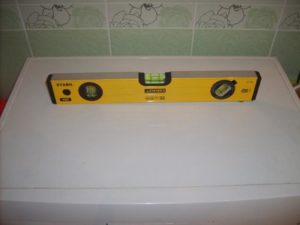
- Now place a spirit level on the top cover and check the air bubble to make sure it's centered. If the level is off, the front legs need to be adjusted.
- Next, we move the level perpendicular to the initial position, and align the machine horizontally by tightening the other pair of legs.
- Don't forget to check the alignment of the side wall with a level. To do this, place the level against the front or side wall, as shown in the figure.
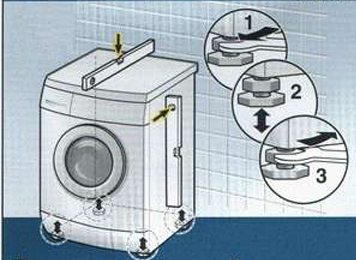
Continue adjusting the feet until the washing machine stands firmly and the level shows that it is in a strictly horizontal position.
When finishing, be sure to tighten the locknuts on the feet to ensure they stay level. Sometimes, to achieve a stable position, you may need to slightly move the machine to the right or left, forward or backward, rather than tighten the feet. In short, installing the washing machine perfectly requires patience; it's not always easy. This is why experts recommend installing the washing machine on tiled or cement-based floors.
However, even a properly installed washing machine can become misaligned over time. What causes this? It's simple: firstly, the machine can shift due to constant vibrations, and secondly, the ground on which the house is built can shift, causing the building's level to shift.
Why do this?
A logical question arises: why level the machine at all? Despite various factors, it's essential. After all, an incorrectly installed machine will vibrate excessively and sometimes even bounce. Excessive vibration of the drum and the entire washing machine leads to faster wear of parts, and the equipment breaks down.
The most common problems caused by vibration are:
- the plastic tank is cracking;
- the tiles on the wall in the room are cracking due to the impact of the vibrating machine;
- the car "moves out" from its place;
- the bearings wear out.
To ensure the washing machine is installed correctly and does not bounce, some users, based on their experience, recommend using rubber feet. These are attached to the floor and reduce vibration.

So, you can level your washing machine yourself. If you don't want to do this or don't have the tools, call a professional to prevent it from jumping around later. Just don't leave the machine in an unstable position!
Interesting:



Readers' comments
Headings
Washing machine repair




For buyers




For users


Dishwasher




Add a comment