
How to load dishes into a dishwasher
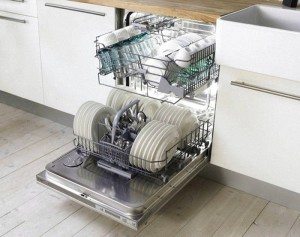 Properly loading the dishwasher is one of the most important factors for a successful wash. At first, loading may take at least 20 minutes to carefully and thoughtfully arrange everything. But with time, everything will fall into place, and you'll be able to complete the process in less than 10 minutes. We suggest you learn how to load dishes and watch the video.
How to prepare dishes
Before you start putting dishes in the dishwasher, remove all uneaten food debris. The better you do this, the better the dishes will be washed and the less likely the dishwasher's drainage system will clog. You can clean the dishes with a cloth, sponge, or rubber spatula. It's especially important to remove fruit pits, beans, and corn.
Should you rinse dishes before loading them into the dishwasher? Of course, rinsing them under water will clean them better. This begs the question: what's the point of using a dishwasher if you have to wet your hands? If you're piling up dishes, pre-rinsing is essential; dried-on food residue is difficult to remove. If you're used to washing dishes immediately after meals, you can easily just place them in the dishwasher without rinsing.
Please note: Some dishwasher models have a pre-rinse mode, which is a big plus if you have a lot of dishes piling up throughout the day.
We place glasses, cups, and mugs
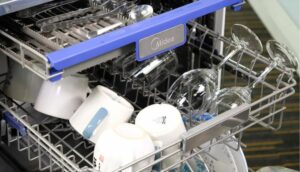
Now let's look at the different dishes one by one and how to arrange them correctly. Let's start with glasses, mugs, and cups. Most dishwashers use the top rack for these items. Glasses, mugs and cups should be placed upside down so that water washes their inner surface and then flows down. Horizontal placement is not acceptable, as water will hardly get inside.
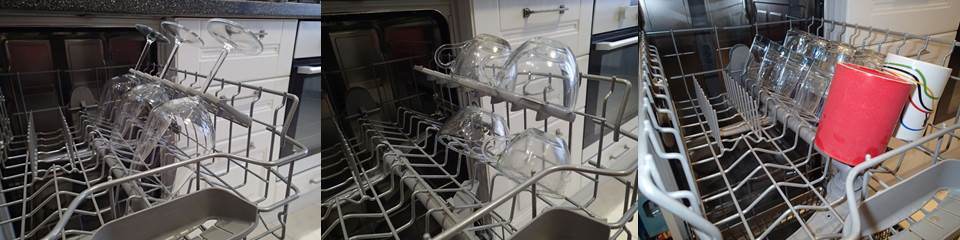
Wine glasses and goblets are also secured with the stem up in a special holder. The glasses should not touch each other to prevent breakage during washing. A plastic holder can be used not only for wine glasses but also for the efficient placement of small tea or coffee cups.
Important! All items must be securely fastened, otherwise something may tip over under the running water. Nothing should move when the top tray is pushed in.
We lay out various plates
Depending on the size of the plates and their intended use, they are placed on either the upper or lower rack. The upper rack, if the dishwasher's capacity allows, can accommodate:
- small kosushki;
- bowls;
- ice-cream bowls;
- saucers;
- bowls;
- sauce boats;
- salt shakers;
- dessert plates.
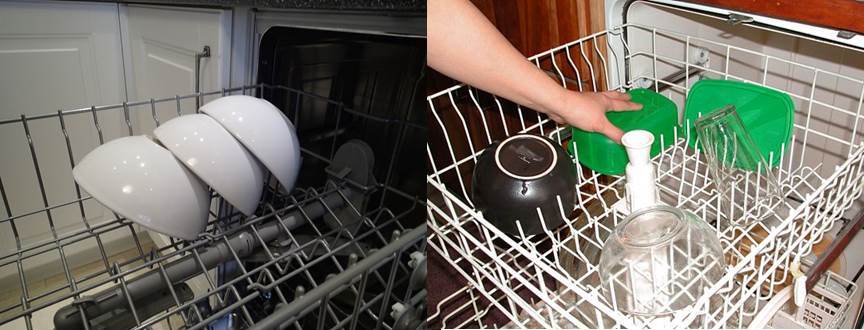
If necessary, and when heating water to a low temperature, you can place plastic utensils on the top shelf, away from the heating element, to prevent them from becoming deformed.
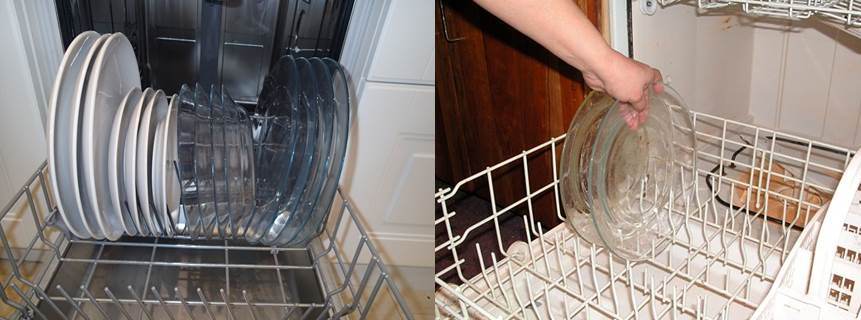
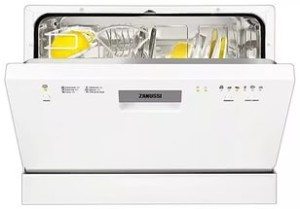
Place large and medium-sized plates, as well as soup bowls, on the lower rack. It's best to place larger plates at the edges and smaller plates in the center. This will ensure better water access to the upper rack. Also, place the plates facing the center of the dishwasher to prevent them from touching each other. The larger the gap between the plates, the better they are washed, so if your dishwasher allows, place the plates less frequently. Overload mini dishwasher There's no point, the dishes will remain dirty and you'll be disappointed with your appliances.
How to stack cutlery correctly
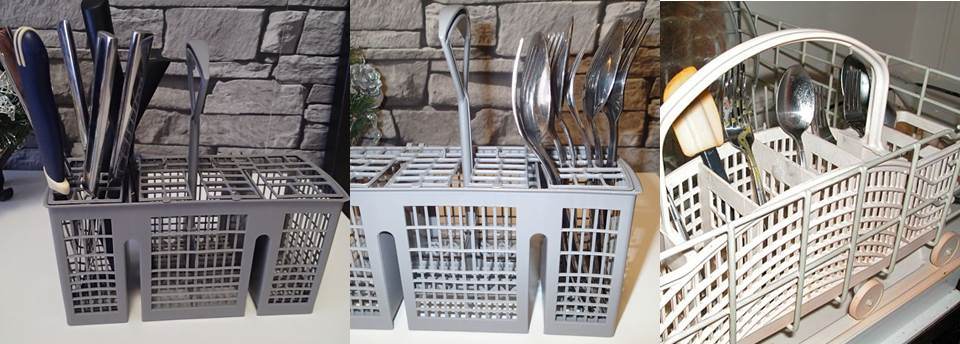
The dishwasher has a special basket for cutlery, which includes large and small spoons, forks, and serving knives. Spoons and forks should be arranged loosely, preferably alternately. Stacking spoons too tightly will prevent them from cleaning properly. Knives should be placed with the blades facing down.
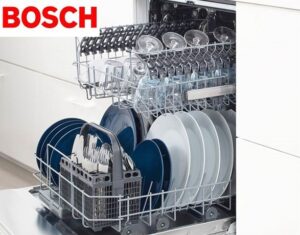
New dishwasher models, such as those from Bosch, feature a top-most cutlery tray. The spoons are arranged horizontally in this tray. This not only ensures high-quality dishwashing but also saves space inside the dishwasher. Furthermore, horizontal placement of spoons, forks, and knives is safer.
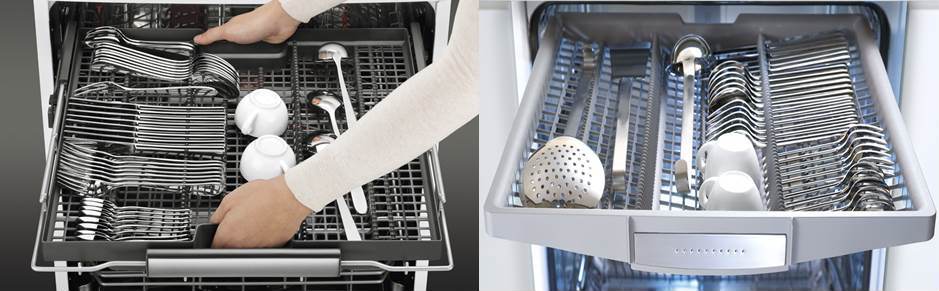
Important! Sharp and ceramic knives are not recommended for dishwasher use, as they may dull the blade. Knives with wooden handles should not be washed, as prolonged exposure to water will cause the wood to swell.
How to arrange pots and pans
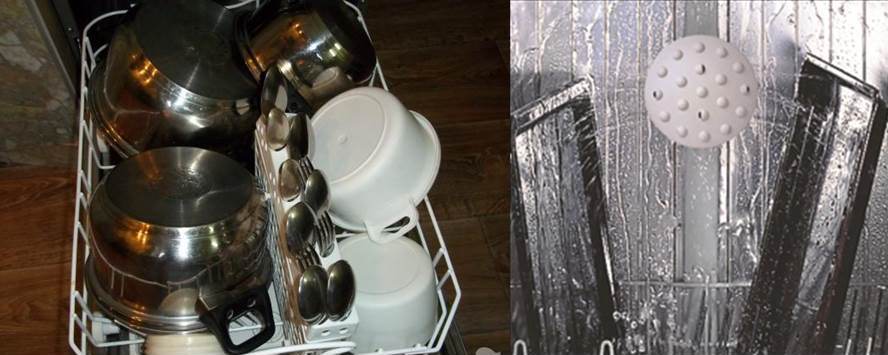
Large cookware such as frying pans, saucepans, sauté pans, baking sheets, etc. should be placed in the bottom container. It's best to wash these items separately from glass, porcelain, and crystal, using a more intensive cycle and high temperature.
So, frying pans and baking sheets should be placed on their sides, and pots upside down or at an angle. This is the only way to ensure maximum water access to all dishes in the dishwasher. If you place pans upside down, they will block access to the top rack.
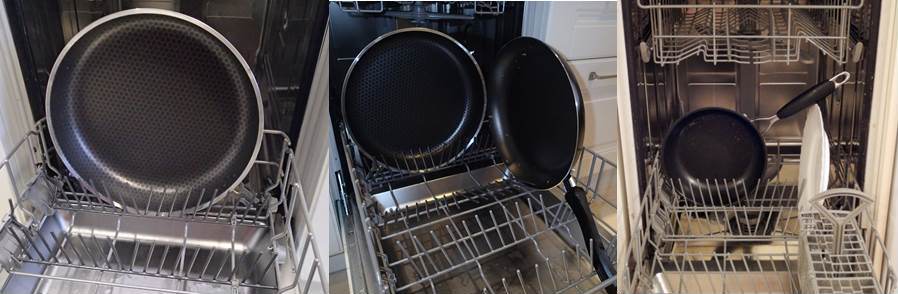
Important! Some pans and other Teflon-coated cookware are dishwasher-safe by their manufacturer, so please be careful.
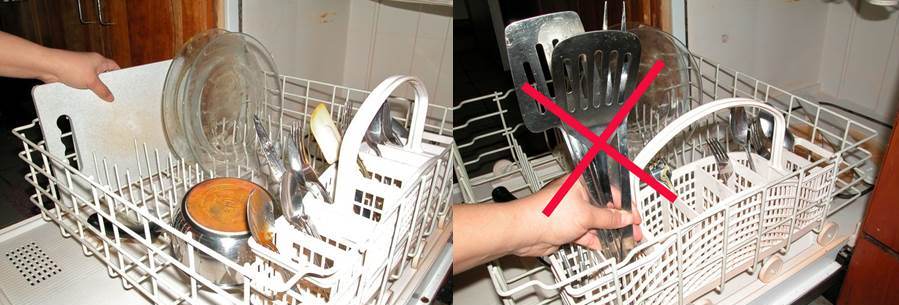
If the handle is removable from the frying pan, be sure to remove it. Place the frying pan and handle so that it doesn't touch the dishwasher walls. If you arrange the pans as shown in the photo below, access to the top rack will be limited, so we don't recommend placing anything in it. In this case, you can use the "Half Load" function, which will save not only water but also energy. It is best to place baking sheets sideways along the edges of the lower tray of the dishwasher, even if there is no special attachment; the water supply from the lower spray arm will be sufficient.
Is it possible to wash kitchen utensils in the dishwasher?
Kitchen utensils, including cutting boards, ladles, slotted spoons, and spatulas, are dishwasher safe, provided they are not made of wood or, preferably, plastic. Plastic spatulas can be placed in the topmost dish rack, while cutting boards can be placed in the side compartments of the lower or upper rack, depending on the size of the board. However, if possible, it's best to hand-wash the boards.
Ladles and spatulas should be placed horizontally only, even if there is no special compartment for them, there is enough space for them in the upper compartment.
Tips for loading a dishwasher
When loading dishes into a dishwasher according to all the rules, the question arises as to how many dishes can be washed in one cycle. Manufacturers specify the capacity in terms of place settings in their instructions. Small dishwashers hold up to 6 place settings, slimline dishwashers up to 11, and full-size dishwashers up to 17 place settings.
However, sets may vary not by the number of plates, but by the size of the plates. Furthermore, some families may only use soup and salad bowls and not saucers. Therefore, dishwasher loading may vary from family to family. We suggest following a few more rules for placing dishes in the dishwasher:
- Don't load the machine with dishes to the maximum; leaving more space between items will allow for better washing, and don't overload the machine;
- Before placing any item in the dishwasher, make sure it is dishwasher safe, especially plastic items and fragile glass and crystal glasses;
- place objects so that they do not touch each other;
- If possible, wash pans and pots separately from plates, mugs and glasses;
- Do not wash wooden items in the dishwasher;
- If you prefer to collect all the dishes in one day, it's better to place dirty plates directly in the washing machine; they won't dry out and will be easier to clean later.
So, arranging dishes correctly in the dishwasher compartments isn't that difficult. After a few wash cycles, you'll do it automatically. We hope this article helps you figure it out. You might also want to watch this interesting video.
Interesting:

Readers' comments
Headings
Washing machine repair




For buyers




For users


Dishwasher




Add a comment