
How to Replace a Bosch Dishwasher Safety Device
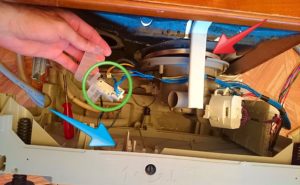 Any modern appliance is protected against electrical overloads. This protection is required by safety regulations; a household appliance without it will not receive a quality certificate. The safety device in a Bosch dishwasher can be found on the power board, which is housed in a special plastic housing at the base of the power cord. What exactly does this device do, how can you tell if it's broken, and how can you replace it? We'll find the answers to all these questions.
Purpose of the fuse
It's not hard to guess what the fuse in a Bosch dishwasher does. It serves to absorb the shock in the event of an electrical overload, thereby protecting the electrical components and, most importantly, the dishwasher's electronics. The fuse operates simply: at a certain point, it must break the circuit, de-energizing the appliance and interrupting any harmful voltage.
If there had been no fuse, the power surge would have fried the wiring in the dishwasher and burned out all the circuit boards.
The very first fuses were disposable. After a negative impact, the device would burn out and have to be replaced with a new one. Modern safety systems are capable of recovering after a device reboot. Simply disconnect the dishwasher completely and then turn it back on, and the fuse will work again. But that's under normal conditions. Sometimes the power boards and fuses are particularly vulnerable, requiring repair or even replacement. But first, you need to determine whether these components are the problem.
Where can I find it?
If a fuse blows, the Bosch dishwasher won't turn on at all. With these symptoms, if the outlet and power cord are intact, you won't think anything else is the problem. The only thing that could be the fuse is blown. Where is the fuse located? Finding it is easy.
- First, look at the place on the dishwasher body where the power cord goes.
- At the base of the cord there is probably a technological hatch with a plug that is inserted into the grooves or screwed on.
- We de-energize the machine, remove the plug and gain access to the desired part.
Once you reach the fuse, you can immediately inspect the wiring soldered to it and the semiconductor elements themselves. A blown fuse often has traces of soot, which is the most obvious sign that the part has outlived its usefulness. To clear your conscience, you can take out a multimeter and test the fuse and the wires connected to it. The device will give you a more accurate answer, but it will already be intuitive that you need to buy a new part. A new part will cost about $20, but you can find cheaper options.
How to change it yourself?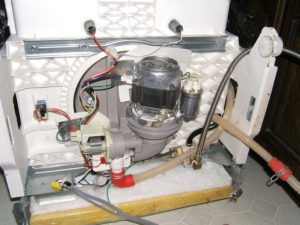
Replacing a fuse in a Bosch dishwasher is far from difficult. To remove the old part, take a photo of it to avoid mixing up the wires later. Next, disconnect all the wires connected to it. On some models, the wires are soldered, so you'll need to use a soldering iron. Soldered wires should not be torn off under any circumstances. Be careful, unsolder each wire, and then bend them to the side to keep them out of the way. Next, proceed as follows:
- unscrew the fastener holding the fuse in the retainer and remove the faulty part;
- Take a new fuse, make sure it is identical to the old one, then insert it into the retainer and secure it in place;
- After looking at the photo taken earlier, carefully connect all the wires and solder them if necessary;
- Plug the power cord into a power outlet and make sure that the control module is receiving power;
- Put the plug back in place and you can start the dishwasher.
If before or after repair The dishwasher is giving me electric shocks., then most likely the power cord is making contact with the dishwasher's body somewhere. This is extremely dangerous. You need to immediately turn off the power to your dishwasher to find the leak and fix it. If you're afraid to do it yourself, calling a professional is even better.
In conclusion, we'd like to point out that almost anyone can find and replace a power board with a fuse. The key is to follow safety precautions and proceed carefully. Reread the instructions in this publication and go for it. Good luck!
Interesting:



Readers' comments
Headings
Washing machine repair




For buyers




For users


Dishwasher




Add a comment