
Which washing machine is better: Siemens or Samsung?
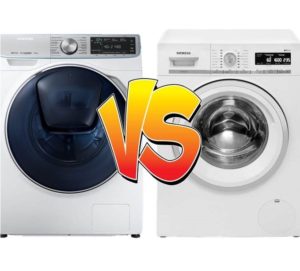 Every year, the quality of household appliances declines, as does trust in previously trusted brands. Previously highly reliable Siemens appliances are breaking down more frequently, and their main competitor, Samsung, isn't exactly known for its durability either. Before heading to the store for a new washing machine, it's worth exploring the market and identifying a few favorites. We suggest comparing two popular manufacturers and choosing between Siemens and Samsung. We'll compare the two brands based on functionality, reliability, design, and price.
Functionality and reliability
To determine which washing machine is best, it's worth comparing them across all important parameters. First, let's compare their features. Among the advantages of the German Siemens washing machine are its extra-gentle delicate wash cycle, its completely safe baby mode, and its fast program, which doesn't compromise cleaning performance due to speed. Other undeniable advantages include 100% leak protection and foam control.
Korean Samsung models also have their advantages. The most striking among them is the use of special balls in the design, which ensure perfect drum balance at any load level. Consumers also note the virtually unbreakable door, spacious hatch, and tightly fitting drum seal.
The range of programs for both brands is approximately the same.In terms of software, it is inferior to Siemens, since the "Germans" are equipped with rather primitive electronics. However, they offer consumers a wide range of front-loading machines, while Samsung sells a limited number of models.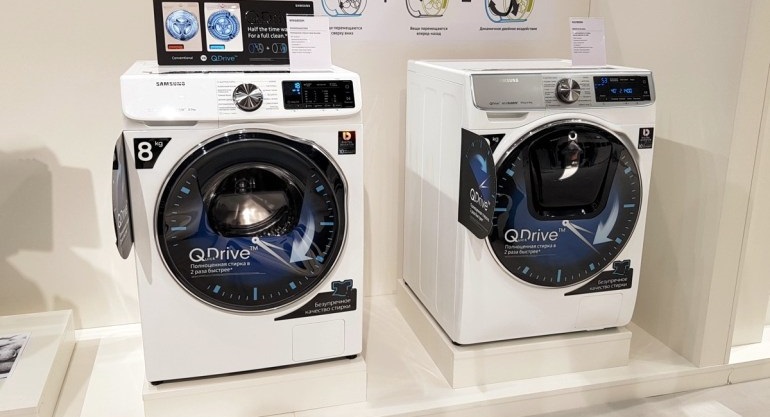
In terms of reliability, the manufacturers are on equal footing. Unofficial statistics from service centers suggest that Samsung washing machines break down more frequently, but this argument is easily contested – Samsung washing machines are also sold more frequently than their competitors.
According to service center statistics, Samsung washing machines break down more frequently, but it's worth considering that the brand also has higher sales volumes.
When it comes to technology, the Koreans win. The company constantly offers new ideas and improves on old technologies, while the Germans follow the beaten path, often ignoring innovation and modern developments. However, this is debatable: most of Samsung's innovations have unproven benefits. Siemens, on the other hand, uses methods proven over time and by thousands of customers.
Design and washing quality
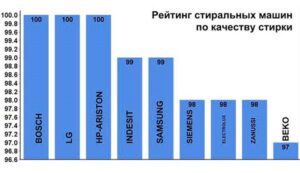
The decisive factor when choosing a washing machine is the cleaning performance. Each washing machine manufacturer underwent a test to determine how well they handled stains of various origins. The test proceeded as follows: each machine was loaded with six types of stains, then the "Cotton" cycle was selected. Samsung emerged victorious, having cleaned almost all problem areas. Siemens failed to remove animal fat and cherry stains, despite completing the cycle faster than its competitor.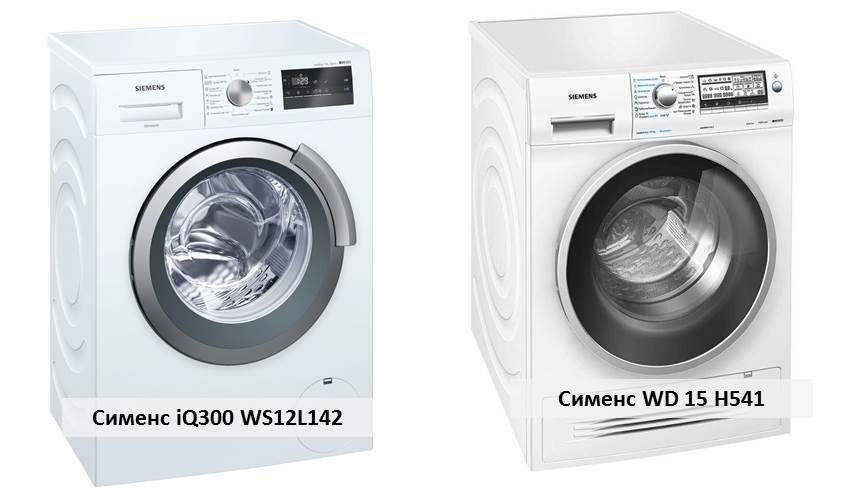
It's impossible to objectively evaluate the design—everyone has their own tastes and preferences. It's worth noting that both brands offer models in white, gray, and black. Interestingly, Samsung stands out for its space-age design. All Samsung machines feature a convex hatch and chrome accents.
Cost of cars
To compare the pricing policies of the manufacturers, it's worth comparing the average prices of various models from both brands. A quick analysis clearly shows that Samsung washing machines are cheaper than Siemens ones. Almost every Simen machine gun is $70–$80 more expensive. The amount is significant, since the price tag for some units does not exceed $100–$150.
But it's important to understand that both companies offer different price ranges. Siemens offers the following options:
- iQ300 WS12L142 – about $240;
- WS 12L247 – up to $280;
- WM 12 N290 – approximately $390;
- WM 14 U640 – about $640–$650;
- WD 15 H541 – price from $1250.
Korean machines are more affordable. Among automatic machines, it's easy to find budget options in the $150–$200 range, which is considered a definite advantage. Here are a few examples:
- WF8590 NLW8 – from $150;
- WF8590 NLW9 – on average $160;
- WW65K42 E08W – about $240–$250;
- WW65K42 E09W – about $300;
- WW90M74 LNOA – up to $600.
Surprisingly, Samsung wins our "race." Siemens is inferior to the Korean brand in many respects, including washing quality and price. Incidentally, Samsung washing machines are the ones most often chosen by consumers.
Interesting:
Readers' comments
Headings
Washing machine repair




For buyers




For users


Dishwasher




Add a comment