
Which drum is best for a washing machine?
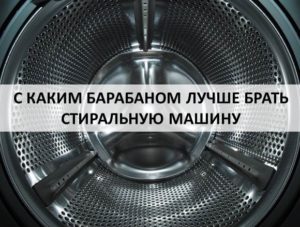 The drum of a washing machine takes up almost all the space, so it's the one that most consumers have questions about. Moreover, some confuse it with the tub, which leads to even more confusion. Our article will set the record straight and explain which materials are best, whether the heavily touted innovative honeycomb panels are truly effective, and how to test the drum before planning a purchase.
The best material for a washing machine tank
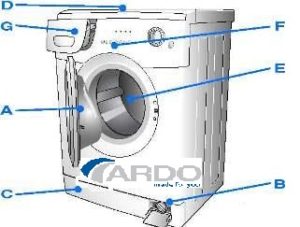
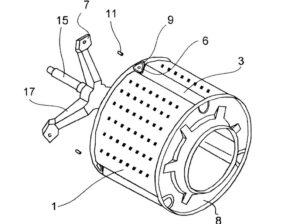
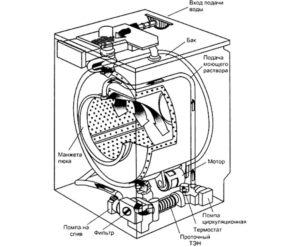
First, let's define the washing machine's components. The tub is the main container of the washing machine, where water and detergent are supplied and where the heating element, sensors, and drum are located. The drum, in turn, is cylindrical and designed to hold the laundry.
Now let's look at the materials. The drum in both budget and expensive washing machines is always made of stainless steel. The tubs come in a variety of sizes, and consumers will have three options to choose from.
- Enameled steel. It's rarely used, despite its reliability, resistance to corrosion, temperature fluctuations, and cracking during transportation. Steel tanks have one major drawback: even the slightest chip or crack renders the enamel ineffective in its protective function, causing the material to rust and become unusable. This can be caused by prolonged use or by accidentally introducing a foreign object into the tank.

- Stainless steel. A stainless steel tank, on the other hand, will last up to 100 years due to its high strength, reliability, and resistance to wear and tear and aggressive environments. However, it does have its drawbacks: high price, heavy weight, increased noise, and vibration. Another downside is poor thermal insulation, which means the machine wastes a lot of energy constantly heating the water. There's also a high risk of buying a counterfeit and paying for cheap and short-lived metal instead of high-quality processed steel.
- Polymers. These are plastic tanks that boast excellent performance characteristics. They are valued by consumers for their low cost, absorption of noise and vibration from the rotating drum, high thermal insulation, lightness, and absolute resistance to corrosion and chemicals. The only questionable aspect is durability, which clearly makes plastic, with a service life of up to 30 years, inferior to steel. However, ongoing developments are underway to improve the composition, and the stated lifespan coincides with the overall lifespan of the washing machine. Another negative aspect is the fragility of polymers during rough transportation or when foreign objects fall inside.
Important! Each manufacturer has its own definition of "plastic," which includes any composite materials.
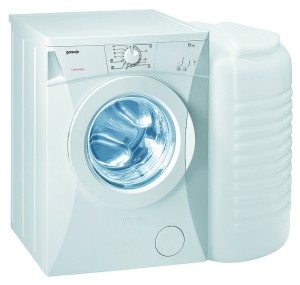
Moreover, brands are actively developing their own types of materials, complementing the standard form and assigning them brand names. For example, Whirlpool promotes Fibre, Candy promotes Silitech, BEKO promotes Carferron, Bosch and Siemens promote Polynox tanks, Gorenje uses Carbotech and Polytenax, and Electrolux uses Carboran. Other manufacturers, including the well-known ARDO, offer a compromise: a plastic tank with a stainless steel back panel. These machines are durable, long-lasting, and affordable.
There's no definitive answer to the question of the most suitable material for a drum. It all depends on budget, brand, build quality, transportation conditions, and the buyer's needs. It's best to focus on the washing machine's technical specifications and choose your "home helper" based on capacity, energy efficiency, and performance ratings.
Honeycomb Drum: What's the Catch?
Numerous experiments have confirmed that the "grater effect" doesn't actually work. Convex and rough drums don't remove stains better and actually damage laundry, so more and more manufacturers are striving to achieve the least impact on fabric. An acceptable standard option involves small holes, highly polished and with concave edges. There's also a new trend: the so-called honeycomb pattern.
The honeycomb drum is patented by Miele and differs from conventional drums by the presence of hexagonal bulges on the walls and sides of the cylinder, resembling a honeycomb. Thanks to them, a water film is formed between the loaded laundry and the metal, enhancing sliding and protecting the fabric structure. And, as the developer claims, gentle washing is complemented by durability and low energy consumption.
The catch with a fancy drum is that the high price isn't justified. Many standard, well-made drums offer equally effective cleaning. If you choose your machine wisely, you can find a more advanced unit for the asking price.
Let's inspect the drum before purchasing the equipment.
Once you've decided which drum is best for your washing machine, let's begin testing it in-store. Relying solely on advertising or sales associate recommendations is extremely imprudent. Therefore, approach the model you're interested in and begin a visual and palpatory inspection.
- We open the hatch door and run our palm along the inner surface of the drum. Despite the unevenness and holes, your fingers should not catch on sharp protrusions or micro-burrs. Especially around seams and holes. If there's even one snag, just ignore it, as it's clearly a sign of poor workmanship and poor quality.
A more reliable method is to put nylon tights or stockings on your hand. The tights will definitely catch on the hangnail.
- We carefully feel the rib breakers - plastic elements on the drum that look like blades or barriers. Here too
 Absolute smoothness is essential, and the dividers themselves must fit securely in the grooves provided. If they wobble even slightly, the machine fails the test.
 - Spin the drum, checking how easily, quietly, and smoothly it rotates. A slight tension is acceptable, but there should be no extraneous creaking or whistling sounds.
- Rock the container up and down, paying attention to the joint with the housing. The resulting large gap clearly indicates worn bearings.
- Measure the distance from the edge of the drum to the beginning of the door seal. A length of 5 mm is ideal, while anything longer than 8 mm is risky. The risk is that small items, such as children's socks, underwear, or gloves, could fall through the gap. Even worse, coins or other hard objects left in pockets could fall through the opening, causing damage.
Inspecting the drum yourself is the most important factor when choosing a washing machine. If the inside of the machine is free of burrs, loose ribs, and unsightly gaps, then the appearance and material of the components are of secondary importance. Remember that there is such a thing as "excess quality," and even a budget washing machine with a standard drum will last for many years if properly maintained.
Interesting:


Readers' comments
Headings
Washing machine repair




For buyers




For users


Dishwasher




Add a comment