
Which washing machine to choose and how?
 If you're thinking about buying a washing machine but haven't decided which one yet, this article will help. We'll discuss the different types of washing machines and what details are important when choosing one.
Types and kinds
Washing machines can vary in various ways. Front-loading machines are the most popular option in Russia. In the US and China, top-loading machines are more popular. Let's take a closer look at their features.
Top-loading washing machines
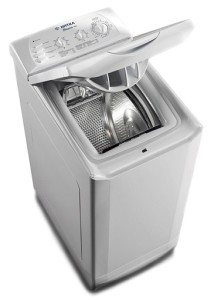 Machines of this design lack the familiar hatch on the front of the machine. Instead, they have a hinged lid located on top. This is where the dirty laundry is loaded into the drum. It can be opened using a locking button.
In most similar models, to remove clean items after washing, you need to rotate the drum so the opening flaps are facing upward. Also, in some models, at the end of the wash cycle, the machine automatically positions the drum flaps so you don't need to rotate them. This feature is called "Drum Up."
One of the most important advantages of a top-loading washing machine is that it saves space. With this model, you don't need to account for the extra space at the front of the machine to open the door. It doesn't have a front door, but rather a lid that opens upward. The dimensions of this machine are approximately the same as those of traditional front-loading machines (approximately 80-95 cm in height and 40-45 cm in width). The depth of vertical machines is approximately 60 cm. Front-loading machines, on the other hand, can range from 40 to 60 cm.
Some believe that the drum of this type of household appliance is more reliable. However, experts disagree. They also claim that there are no fundamental differences in the drums of different types of washing machines.
The wash, rinse, and spin quality of front-loading and top-loading machines are not significantly different. However, for those who like to see the washing process, a top-loading machine is not suitable because it lacks a transparent door or window. These are simply not designed for this purpose.
Front-loading washing machines
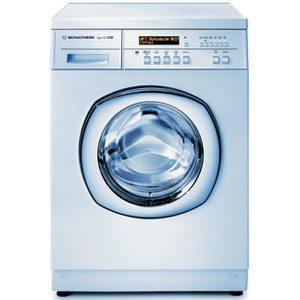 As we mentioned above, this type of household appliance is very popular in Russia. And when most Russians think of a washing machine, this model is what they picture. It features a round, transparent door at the front. For those who like to watch the progress of their laundry, this is the perfect option, as the glass door allows you to see everything going on inside the machine.
A frontal washing machine can wash from 3.5 to 10 kg of laundry, depending on the technical characteristics of each specific model. One of the minor drawbacks is that when installing and using the machine, you should always remember that there should be enough space left at the front of the machine to allow the hatch to open freely.
The height of most machines of this type is 80 cm, give or take 15 cm. There are also front-loading washing machines suitable for smaller spaces. For example, narrow models, which are no more than forty centimeters deep, are available. Mini models are also available. They are significantly smaller than standard models and easily fit even the smallest spaces. However, it's important to keep in mind that these models will have a smaller laundry capacity and possibly lower power.
Dimensions.
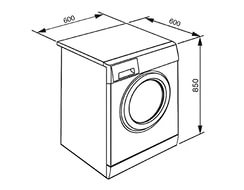
- Standard. They are approximately 90 cm high and 60 cm wide and deep. They can hold 5-7 kg of laundry.
- Compact. They're about 70 cm high (give or take 2 cm), about half a meter wide, and about 45 cm deep. They hold 3 kg of laundry.
- Narrow. The height and width are the same as standard machines. The depth is about 40 cm. The depth is 35-40 centimeters. They can wash from three and a half to five kilograms at a time.
- Super-narrow. The height and width are the same as standard models. The depth is about 35 cm, sometimes a little less. The load capacity is three and a half to four kg.
Comparison of front-loading and top-loading washing machines
Frontal.
- Front-loading washing machines are widely available on the Russian home appliance market.
- They are also often cheaper than their vertical counterparts.
- With front-loading washing machines, you can see the entire washing process through the transparent part of the door.
- Standard models include a fairly large amount of linen.
Minor drawbacks include the need to bend down to remove washed laundry, and the need for some clearance to open the hatch properly.
Vertical.
- Most models are narrow and suitable for small spaces.
- The capacity volume is quite high.
- There is no need to bend over much when removing and loading laundry.
- It is possible to add items even during washing.
On the downside, such machines tend to be more expensive. Also, most household appliances of this type don't vary much in size. So, if you're looking for a mini "vertical" washer, you're unlikely to find one.
How to choose the right one?
 We've already discussed the types of washing machines. Now we can move on to the following, equally important parameters, which apply to both types of machines. Let's start with drum capacity. When purchasing a new appliance, consider the number of people living in your household. If you have three to five people, the machine should be able to wash at least 5 kilograms of laundry at a time.
It's also important to consider that different types of fabric may require different amounts of space. For example, one wool sweater can replace 5-6 cotton T-shirts.
Be careful! Don't overload the washing machine. Do not add more laundry than the instructions allow. Also, don't pack too little laundry. Don't wash just one T-shirt or tank top. Wait until you've accumulated at least 1.5-2 kg of laundry.
How to save money?
From a cost-saving perspective, standard-sized washing machines are more cost-effective. However, if space is limited, narrow or compact models are your best bet. A significant drawback of these options is the limited amount of laundry that can be washed at one time.
If you want to save on water and electricity, it's better to buy energy-efficient household appliances. How can you determine which washing machines are energy-efficient? Machines are classified by energy consumption classesThe highest classes are those that consume less, and the lowest ones consume more.
Energy consumption by class:
- Class "A++" is the most energy-efficient class currently available. This type of appliance consumes less than 0.15 kWh/kg.
- Class A+ is a very economical option. Energy consumption for this type of machine is less than 0.17 kWh/kg.
- Class "A" - such machines require 0.17-0.19 kWh/kg.
- "B" consumes from 0.19 to 0.23.
- "C" - 0.23-0.27.
- "D" - for this class 0.27-0.31 is required.
- Other classes – more than 0.31 kWh/kg.
By the way, the presence of a drying function in the machine increases the consumption of both energy and water.
Wash quality is also determined by Latin letters. A wash quality rating with the letter "A" indicates that the washing machine performs well.
Spin
Spinning occurs at the very end of the wash cycle. The spin speed determines how wet the items will be and how easy they are to iron. You can set the spin speed during this stage of the wash cycle yourself. This is usually done when selecting a cycle for a specific fabric type. For delicate items, use a low spin speed. For coarser fabrics, use a high spin speed. Spin speeds are also divided into classes, but we won't go into detail here.
Machine with dryer
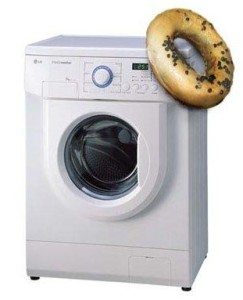 The advantage of a washing machine with a drying function is obvious: you get dry laundry immediately after the wash/dry cycle. This is much faster than waiting for it to dry on its own while hanging it out. However, there are also disadvantages. After drying, some fabrics can be very difficult to smooth out, even with an iron. Furthermore, using this function increases energy consumption. On the one hand, such a machine is more convenient. On the other, it is more energy-efficient. Do you want to save on laundry or get dry laundry faster? The choice is yours.
Drying is accomplished using heated air, which removes moisture from items and collects it in a special container. Models can feature a timer-controlled drying system, which automatically starts drying after washing. These machines also feature a humidity-controlled drying system. These machines use a special sensor that analyzes humidity and determines when and how long to dry the laundry. The latter drying method is considered more modern and is used in new washing machines.
Control
Machines produced today have a built-in control system. It's usually quite simple and intuitive. Setting the mode and starting the wash cycle usually requires no complicated steps. Simply press a couple of buttons. The machine will do the rest. It has built-in control and monitoring systems for the entire washing process. Water change, rinsing, spinning, temperature control, and more are all performed at the right time.
The latest models are increasingly equipped with a display. You can use it to set programs and monitor the information provided by the processor.
Types of protection
Machine developers have strived to ensure maximum consumer safety. Therefore, you may notice various safety features in new washing machines. For example:
- Leak Prevention. This system protects the machine from internal leaks. If the hoses break or become damaged, the water supply is shut off. This will prevent large amounts of liquid from spilling on the floor, saving you and your neighbors from this unpleasant experience.
- Prevents accidental door opening during washing. The door lock, found in all modern washing machines, is designed to prevent the door from being opened during washing, rinsing, and other processes. It maintains the door closed until the end of the washing cycle.
- Child lock. Not all washing machines have this protection feature, but if you have small children, it's a must-have. The idea behind this feature is to use a combination of keys to lock and unlock the machine. It's similar to the one found on cell phones, which prevents accidental key presses while the phone is in your pocket.
Modes
The number and types of modes are updated frequently. Manufacturers strive to make household appliances as convenient and appealing as possible for customers. And, of course, the addition of new features increases the machine's value and appeal. The most common programs found in almost all washing machines are:
- Delicate mode,
- Quick wash,
- Wash for cotton,
- Washing for colored laundry.
These are the most requested features, so they're included in most washing machines. If you need any special settings, you can talk to a sales associate. Reputable appliance stores usually have qualified staff. They'll be happy to answer all your questions.
The variety of different modes and programs is usually greater in those machines that cost more. And lower for cheaper ones. Therefore, we recommend choosing washing machines that suit your needs and budget.
Interesting:

10 reader comments
Add a comment
Headings
Washing machine repair




For buyers




For users


Dishwasher




For me, a top-loading machine is better - you can add forgotten things into it and fit it even in the smallest bathroom.
I have a front-loading Bosch washing machine—you can see what's going on, and the funniest thing is watching our cat monitor the progress of the wash—it's absolutely hilarious! It also doubles as a nightstand, so it's so convenient for storing things. It's currently in our bathroom, but we could build it into the kitchen if we wanted, which is something you can't do with a top-loading machine.
I trust German manufacturers; they make high-quality equipment. I'm currently looking for one myself, and so far I've settled on the Siemens iSensoric, a smart machine with innovative technology.
We have an Ardo TL800EX. It will be 11 years old in March! Super car! Next time, I'd like to get an Ardo too.
I can't help but share. Vyatka automatic. The "old lady" worked for 27 years. The only repair was a hose change. Are Vyatkas still around?
There are, but it seems they are assembled in China.
I have a Candy Aqua compact. It's located under a special large sink. The bathroom is small, but it doesn't get in the way at all! It has a 4 kg load capacity and handles a double bed set perfectly, along with a terrycloth robe. I even washed a hollow fiber coat in it—it worked perfectly. I only set the spin cycle to 400 rpm, as recommended by the coat manufacturer. And it doesn't bounce around—the technician leveled it well, plus it stands on special rubber feet. It rocks slightly when in use, but doesn't hit the bathtub (there's a gap of a couple of centimeters) or the coil on the other side. I'm very happy!
I also like vertical ones more now, although I didn't really pay attention to them before. And they seemed strange to me anyway. My husband's relatives actually gave us an Indesit vertical one. At first, I thought about taking it to the dacha and buying a frontal one for the apartment. But luckily, I tried it out and quickly changed my mind.
I've heard there are several good Hotpoint vertical models, but I'm not familiar with them and can't remember which ones! Could you please tell me?
I looked on Yandex Market and chose Whirlpool because of the good reviews and reasonable price. It works well, I definitely didn't go wrong.