
Why does washing powder harden in the tray?
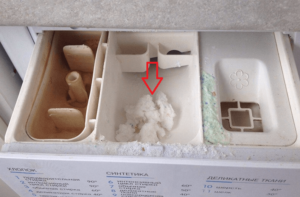 Very rarely do users add laundry detergent directly to the drum, rather than to the powder drawer. This is because household detergents should be stored in a special compartment, as most washing machine programs don't use all the detergent at once, but rather in portions during different stages of the cycle. However, this method has a downside: sometimes the detergent hardens in the machine's drawer, where it also sticks to the plastic parts of the powder drawer. Let's look at why this happens and how to deal with it.
Bad powder
If you have a solid lump of powder remaining in the compartment, then most likely the cause should be sought not in the washing machine, but in the detergent itself. The problem probably arose due to the poor quality of the household chemicals that were added to the “home assistant” compartment.
In this case, simply check the quality of the powder by adding it to a glass of clean water and stirring thoroughly. A quality product will dissolve completely in warm water very quickly, while counterfeit household chemicals will dissolve unevenly, leaving behind large clumps and sediment.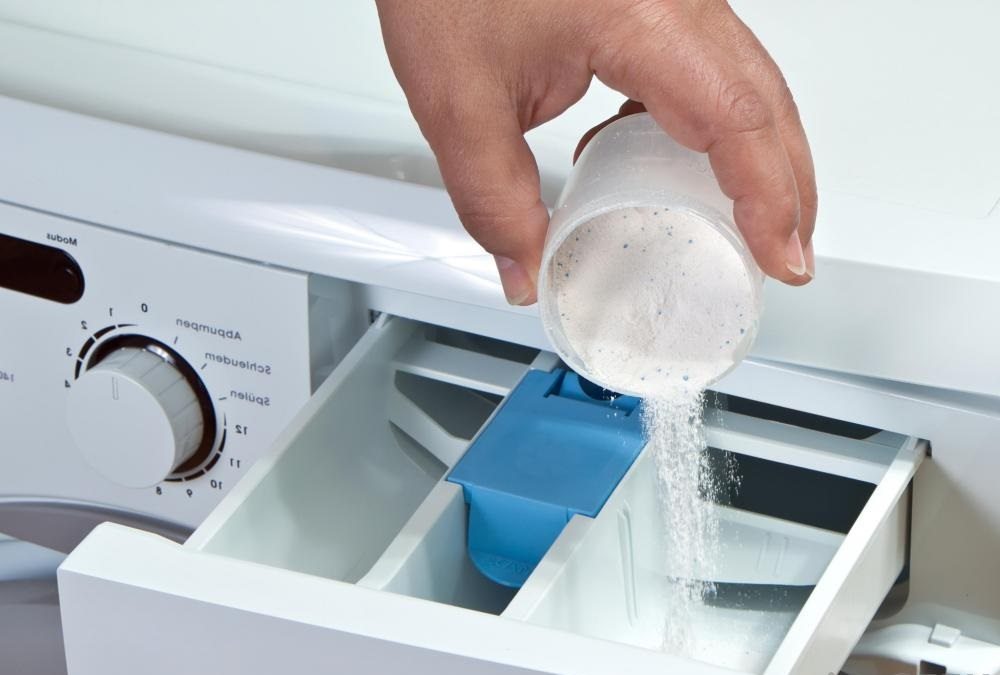
For additional testing, you can add a few drops of brilliant green to the resulting solution to check the color of the liquid. Low-quality washing machine detergent will completely absorb the brilliant green, so the solution won't change color, while a solution made with high-quality household chemicals will turn slightly green.
You can also check the product by carefully examining the packaging. Try scanning the product's barcode with a special app on your smartphone or tablet. If the product is certified, the program will confirm the authenticity of the household chemical. If the data is incorrect, it's a counterfeit.
Is the water supply to blame?
It is also worth checking the water supply if there is washing powder left in the washing machine compartment. Weak water pressure certainly can't be to blame, as modern washing machines are equipped with smart control modules that carefully monitor pressure readings. If the "home assistant" is unable to collect liquid within a certain time, the control board will simply stop the operating cycle and display a corresponding error on the display.
Therefore, if the washing machine doesn't notify the owner of a water intake error, but detergent remains in the detergent compartment, the plumbing is definitely not to blame. Also, don't look for a problem with the inlet valve, as it allows enough water to flow through for the machine to function effectively.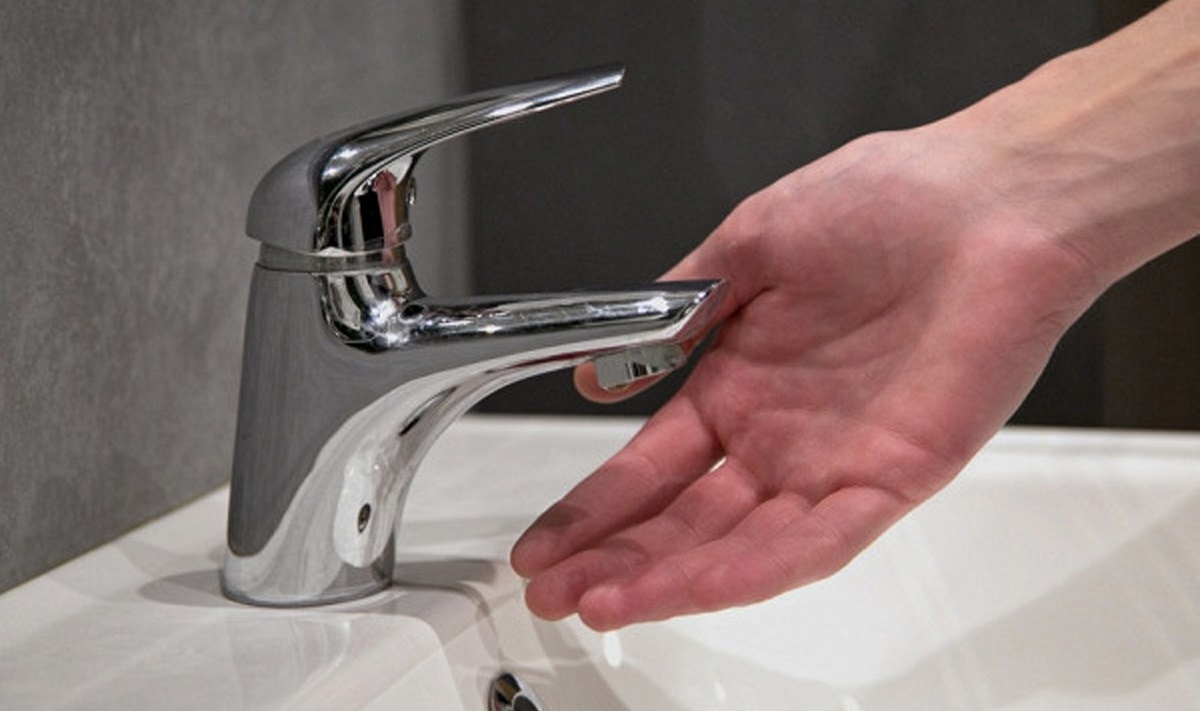
In this case, service center specialists recommend checking the detergent drawer inlets for blockages. These blockages can cause the detergent drawer to only partially flush household chemicals, leaving some detergent in the dispenser. In this situation, simply clearing the blockages will prevent any detergent from remaining in the washing machine after the cycle is complete.
Cleaning the powder receptacle inlet openings
Let's move on to restoring your washing machine to normal operation. To do this, you'll need to remove the detergent drawer from your front-loading machine. To do this, pull the drawer towards you as far as it will go with one hand, and with the other, press the “tongue”, usually located between the main and pre-wash compartments. If you have done everything correctly, the powder receptacle will leave its seat without any effort.
Next, you need to carefully inspect the inside of the detergent drawer. Looking up, you'll find special holes that allow liquid to flow into the detergent compartment during the washing cycle, where it's collected for the wash cycle. The holes are perforated, so to clean them, you'll need a needle, toothpick, or similar tool pre-treated with citric acid. How do you effectively clean a washing machine's detergent drawer?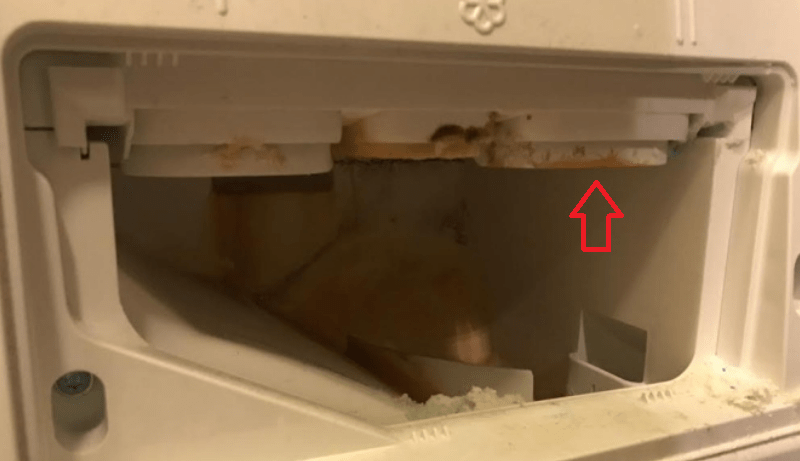
- Take a clean wet cloth.
- Sprinkle some citric acid on it and then wait until it absorbs the water from the cloth.
- Rub the top wall of the detergent compartment with citric acid.
These procedures are necessary to remove calcium deposits caused by poor-quality hard water from the tap. Citric acid effectively dissolves them, making cleaning much more effective. Afterwards, all that's left to do is clear the clogged holes with a needle or toothpick.
If you live in a region with very hard tap water, consider purchasing a special water filter for your washing machine to reduce the impact of water on the internal components of the washing machine.
Now you know why powder might remain in the detergent compartment and how to deal with it.
Interesting:


Readers' comments
Headings
Washing machine repair




For buyers




For users


Dishwasher




Add a comment