
Is a tumble dryer drain necessary?
 Everyone probably has a good idea of how much hassle it is to connect a washing machine to the utility system: you need to connect it to the sewer system, to the power supply, and make sure it all works. It might seem intuitive that it's just as complicated with dryers, but why would you need a sewer system for a dryer, since it doesn't interact with water as much as a washing machine? So, let's explore all the intricacies of connecting a dryer to the utility system.
Does the dryer require drainage?
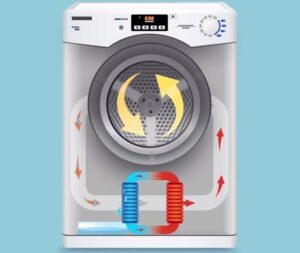
How does a tumble dryer actually dry clothes? It's simple: wet laundry is processed inside the drum by streams of hot air, the moisture evaporates, and is removed from the chamber as condensation/steam, etc. Consequently, tumble dryers are not directly connected to the water supply or sewer system, but sometimes such a connection may be necessary.
Currently, there are three types of automatic tumble dryers available on the market.
- Exhaust dryers. A corrugated pipe is connected to the dryer chamber, which removes moisture from the machine directly into the room or outdoors. These units do not require a sewer connection, but they are quite demanding.
- Condensation. In this case, the exhaust moisture, in the form of heated, moist air, undergoes a cooling process, separating the dry air and the liquid (condensate). The condensate then drains into a special tray. The tray must be emptied after each drying cycle.
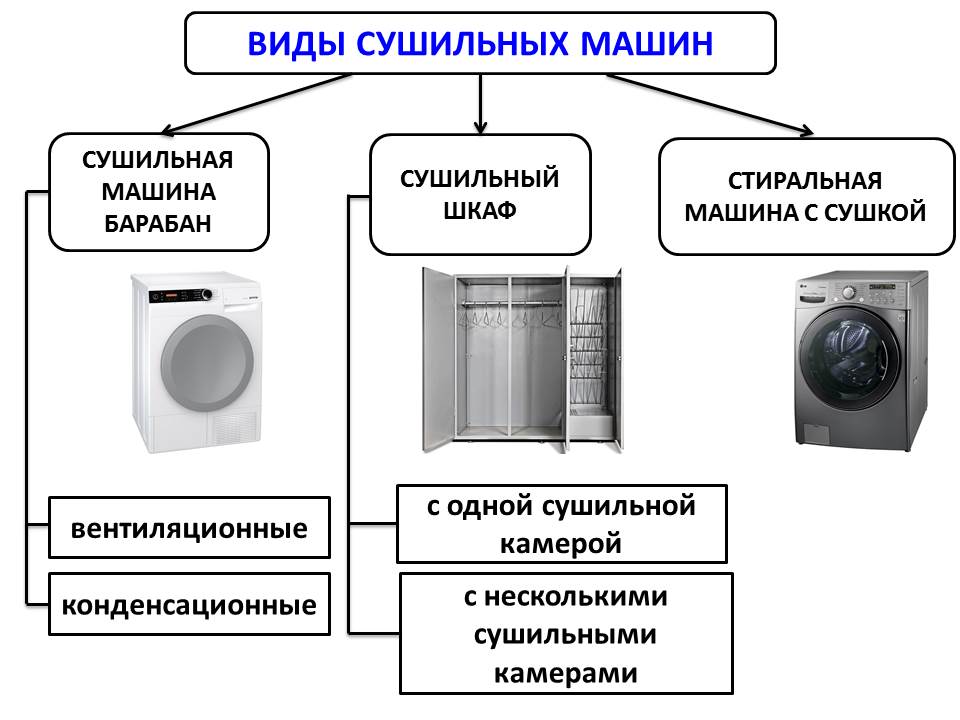
- Evaporative dryers. Many consider this a type of condensation dryer. Unlike traditional condensation dryers, the air isn't cooled after use; instead, it's heated, turning into steam. The steam is discharged from the dryer through a special hose, either into a tray or directly into the drain.
Important! Condensing and evaporating units can be connected to the sewer system, but units with this functionality are very bulky!
Accordingly, more free space is required for their installation, but the volume of laundry loaded into one cycle is also several times larger.
From the above, we can conclude that, in fact, no tumble dryer requires a sewer connection to function properly. With evaporative and condenser dryers, you'll need to empty the liquid tray after each drying cycle, which generally shouldn't be a problem. If you want to fully automate the process, you can connect the unit to the utility lines.
We connect the machine to the power supply and sewerage system
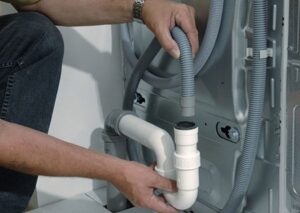
As we've already established, connecting the dryer to the sewer is not necessary, but if you decide to do so, the connection process looks something like this.
- Attach the outer hose to the back of the dryer.
- Check that the fastening is secure and that there are no twists or bends in the tube.
- The hose can either be shortened by cutting it, or lengthened by using another piece and a connector.
- The end of the drain hose must be led into the sewer by connecting it to the outlet under the sink or simply throwing it into the sink or bathtub.
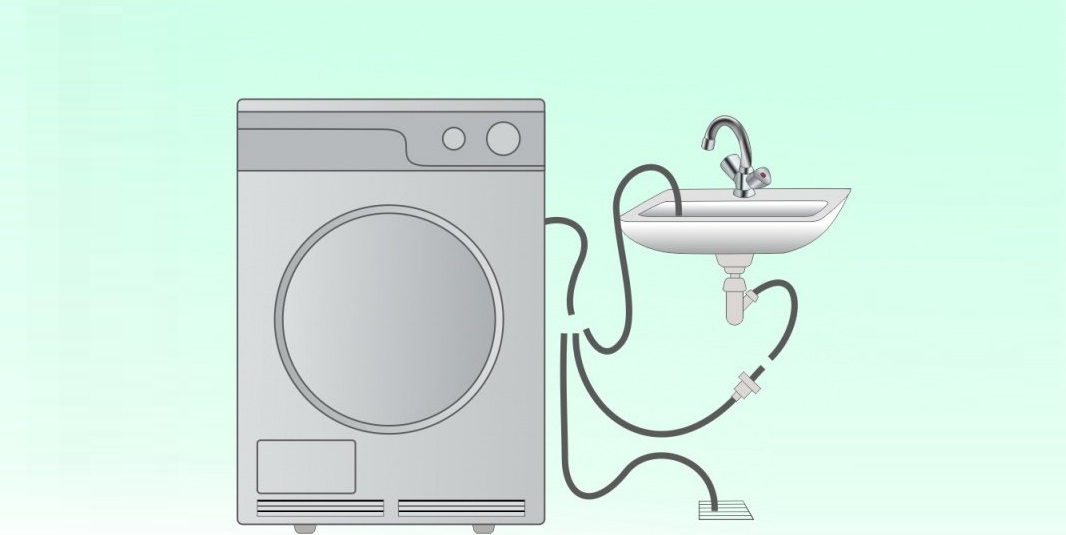
Actually, you don’t need to do any special actions; everything is exactly the same as with a washing machine. Before the first start-up, remember to double-check the quality of all fasteners to prevent water leakage.
As for connecting to the power supply, things are even simpler: the only recommendation is not to connect both the dryer and the washing machine to a double outlet, as the network may not be able to handle such a load, which will lead to a short circuit.
The power of dryers usually does not exceed 2500 W, so any household socket is suitable for connection to the network.
To prevent short circuits, ensure a fuse is installed in the distribution panel. Typically, a 16 A RCD and a circuit breaker of the same type are installed. This way, even during power surges, your unit will be well protected from failure and burnout.
Interesting:



Readers' comments
Headings
Washing machine repair




For buyers




For users


Dishwasher




Add a comment