
Which is better: capsules or dishwasher powder?
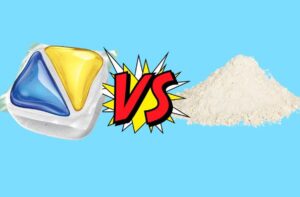 Today, hardware stores offer a wide variety of detergents designed for perfect dishwashing. They differ not only in manufacturer but also in type. This is why new dishwasher users often struggle to decide between capsules and dishwasher powder. Let's take a closer look at the different types of household cleaning products so you can find the perfect detergent for you.
Bulk agent for PMM
These products look like a loose mixture, either homogeneous or with the addition of different granules. This type of chemical consists of surfactants, or surfactants for short, which are needed to actively break down food residue on the surface of dirty dishes. Most often, such household chemicals contain various components.
- Enzymes needed to combat the toughest stains.
- The enzyme subtilisin is designed to remove residual protein.
- Oxygen bleach.
- Baking soda, water softener.
- Preservatives that can significantly increase the shelf life of household chemicals.
- Fragrances that give the product a pleasant aroma.
Phosphates and chlorine are also worth noting, sometimes added to enhance dishwashing effectiveness. Additionally, additional components not found in every product include surfactants, which facilitate cleaning in hard tap water, lipase, which can dissolve fat, and proteases, which help break down protein residues.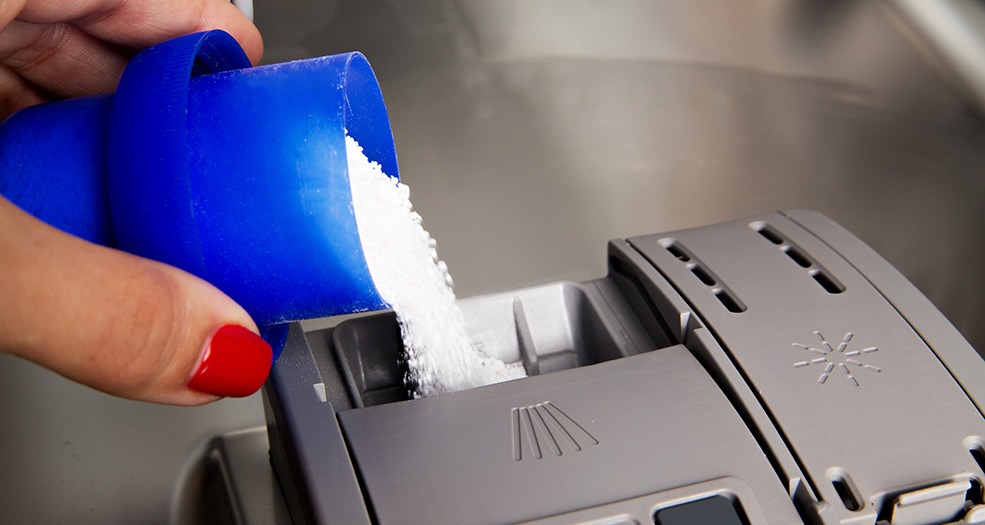
But regardless of the composition of household chemicals, it's crucial that dishwashing powder alone isn't enough; it needs to be combined with other household chemicals. This includes special regenerating salt for dishwashers and rinse aid.
It's best to add both of these products separately to your dishwasher so they don't become part of your dishwashing detergent routine. Salt granules will help combat extremely hard tap water, which can damage your dishwasher's heating element. Rinse aid is essential for the final stage of cleaning, as well as for leaving your dishes sparkling.
Loose powder detergents are considered the most popular among dishwasher users. This is due to their relatively low price. Considering that a combination of powder, salt, and rinse aid is cheaper than 3-in-1 capsules with the same effect, it's no wonder they're such a popular choice. Furthermore, there are a number of other advantages worth highlighting.
- If you use a mixture of detergents, most dishwashers will automatically control the consumption of salt and rinse aid, adjusting the settings according to the hardness of your tap water.
You can find up-to-date water hardness data on the official website of your local water utility or using test strips – this will allow you to optimally adjust the consumption of salt granules.
- The powder dissolves very quickly, making it suitable for fast wash cycles. Furthermore, it's dishwasher-safe, so you can buy it with confidence and not worry about it not being suitable for your dishwasher.
- Finally, powdered products are easy to add in small portions, which is very important, for example, for half-load washing modes.
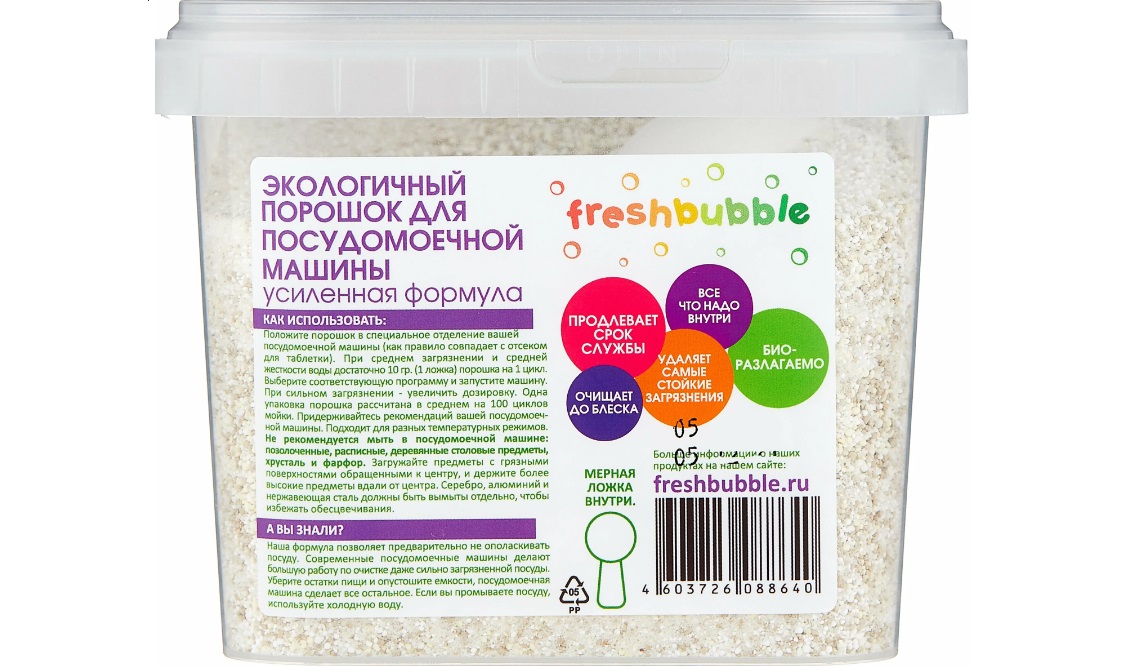
But this is not to say that these tools are without flaws. Several shortcomings can be identified.
- It's very easy to spill the powder while loading it into the tray, which means some of the product will occasionally go to waste.
- When loading these household chemicals, their particles become airborne, which can also penetrate the skin and respiratory tract, causing an allergic reaction.
- Powdered products, especially those sold in cardboard boxes, require special storage conditions. They're easy to accidentally spill, and if the room is highly humid, as is often the case in a bathroom, the powder may cake and become less effective.
- When using detergents, it's important to pay close attention to the dosage. Adding too much detergent per cycle will create excessive foam, which can not only cause leaks but also damage the dishwasher itself.
It is precisely because of such a large number of disadvantages that manufacturers have developed an alternative to powder, which we will discuss in the next section.
Encapsulated type products
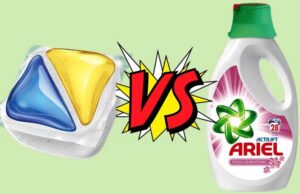
Household cleaning products of this type look like transparent bags with different compartments, each containing a multi-colored gel. This appearance clearly demonstrates the special nature of this cleaning product, which is designed for multiple cleaning applications. Often, encapsulated detergents perform several functions in the dishwasher.
The most common type is the 3-in-1 capsule, which consists of a cleaning element, special dishwasher salt, and rinse aid. There's also a popular 5-in-1 option, which contains the following components:
- cleaning component;
- chemicals for protecting household appliances from scale;
- special regenerating salt;
- protective agent for dishes;
- rinse aid.
In addition to the capsule varieties described above, stores also offer chemicals containing 10 or more ingredients. These may include the following:
- special additives to give dishes shine;
- chemicals for eliminating unpleasant odors;
- protective components against microbes;
- catalysts for removing the most serious contaminants even in cold or slightly warm water.
The more components and special properties a capsule has, the more expensive it will be.
These household chemicals have a huge number of advantages. Why capsules are so much more convenient to use.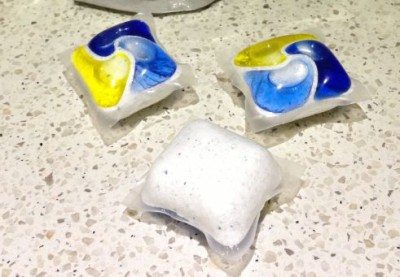
- One capsule contains all the necessary products for a single cycle. No need to worry about dosage or adding too little or too much chemicals—just add one capsule to the dishwasher for a perfect clean without damaging the machine due to excessive foaming.
- Each capsule is individually packaged, making it easy to transport and store. Furthermore, the packaging prevents the active chemicals from leaching into the environment.
- Stores offer a huge selection of dishwasher capsules, both in terms of type and packaging. You can find small packages of 10-15 capsules, which can help you try out a previously unknown brand, or you can save money and buy a whole pack of 100 or more.
Of course, these household chemicals also have their significant drawbacks. These should definitely be kept in mind if you're considering purchasing such a product.
- Capsule-type detergents are almost always significantly more expensive than regular powders. However, you can try to find less popular brands whose prices are as close as possible to those of dishwasher detergent.
- When all the ingredients are added to a single capsule, they don't work as effectively together as if they were loaded into the dishwasher separately. If both the powder and rinse aid are added to the liquid at the same time, the conditioner becomes less effective.
- Some capsules take a very long time to dissolve, so they cannot be used if the quick wash mode is selected.
- The capsules contain a relatively small amount of special salt, so it's only sufficient for moderately hard water. If your area has poor-quality tap water with high hardness, the salt content will be insufficient, which could cause damage to the internal components of your "home assistant."
- If you have hard water, even the manufacturer of household cleaning products recommends adding additional salt granules, even if you use capsules with added salt. In this case, the automatic dispensing of salt and rinse aid will be unavailable, as you'll have to constantly add the products manually.
- Phosphates are much more commonly added to capsules. Furthermore, a capsule cannot be partially used, splitting it into two cycles. This is very inconvenient for cycles that require a reduced dose of household chemicals, such as a half-load cycle.
- Some dishwashers are simply not designed to use encapsulated detergents.
Ultimately, it's impossible to say right away that capsules are better than powder, because they also have a number of disadvantages in addition to a number of advantages.
Which remedy is preferable?
It's difficult to say definitively whether one should use a particular type of household chemical, as there are as many situations and opinions as there are people. Most often, the choice of cleaning product is based on user preference. Statistics show that dishwasher owners are more likely to purchase capsules, as they may be more expensive, but they are much more convenient and economical than powders.
It's also worth noting the advantages of loose powder detergents, which are extremely convenient for half-loads. Plus, powders can be a lifesaver when you need to quickly refresh dishes during a short cycle, during which the capsule may not have time to dissolve.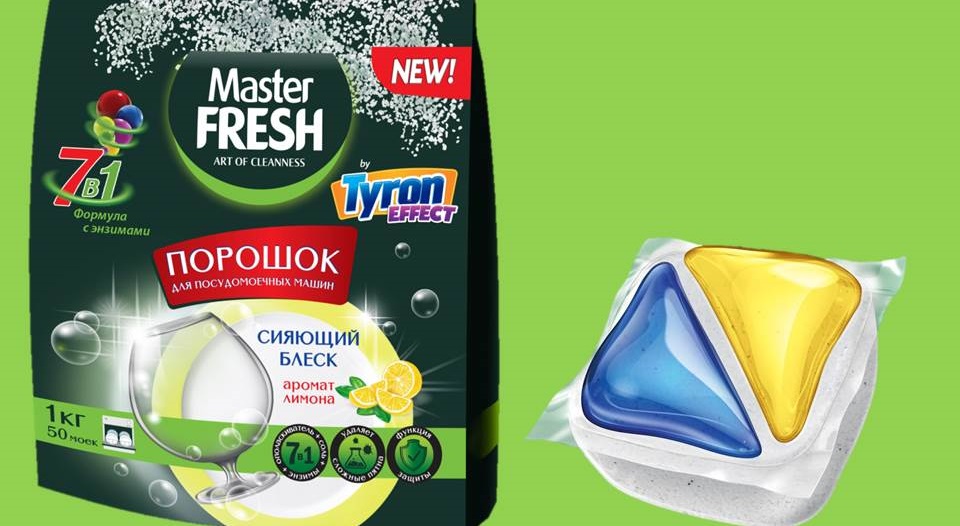
To ensure your dishes are always crystal clear, free of food residue and white deposits, follow a few simple guidelines. The most important is to read the dishwasher's official user manual and the instructions for your detergent, which detail the proper dishwashing process. The following points are also worth highlighting:
- If you use powder rather than capsules, it is better to buy salt and rinse aid of the same brand as the bulk product;
- Do not use household chemicals designed for hand washing in dishwashers. These products produce excessive foam, which can cause damage to your dishwasher.
- If you choose a cycle in which the machine heats the water to 40-50 degrees Celsius, it is better to use capsules with enzymes, which wash dishes better;
- Alkaline and acidic household chemicals are excellent for cleaning heavily soiled dishes, but they sometimes have a strong bleaching effect. This should be taken into account if you need to clean dishes decorated with delicate paintings.
Therefore, it's impossible to say with certainty that one type of household chemical is definitively better than another, as each product is effective in different situations. That's why the best option is to keep both products at home, so you can use them depending on your chosen cleaning cycle.
Interesting:


Readers' comments
Headings
Washing machine repair




For buyers




For users


Dishwasher




Add a comment