
Energy efficiency class of dishwashers
 A dishwasher is a fairly powerful household appliance, so many people are now interested in the energy efficiency ratings of dishwashers. Some do this for reasons of economy, others for conservation of natural resources. In any case, it would be useful to know this information before purchasing a dishwasher, so you can understand the expected utility costs and how much difference there is between dishwashers when categorized by energy efficiency rating. Let's explore this topic in this article.
What classes are there?
What exactly is an energy efficiency ratio? It's the ratio of the utility obtained from the consumption of a standard unit of a resource to the actual cost per unit of resource. The more energy efficient a device is, the less energy it can consume without sacrificing performance.
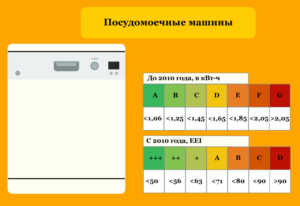
Energy efficiency classes are designated by letters of the Latin alphabet from A to G, out of 7 in total. The closer to the beginning of the alphabet, the higher the energy efficiency. Accordingly, class A is the best.
Class A is further subdivided into several subclasses (A+, A++, and A+++). It requires energy consumption that is almost half that of the standard. This class is reserved for very high-quality models, designed to last up to 15 years. They consume little energy while still performing well.
Classes B and C are also quite energy-efficient, but less powerful and efficient. Their energy consumption is 25% and 5% lower, respectively, than standard levels.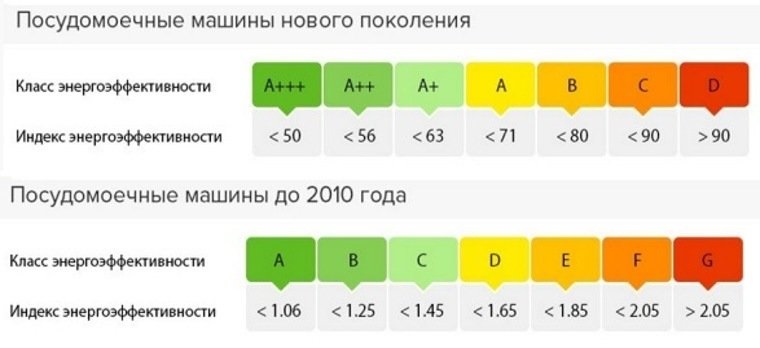
Class D represents a middle ground; all other energy consumption levels are measured by this level. Class E consumes 10% less energy than efficiency class D.
F and G are the least energy-efficient energy classes, consuming a quarter more electricity than standard.
It's quite rare to find low-efficiency dishwashers these days. Most are labeled as Class B, while premium models are always labeled as Class A (marked in green).
Important! The letter A on premium machines not only indicates a high energy efficiency rating, but also a number of other characteristics typical of luxury appliances (assembly location, drying class, etc.).
Since dishwashers also handle water, water efficiency ratings are also important. However, if a dishwasher has a high energy efficiency rating, it will likely have a similarly high water efficiency rating. Optimal consumption is 15 liters per cycle.
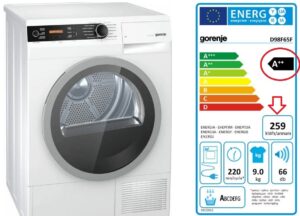
The manufacturer is obliged to provide each released model with an energy efficiency label, which includes the following components:
- name of the manufacturer and trademark;
- model name and number;
- a table with all energy efficiency classes, where the class of the unit itself will be displayed;
- quantitative values of resource consumption by the device;
- other values of the main functional parameters of the dishwasher;
- a link to the standard document according to which the model was assigned a particular energy efficiency class.
Labels containing model information are regulated by law and must meet multiple requirements.
- Absolutely every model must be provided with such a label.
- The label should be placed in such a way that it immediately catches the customer's eye when examining the distributor.
- When transporting the unit, the label must be secured in such a way as to ensure its safety.
- At the manufacturer's discretion, the label can be affixed not only to the device itself, but also to the packaging that comes with it.
According to the Law on Consumer Rights, specifically Section 3 of Article 10, manufacturers are obligated to provide information about the energy efficiency class of a device to the buyer in accordance with the method adopted for a specific type of product (through marking, inclusion in technical documentation, through a label, etc.).
Energy efficiency classes of popular dishwashers
Looking at things objectively, it's clear that we primarily choose a dishwasher based on price, reviews, design type, and other seemingly more important characteristics. Let's review dishwashers from the same well-known and beloved manufacturers, but in addition to the basic characteristics, we'll also learn about their energy efficiency classes. Let's get started!
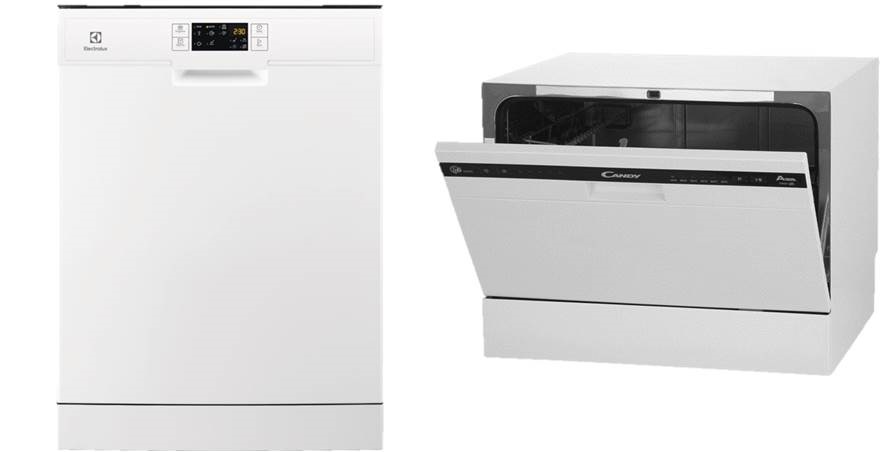
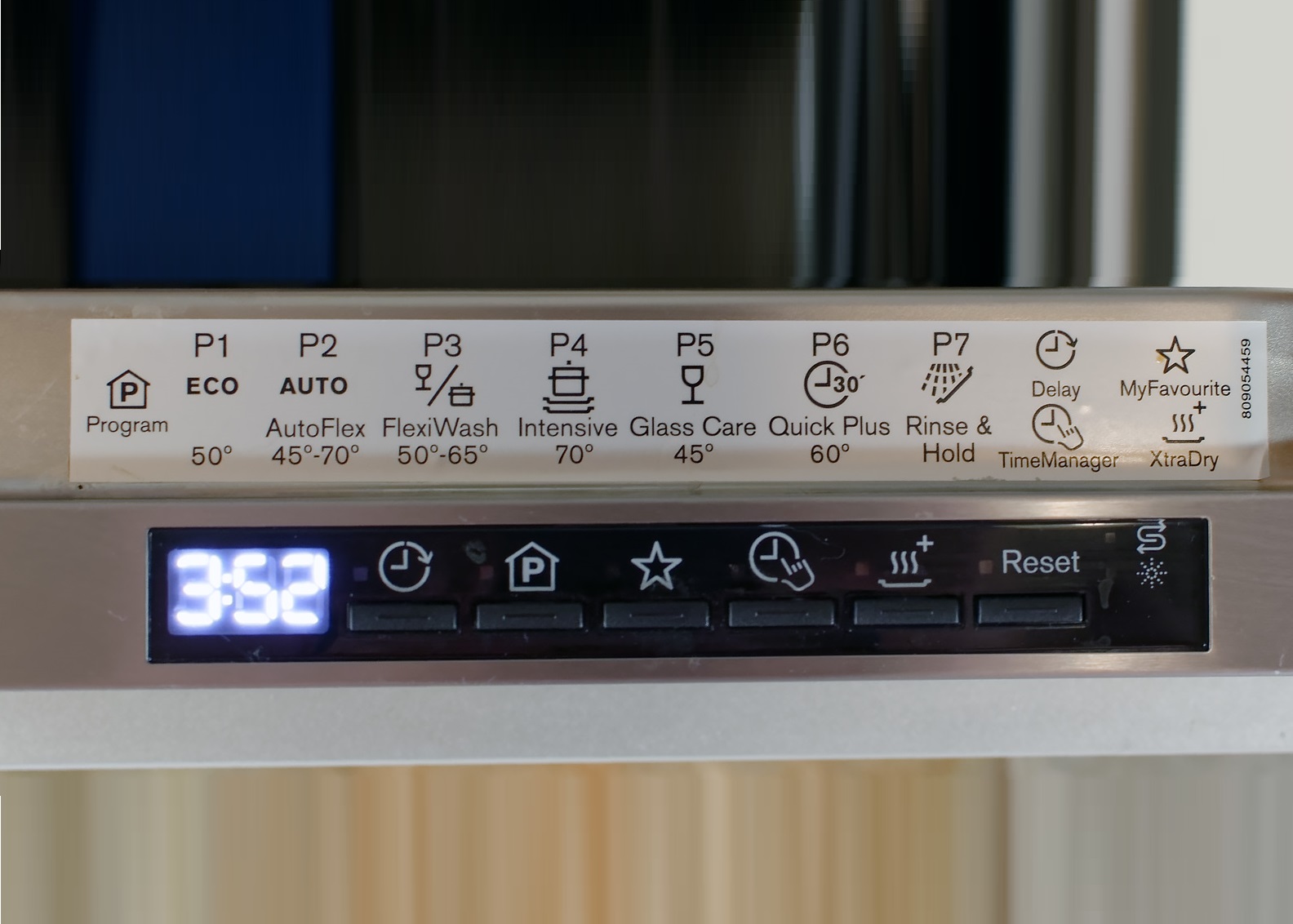
- Electrolux ESF 9552 LOW (standalone). Priced just over $300, this washer holds 13 place settings (6 programs available). All efficiency classes are A-rated (A++ for energy consumption, A for washing and drying). Water consumption is only 11 liters per cycle. Condenser drying.
- Candy CDCP 6/E (standalone). A budget-friendly machine priced at around $150. It holds 6 place settings. It's very economical: it boasts A-class cleaning, energy efficiency, and drying performance. Water consumption is very low—7 liters per cycle. It uses condensation drying.
- Weissgauff TDW 4017 D (standalone). Another affordable dishwasher, priced at around $200. It can wash 6 place settings. It has an A-rated wash and dryer performance, and an A+ energy rating. It uses 8 liters of water per cycle and features condensation drying.
- Candy CDCP 6/ES (standalone). Another Candy model, priced around $160, holds 6 place settings. It's quite efficient in washing, drying, and energy consumption (all energy classes are marked with the letter A). It uses 7 liters of water per cycle. It features condensation drying.
- Weissgauff TDW 4017 DS (standalone). The second model on the list from Weissgauff costs just under $200. It offers A-class drying and washing performance, and an A+ energy efficiency rating. This dishwasher holds 6 place settings. It uses condensation drying. Water consumption is no more than 8 liters per cycle.
- Electrolux EES 948300 L. Unlike previous models, this dishwasher is built-in. It costs around 40,000 rubles. It has a decent capacity—14 place settings. It has A-class drying and washing performance, and a premium energy efficiency rating of A+++. It uses 10.5 liters of water per cycle. It uses condensation drying.
- Candy CDI 2L10473-07. Built-in dishwasher from Candy, priced at $250. Holds 10 place settings. Class A washing, drying, and energy efficiency. Condenser drying. Water consumption per cycle: 9 liters.
- Candy CDIH 1L949-08 (built-in). Price just under $200. Efficiency class A for all functional parameters. Capacity: 9 place settings. Water consumption: 9 liters. Condenser drying.
- Beko DFS 05R13 W (freestanding). Price: $180. Class A cleaning, drying, and energy efficiency ratings. Uses 10.5 liters of water per cycle. Capacity: 10 place settings. Condenser drying.
- Beko DIS 26022 (built-in). Price: $200. It offers A-class washing and drying performance, and an A++ energy efficiency rating. The washing chamber holds 10 place settings. Water consumption per cycle is 9.5 liters. Condenser drying.
It is clear that even among models from more or less budget manufacturers, you can find examples with a high degree of energy efficiency, which is good news.
Interesting:

Readers' comments
Headings
Washing machine repair




For buyers




For users


Dishwasher




Add a comment