
Spin class B for a washing machine
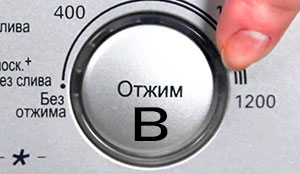 When choosing a new automatic washing machine, prospective owners consider many factors: manufacturer, software, appearance, dimensions, price, and energy efficiency. They also evaluate how much water the washing machine consumes and how well it spins clothes. Based on these factors, preference is given to a specific model.
What does the spin class B indicate? Will a machine with this rating spin laundry efficiently? Let's explore the nuances.
Why is this indicator needed?
Before purchasing a washing machine, it's best to carefully examine the technical specifications of the model you're considering. One of the key indicators is the spin class. What does it mean?
The spin class assigned to a model indicates how wet the items will remain at the end of the washing program.
What does this mean? The spin class indicates the speed at which the machine can spin the drum to dry clothes. The higher the spin speed, the less damp the washed clothes will be.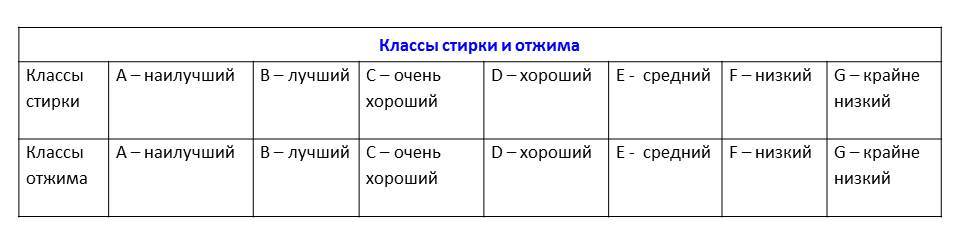
There are seven spin classes, with A, B, and C considered optimal. The difference here is the maximum permissible spin speed of the centrifuge: 1600, 1400, and 1200 rpm, respectively.
Let's compare the classes with each other
Many housewives value a washing machine that spins laundry well. Therefore, when purchasing a "home helper," prospective owners look at the spin class. Each category varies in the speed at which the drum spins during the final stage of the cycle.
- Class "A" is the highest. These washing machines can spin clothes at up to 1600 rpm. Residual moisture content of clothes will be only 45%. Drying time in this case is minimal.
- Spin class B is the most productive. These washing machines retain 45-54% of their moisture content. This means your "home helper" can dry clothes more than halfway. The machine spins the drum at up to 1400 rpm.
- Class C – acceptable. The laundry moisture content at the end of the wash cycle is 54-63%. The washing machine spins the drum at 1000-1200 revolutions. This is average for a high-quality washing machine.
Overall, the differences between the first three categories are insignificant. Washing machines with a rating lower than "C" are rare on the market today. Most washing machines are rated at spin class B, which is considered the most efficient.
The most optimal class
So, which washing machine is better to buy—one with maximum spin speed, or a less powerful one? It's crucial to consider what clothes will be washed. The recommended spin speed depends on the type of items loaded in the washing machine drum:
- bed linen and terry towels can be “spinned” at a speed of 1200-1500 rpm;
- jackets, down jackets and other bulky items – 1000-1200 revolutions;
- cotton – 1200-1400;
- satin, silk products – no more than 800 rpm;
- synthetics, children's clothing, everyday items - 1000-1400 rpm.
For people who primarily wash delicate and sensitive items, it is not advisable to purchase a machine with a maximum spin speed of 1400-1600 rpm.
It's a mistake to think that the lower the moisture content in your washing machine, the better. Yes, your laundry will be drier, but it will wear out much faster. Frequent rotation of the drum at high speed (1400-1600 rpm) is harmful both for the clothes and for the washing machine itself.
Constantly forcing your washing machine to spin at maximum speed will damage some of its internal components, such as shock absorbers, bearings, and counterweights. They will wear out much faster.
Therefore, it doesn't always make sense to buy a washing machine with a high spin speed. It's best to buy a machine with a spin class B or C. A washing machine should remove at least 40-45% of moisture from clothes, which both categories provide.
A washing machine's energy efficiency also depends on its spin class. The higher the spin class, the more kilowatts it will consume. This is because the motor will need to spin the drum faster, which requires more energy.
Therefore, spin class B is considered the most productive. Users can spin rough, heavy items at 1400 rpm if needed, while simultaneously reducing the speed to 1000 rpm when loading more delicate fabrics. Machines classified as category "C" are also considered optimal for home use.
Interesting:
Readers' comments
Headings
Washing machine repair




For buyers




For users


Dishwasher




Add a comment