
Spin class C in a washing machine
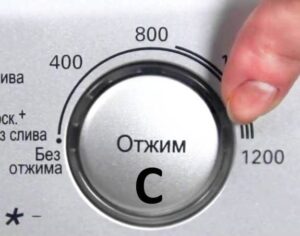 Before purchasing a washing machine, you should always consider not only its size, appearance, and price, but also its technical specifications. Ideally, you should even consider such nuances as energy efficiency class, water consumption, noise level, and spin strength. The latter is especially important, as it affects the quality of spinning after washing, which is often unsatisfactory. Today, we'll look specifically at spin class C in washing machines, as this rating is often found in budget models of "home helpers."
What does this letter hide?
Don't rush to buy attractive household appliances on sale, as they may not satisfy you in small details. Always carefully examine your future "home assistant" before making a purchase decision. Spin class is a feature many people overlook before purchasing, which is a mistake.
The spin class tells the buyer how effectively the appliance handles moisture in freshly washed items. The higher this rating, the better the machine's spin performance.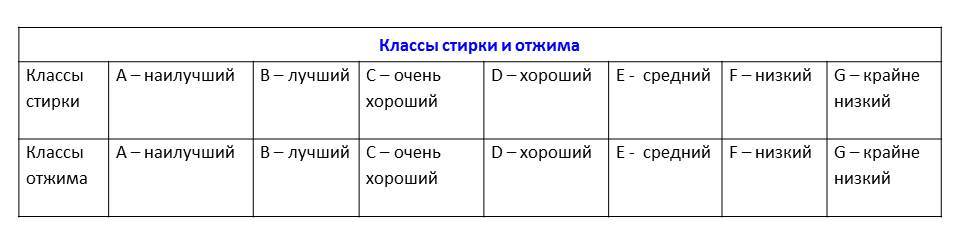
The letter designation indicates the number of revolutions per minute (RPM) the washing machine can spin to dry clothes. The higher the RPM, the drier the laundry will be at the end of the cycle.
Manufacturers produce household appliances with seven different spin classes, ranging from "A" to "G." However, only the first three are considered acceptable for today's fast-paced lifestyle. As for the difference, it is hidden in the maximum permissible rotation speed of the centrifuge, which can be from 1600 rpm to 400.
Characteristics of each class
Undoubtedly, every housewife values their appliances' ability to spin clothes effectively, so buyers often opt for the highest spin classes. Let's take a look at what these letter designations mean:
- The best class is "A." Washing machines with this rating can spin the drum up to 1600 rpm during the spin cycle. The residual moisture content of clothes after this cycle will be only 45%.
The more powerful the spin, the faster the final stage of the work cycle will be completed.
- Productivity Class "B." The speed is fixed at 1400 rpm, and the moisture content of clothes in this class after spinning is 45-54%, so clothes are dried approximately halfway.
- Acceptable class "C." Finally, the last drying class currently in use, allowing washing machines to spin the drum at up to 1200 rpm. This class is considered average, as the moisture content of the laundry after the cycle is already 54-63%.
The difference between classes "A" and "C" is considered minimal, so you can safely purchase a device with these spin parameters. However, it's best to avoid buying equipment with a class "D" or lower, especially since they're very difficult to find in stores. Most appliances today are rated "B," considered the most optimal.
Do you need a high spin speed?
We've covered what each spin class means, now all that's left is to choose the appropriate drum rotation speed. The maximum number of revolutions is not always necessary, so it is first necessary to understand what kind of clothes the housewife will be washing in her “home helper”. The following recommended spin settings can be identified for specific types of clothing.
- For bed linen and terry towels, a speed of 1200 to 1500 drum rotations per minute is best.
- For jackets, down jackets and other bulky items, you should use a speed of 1000-1200 rpm.
- Cotton items should be processed at a speed of 1200-1400.
- Satin and silk items should not be spun at a speed higher than 800 rpm.
- Synthetic items, baby items, and everyday clothes are best spun at a speed of 1000 to 1400 revolutions.
Therefore, if you mostly wash delicate fabrics and other delicate items in your washing machine, you simply don't need a class A or B machine. This would be a waste of money, so consider choosing a class C spin cycle.
Many people mistakenly believe that the lower the moisture content of clothes after a cycle, the better. While clothes will certainly be less damp and therefore dry faster, intensive spinning will also wear them out much faster. Furthermore, excessive RPMs can damage not only clothes but also appliances.
This is because a strong spin cycle creates excessive vibration, which can negatively impact the washing machine's key components. For example, over time, shock absorbers, bearings, and counterweights can fail and need to be replaced.
That's why you shouldn't chase the highest spin class. Not only is it often unnecessary, but it can also damage your favorite items along with the machine itself. It's best to buy machines with classes "B" and "C," as a modern washing machine should remove at least 40% of moisture, which these machines do perfectly.
The spin class has a significant impact on energy consumption. Therefore, the more powerful the spin, the more energy the electric motor uses to spin the drum, and the higher the user's utility bills will be.
For all of these reasons, the "B" category is considered optimal. It's sufficient for both spinning the largest items at 1400 rpm and for handling smaller items made of delicate fabrics, for which the speed can be reduced to the minimum. However, "home helpers" with a "C" category shouldn't be discounted either, as they are also ideal for home use.
Interesting:
Readers' comments
Headings
Washing machine repair




For buyers




For users


Dishwasher




Add a comment