
Washing machine spin class – which is better?
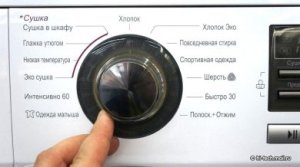 If you're looking to buy a washing machine, it's important to evaluate all its features. We often want to use our appliances for many years to come. Therefore, it's important to understand at least the features you'll use regularly. And if you're interested in the spin class, it's worth taking the time to learn about it. In this article, we'll explore the different spin classes, their effectiveness, and which one is best for you.
Classification
The classification of such an important washing process as spinning is closely related to the number of revolutions a washing machine can make. Typically, the number of revolutions in automatic machines ranges from 400 to 1200 revolutions per minute. The effectiveness of the automatic laundry spinning process depends on how damp the washed items remain after spinning.
This calculation is quite simple. To do this, we need to weigh the laundry after it's been spun. Then, wait until it's completely dry and weigh it again. Once we know both figures, all we have to do is subtract the dry weight from the wet weight, divide the resulting value by the dry weight, and multiply by 100%.
There's also a European standard for drying quality. It's supported worldwide and is based on the Latin alphabet. According to this standard, high-quality spinning is marked with the letter "A." Slightly worse is marked with the letter "B." Even worse is marked with the letter "C." And so on. The final letter in this classification is "G."
Let's take a closer look at this classification, starting with the worst indicator:
- "G" – this letter tells us that the spin quality corresponds to a figure greater than 90%. This means that the moisture content of the item after spinning will be more than 90%.
- “F” – this designation corresponds to a laundry humidity of 81 to 90%.
- “E” – this value indicates 72-81 percent moisture.
- “D” – corresponds to values from 63 to 72 percent.
- “C” – 54-63 percent.
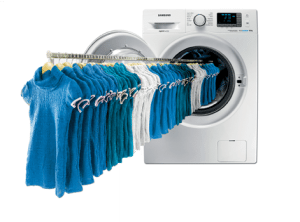 “B” means that this washing machine is capable of spinning clothes while leaving them with 45-54 percent moisture.
- "A" is the highest quality. It guarantees humidity levels of less than 45%.
In addition to the drum's rotation speed, the spinning process is also affected by the way the drum rotates. For example, some washing machines have a spin-drying mode. The drum rotates in a special way, periodically changing the speed. This technique prevents wrinkles from forming during the spin cycle. Therefore, after washing, you can skip the ironing process and simply hang the laundry to dry, eliminating the need for an iron once it's dry.
So which spin type should you choose?
As practice shows, the need for a washing machine speed of over 1000 rpm does not make much sense for spinning. If you compare 400 and 600 RPM, the difference is significant. At 400 RPM, the moisture content of the item will be approximately 90 percent, while at 600 RPM, it will be 75 percent. At 1,000 RPM, the moisture content of the wrung-out item will be approximately 60 percent. This is quite acceptable, especially considering that normal room air has a similar humidity level.
Quite often, machines with high RPMs are significantly more expensive than those with lower RPMs. However, from a practical standpoint, not everyone can tell the difference in moisture content between items spun at 1000 RPM and 1500 RPM. This difference may only be noticeable on items made of dense fabrics, such as jeans or coats.
In other cases, too many spins can have a negative impact on laundry. Furthermore, items removed after such a wash may be excessively wrinkled, requiring a lot of ironing. Therefore, we recommend not chasing too many spins. Instead, focus on the quality of your machine.
Tips for those planning to buy a washing machine
 A friend who works in the repair industry advised buying washing machines only from foreign manufacturers. According to him, Italian and German-made It boasts high-quality performance. And it breaks down much less frequently than the Italian and German machines assembled in Russia or China.
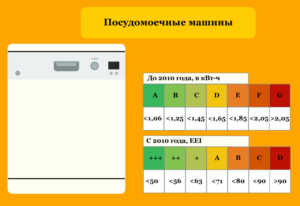
You may also be interested in energy efficiency class of washing machinesSome washing machines use a lot of electricity, while others use little. Moreover, both can wash clothes with approximately the same quality. Therefore, we recommend choosing energy-efficient machines.
The most energy-efficient household appliances are marked "A++." Models marked "A+" and "A" are also recommended. They consume slightly more electricity. Next come brands marked "B," "C," "D," and so on up to and including "G." However, you're unlikely to find the latter on store shelves. Since manufacturers are constantly striving to improve the performance of their appliances, you'll increasingly see models marked "A," "A+," and "A++."
We hope you buy a machine that will last for years and delight you with its high-quality washing and spinning results. Explore our website. Have a great day!
Interesting:
1 reader comment
Add a comment
Headings
Washing machine repair




For buyers




For users


Dishwasher




Thanks for the information. Everything is clear and concise. I received answers to my questions.