
Washing machine efficiency class
 Let's start this article by recalling the grading system in our schools and other educational institutions. As you all know, we grade on a five-point scale. However, other countries have completely different grading systems. In many countries, grades are given either as percentages or as letters. For example, In countries like England and the USA, the alternative to our "five" is the letter "A"And then down the alphabet. The further the letter, the lower the rating.
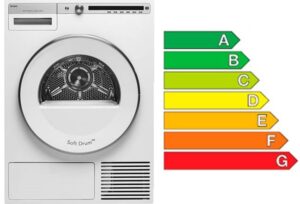
In this article, you'll learn about washing, drying, spinning, and energy efficiency classes. We'll also discuss the principles behind all four classes. Consumers pay attention not only to the washing machine's capacity, but also to all four classes. There are seven washing efficiency classes in total:
- A,
- IN,
- WITH,
- D,
- E,
- F,
- G.
Each class is determined for a washing machine by comparing the performance of the tested washing machine to the performance of a reference machine, which we will discuss below.
Now let's figure out which washing machines receive the highest rating - "A".
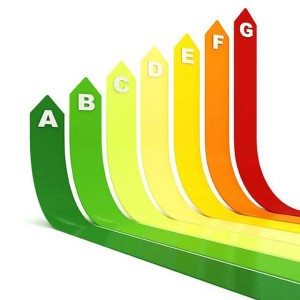 A perfectly washed item is one from which all dirt has been removed. This applies to any type of stain on any type of fabric. Many housewives know how difficult it can be to clean a garment; however, they understand that the sooner you throw the garment in the wash, the easier it will be to remove. If a washing machine successfully copes with its task, it is given an “A” rating. The question now is how manufacturers rate washing machines.
Each washing machine undergoes a test wash. This wash involves using a certified machine, a small soiled piece of fabric, and 180g of washing powder.
Each machine uses the same cloth with detergent. The wash cycle lasts 60 minutes at a temperature of 60 degrees Celsius. After the wash, the machine tests the washing machine for quality. Finally, the manufacturers themselves calculate the results, which are then used to generate a table. This table shows the classification of quality ratings. Using this table, as well as the testing procedure itself, the manufacturer assigns a washing efficiency rating to the machine.
Some people claim they can easily tell the difference between wash grades "A" and "B." However, this is a myth. The point is, the difference between the two classes is extremely small. Not everyone with excellent eyesight will be able to detect it. If a machine is close to Class A, it doesn't necessarily wash poorly. However, the difference can be discerned on bedding and white clothing.
The first standard machine was created in 1995.
These machines are produced by authorized manufacturers. Their specifications fully comply with all European quality standards. They are still manufactured using the same technologies as before. But, as with all technologies, progress continues, and at a very rapid pace, so thanks to new technologies, we can choose a machine that is much more efficient and affordable. This is already noticeable: today, a class A machine washes laundry 1.03 times better than the reference machine. So, it's better to buy class A and B washing machines if your budget allows. Class C is also an option, although it's not recommended, but not lower.
Now let's look at another class - energy consumption and expenditure
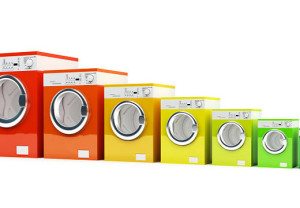 Based on average statistics, a washing machine runs for 3 to 5 hours per week. The difference between these hours is only 9 kWh/kg per year (per 1 kg). Now try multiplying this by the wash volume you're used to. You'll notice that washing quality and energy consumption depend on more than just the washing machine's class.
Here, the biggest factor depends on the load volume. Overloading your washing machine will reduce wash quality and consume more energy. This is also something to consider when doing your laundry.
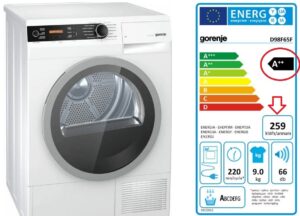
However, class A washing machines are far more cost-effective, as they use the least energy. And if you think about it logically, it becomes clear that the lower the class, the higher the energy consumption. Incidentally, an additional class—A+—was added to indicate energy consumption standards.
And the last thing we will look into is how a machine is rated highly based on its spin class.
Everything here is very logical and simple: the manufacturer initially weighs the laundry before the wash cycle, then launders it under normal conditions. After washing, the manufacturer simply divides the post-wash weight by the pre-wash weight. Spin efficiency depends on the spin speed and drum diameter of the machine. For example, a class A washing machine spins at up to 1500 rpm.
If you like to dry your clothes on a clothesline or line, you can easily buy a Class G machine. These machines don't even spin the laundry; they simply wash it. If you prefer a quick and easy drying process, then buy a washing machine in the first three classes. After all, why waste your free time on something a washing machine can do for you? Moreover, you won't pay that much for a machine with a very good spin cycle—just a few tens of dollars.
In this article, we've outlined all the advantages of choosing a washing machine with a class A, as well as B and C. We hope you found this article helpful. This information will be useful not only for choosing the right machine, but also for identifying any class discrepancies in your washing machine, should they arise.
Interesting:
Readers' comments
Headings
Washing machine repair




For buyers




For users


Dishwasher




Add a comment