
Classification of washing machines
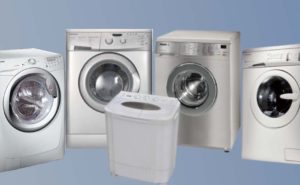 Today, manufacturers produce a variety of washing machine models, differing in design, size, feature set, and more. The classification of washing machines involves grouping them according to one or more characteristics. This division will be multi-layered.
For example, all washing machines are designed for either home or industrial use. At the same time, both home and industrial washing machines are categorized by installation type, maximum load, power, and functionality. Let's try to understand the basic classification of washing machines based on the first and second criteria.
First level of classification?
To clearly understand the criteria used to categorize washing machines into multi-level categories, it's important to clarify which classification criteria will be used to separate appliances into first-level, second-level, and other categories. Defining selection criteria is a highly subjective process. In the presented classification, all automatic washing machines are divided at the first level into machines for domestic and industrial use.
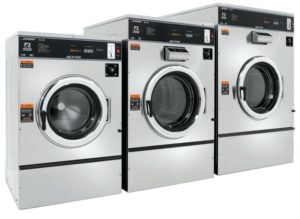
Industrial washing machines are installed in laundries, large businesses, hotels, and medical facilities. They are designed to handle large volumes of laundry daily and operate continuously for several hours. Machines in this group are characterized by high wear resistance, large load capacities, specialized wash programs, and an extended service life (with regular maintenance, up to 20-30 years).
Domestic automatic washing machines are designed for single-family use in apartments. Unlike industrial machines, these machines typically feature a wider range of programs, options, and add-ons. However, these "home helpers" are less durable, with an average lifespan of 7-10 years. They are not designed for long hours of continuous operation or for washing large loads simultaneously. The body of a washing machine, including the drum, is partially made of plastic. Industrial equipment is made almost entirely of metal.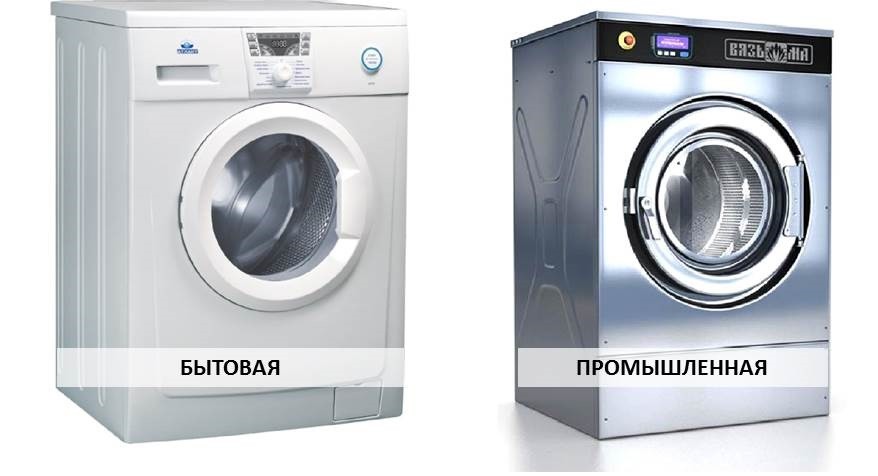
Another criterion for first-level classification is the type of washing machine. They are divided into activator and drum types. The degree of automation of the machine can also be a selection criterion, with the following being distinguished:
- Automatic washing machines. Equipped with a main electronic module that controls the system. This unit will not only monitor the water volume, initiate the main wash, and control the rinse, spin, and drain cycles, but also evaluate the drum load, detergent dosage, and automatically calculate the optimal water volume for washing, among other parameters.
- Semi-automatic machines. The user is much more involved in the washing process: they have to manually fill the water to the required level, start the spin cycle at the end of the wash, then drain the used liquid and add new water for the rinse cycle.
Today, automatic machines have practically replaced semi-automatic equipment. In fact, semi-automatic machines are now more common in industrial settings than in everyday life.
Second level
What criteria are suitable for classifying washing machines at level 2? Here we will discuss the permissible loading volume, equipment dimensions, and installation methods for the devices. Depending on the maximum weight of laundry allowed for a single wash, home washing machines are divided into three types:
- With a small load capacity of 2 to 3.5 kg. In most cases, these units are purchased specifically for wall-mounted, under-sink, or cabinet installation. These "small" units offer significant space savings, but they won't accommodate bulky items;
- With an average weight of 4.5 to 7 kg. These are the most popular and widely used models. All global manufacturers, with the exception of US brands, focus on producing precisely these types of machines. These machines are suitable for washing a large family and are suitable for washing outerwear, blankets, bedding, and soft toys.
- With a maximum load capacity of over 8 kg, these machines can hold up to 14 kg of dry laundry. These machines are expensive, bulky, and are typically purchased by families of six or more.
A similar classification criterion can be applied to industrial machines. Depending on the load, machines are classified as having a permissible weight of 6.5 to 11 kilograms, 12 to 36 kilograms, and over 36 kilograms. Machines can also be classified by housing depth at the second level of classification.
- Super-narrow models have a depth of 33 to 40 cm.
- Narrow equipment takes up 40 to 45 cm of space.
- Standard machines have a depth of more than 45 cm.
Experts believe that due to the close spacing of components in super-narrow and narrow machines, such models will have a significantly shorter lifespan. However, there is little practical evidence to support this belief.
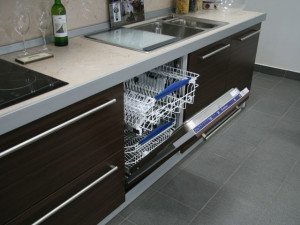
Washing machines can also be categorized by other characteristics, such as installation method (freestanding, fully or partially built-in), loading method (front or top), etc.
Efficiency of washing machines
Beyond the generally accepted classification, we can consider a very interesting feature that allows us to group machines by their efficiency. These indicators are relevant for both domestic and industrial washing machines. The efficiency of washing machines should be given close attention when selecting and purchasing equipment. There are three main classes:
- energy consumption;
- washing quality;
- spin efficiency.
According to the degree of energy saving, washing machines are divided into 5 main groups. The first lines are occupied by the most advantageous models, belonging to the classes “A», «A+», «A++”, with consumption respectively from 0.17 to 0.19 kW/h, less than 0.17 kW/h, and below 0.15 kW/h. Class "B" includes washing machines that consume more than 0.19 units of energy, while "C" includes machines that consume between 0.23 and 0.27 kilowatt-hours. Higher consumption is almost never seen in modern automatic machines.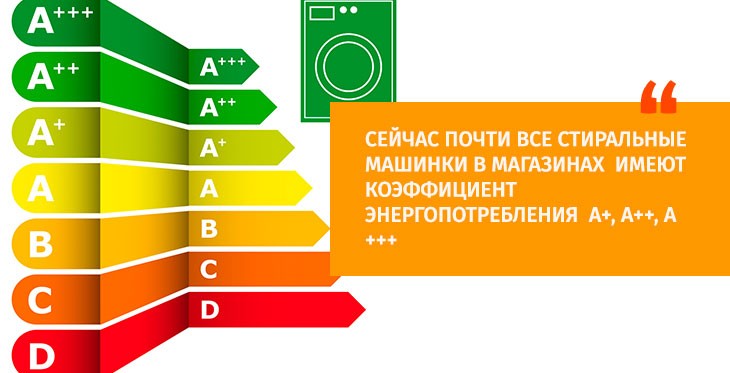
A washing machine's efficiency class is assigned by the manufacturer after comparison with a specific standard. If the machine performs at least as well as the standard, it is assigned an "A" class. Next come the "B," "C," "D," "E," and "F" groups. Class "G" indicates the lowest cleaning performance.
Models are classified by spin efficiency based on the residual moisture content of items spun at maximum drum speed. Class "A" indicates items with a moisture content of less than 45%, while "B" indicates items with a moisture content of 46 to 54%. The least efficient class is designated by the letter "E," which indicates items will be quite damp, with a moisture content of up to 81%.
Classes "F" and "G", which were previously encountered, are not assigned to modern automatic machines.
There are numerous criteria for classifying washing machines. The scale of this work is enormous, and hundreds of reasons for multi-level groupings can be found. We've tried to present the basic criteria by which washing machines can be easily classified. We hope the examples described will help you understand the meaning of the classification.
Interesting:
Readers' comments
Headings
Washing machine repair




For buyers




For users


Dishwasher




Add a comment