
Whirlpool Dishwasher Error Codes
 When we talk about Whirlpool dishwasher codes, we're talking about errors detected by the appliance's self-diagnostic system. They're assigned a specific code. Why are they so important? These codes tell the user exactly what's wrong with the machine. If the code is correctly deciphered, you can get to the root of the problem and fix it yourself, without the need for a technician. Today, we'll be deciphering the main Whirlpool dishwasher self-diagnostic codes.
Features of troubleshooting
The key feature of the Whirlpool dishwasher's self-diagnostic system is that no single code has a definitive meaning. In other words, the error code cannot specifically indicate a particular malfunction; it merely identifies a range of possible faults that the user should pay attention to and check first. Let's give a specific example. Error E5 indicates that:
- no water enters the dishwasher;
- the pressure in the system is too low;
- There is a blockage in the dishwasher that prevents water from circulating properly;
- The inlet valve is broken.
As you can see, the range of faults indicated by this code is quite broad, and it takes time to identify the specific problem and then fix it. One more thing: any of the errors we'll discuss later could be caused by a faulty control module or a simple, temporary firmware glitch.
It turns out that we can add this to the standard E5 error code. And if we check the water supply to the machine, then the inlet valve, then the filters and hoses for blockages, and everything appears to be fine, then we'll need to look at the control module.
Experts recommend that if any system error occurs, first reboot the dishwasher a couple of times, completely disconnecting the power supply to eliminate any short-term system failure, and only then attempt to troubleshoot the problem.
Whatever one may say, not everything is so simple with these Whirlpool dishwasher self-diagnostic system codes. Even if you have a detailed breakdown of each code, there is no guarantee that this code will 100% point to the problem in your specific case. However, the probability is very high, so the decryption data should always be at hand.
E errors
When describing self-diagnostic system codes, we'll follow the following algorithm: first, we'll list the error code, then a brief explanation and the causes of its occurrence, and finally, a brief recommendation on how to troubleshoot these issues yourself. This description will be provided for each error. Let's get started.
Code E1. This indicates that the system protecting the dishwasher from leaks has triggered an alarm. In this case, carefully inspect the bottom of the wash chamber, the salt reservoir, and the hoses for leaks. Look for where water is dripping or already pouring into the tray. Also, inspect the dishwasher hoses for damage and replace them if necessary.
Code E2. This error indicates a violation of the electrical safety system. It's likely that some wiring is exposed, causing a current leak to the housing. If you also feel a tingling sensation when you place your hand on a metal part of the dishwasher, this confirms that a leak has occurred, which is very dangerous. You should immediately unplug the dishwasher, then disassemble it and inspect all wiring and connections.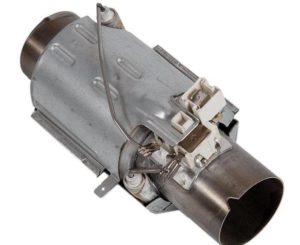
Code E3. This indicates a problem with the heating element. The heating element or thermostat may be faulty, the power supply wire may be broken, or the bus on the control board may be burned out. You'll need to check all of these things step by step with a multimeter. It's best not to touch the control module yourself, as this could make the problem worse.
Code E4. There is a problem with the thermostat; either the element itself has burned out or its power supply wire has broken. It is necessary to check the thermostat with a multimeter, and if the part is in good working order, you need to carefully check the wires going to it. If both are working properly, then the problem is in the control module.
Code E5. This indicates that the dishwasher is taking too long to fill with water, significantly longer than the program predicts. What could have happened? Perhaps you simply forgot to open the tee valve. The water utility may have shut off the water supply, or the inlet hose may be clogged. Most often, it's not the hose itself that's clogged, but the small flow-through filter located where the hose connects to the dishwasher body. In the worst case, the inlet valve may be faulty or its power supply may be interrupted. We check everything, from the water supply and blockages to the inlet valve. The valve itself will likely need to be replaced.
Code E6. The machine is unable to drain wastewater for some reason. We'll check for three main causes:
- clogged drain hose or waste filter;
- pump malfunction;
- breakdown of the circulation pump.
In most cases, blockages are the cause of the error. If cleaning the filter and hose doesn't help, you need to inspect the pump. Its impeller is likely not rotating due to dirt clogging it, or the pump itself is faulty. All of these issues need to be checked, preferably with a multimeter. A qualified technician will be required for a qualified inspection and repair of the circulation pump.
F errors
Code F0. This error doesn't appear on its own. The dishwasher only displays it if the user runs a test program. It indicates a malfunction in one of the sensors. The problem is resolved by checking the sensors step by step, identifying the faulty one, and replacing it.
Code F1. Most likely indicates a faulty temperature sensor. If this sensor transmits incorrect readings to the control module, the temperature inside the dishwasher begins to fluctuate. The system decides to stop operation and generate an error. This problem is resolved by checking and replacing the temperature sensor.
Code F2. This means the mechanical float switch in the Whirlpool dishwasher's drain pan has tripped. It could simply be a stuck contact, or there may actually be a leak. What should you do? First, remove the side panel of the dishwasher and carefully inspect the drain pan with a flashlight. If the pan is dry, you can wiggle the switch with a screwdriver to open the contacts and resume using the appliance.
Code F3. Indicates the heating element, thermistor, or control module bus. All these components are checked and replaced with new ones if necessary.
It is better to entrust the replacement of the control module bus to a specialist.
Code F4. If this error occurs, check how quickly the machine drains. Restart the dishwasher, set the program and listen to how quickly the machine fills and drains water. If there's no drain at all, you need to check the pump, the drain hose (possibly the trap under the sink), and the busbar or firmware of the electronic module. The latter is least likely, so let's focus on the drain pump and hose. Clogs are often the culprit, but sometimes the pump also needs to be replaced.
Code F5 indicates a problem with the sprinkler system. In the vast majority of cases, this annoying error occurs when the sprinkler nozzles are clogged. Simply cleaning them with a thin, sharp object, like a gypsy needle, will clear the error. Otherwise, this code appears when the engine stops running. In this case, it requires diagnostics and replacement.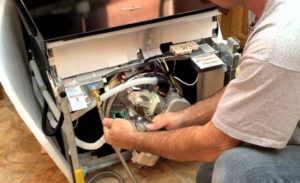
Code F6. When this error occurs, we need to check the machine for water. We'll start by cleaning the flow filter mesh on the inlet hose. If that doesn't help, we need to inspect the flow sensor and replace it if necessary.
Code F7. If code F7 appears, you need to carefully inspect the intake valve. If the valve is functioning correctly (opening and closing fully), we move on to inspecting the pressure switch. First, blow through its tube and then test the component with a multimeter. A broken component cannot be repaired; it must be replaced.
Code F8 indicates insufficient water in the dishwasher system. Clogged filters in front of the inlet valve or a poorly functioning impeller may be the culprit. In very rare cases, the inlet valve may be at fault. This error often occurs if the dishwasher is filled with a low-quality dishwashing detergent that foams excessively. The problem can be resolved by cleaning the filter, cleaning or replacing the impeller, and adjusting the inlet valve. If the detergent is at fault, you should no longer use it.
Code F9. Occurs when the machine continuously fills and then drains water. In most cases, this indicates damage to the inlet valve when it stops holding water. In rarer cases, this symptom is caused by a burnt-out track or triac on the control board. In this situation, the control module commands water intake but does not stop the process. The solution is to replace the inlet valve or repair the control module.
FA. The culprit of the error is the Optical Water Indicator, or simply the indicator that monitors the purity of the incoming water. This component may burn out, its lens may be dirty, or the problem may not be the Optical Water Indicator at all, but a burned-out bus in the control module. These dishwasher malfunctions are resolved as follows:
- the lens is removed and cleaned;
- the indicator itself is checked with a multimeter; if it burns out, it is replaced;
- If the problem is a burnt tire, you need to take the control board to a mechanic for repairs.
FC. This error occurs if your Whirlpool dishwasher is equipped with a water hardness sensor and it's faulty. The solution is to test and replace the sensor.
So, we've explored the various error codes for Whirlpool dishwashers. Now all you have to do is find the code you're interested in from our list and read its meaning. If you're still interested, Error codes for different dishwashers, read the publication of the same name on our website. We bid you farewell and wish you good luck!
Interesting:
11 reader comments
Add a comment
Headings
Washing machine repair




For buyers




For users


Dishwasher




Why, when you're explaining errors, don't you even mention their combinations? For example: F6 and E4? Or F4 and E3? After all, in these cases, they can't be considered two separate errors?
F4, E3 - either the relay in the unit is malfunctioning, or the bushings on the caliper are worn out and have play.
Error F10?
When I select program 2, the button on the top switches to the rinse cycle, blinks rapidly, and beeps. What's the cause?
What does error F 15 mean?
What does error F12 mean?
Whirlpool. What does the letter H stand for?
When the program starts, after a few minutes it starts blinking and produces short beeps and this letter appears.
What does F15 mean?
The Whirlpool starts with a rinse cycle. After that, the tablet doesn't open, and the machine turns off after 5 minutes.
What does error F15 mean and the light is flashing?
Water supply.