
Siemens Dishwasher Error Codes
 Siemens dishwasher self-diagnostics mean that when a malfunction occurs, the machine stops and an error code appears on the display. Users who see this for the first time often assume the dishwasher is broken and will need to be repaired. However, don't panic; instead, understand the meaning of the code and you may be able to fix the problem yourself. To do this, consult your dishwasher's manual or read this article.
Water drain and fill errors
We've divided all Siemens dishwasher error codes into two groups. The first group includes errors that can generally be resolved independently, without the need for a professional, and are primarily related to draining and filling.
E3 is an error code indicating that the water fill does not reach a certain level within the allotted time. Older machines of this brand stop in this situation, and the water fills until it reaches a certain level. In newer dishwasher models, water may leak. The reasons for this type of work are as follows:
- The Aqua Stop system is faulty;
- the drain pump is not working;
- the filling valve is damaged;
- the water level sensor does not work;
- There is a blockage in the water supply filter.
The first thing to check is the filter located immediately behind the inlet hose and the inlet valve. Next, check the Aqua Stop hose and replace it if necessary. The pressure switch and pump break the least often; replacing them requires certain skills.
E5 is an error code that occurs when the water level exceeds the set point. This error is caused by a clogged water sensor tube or a faulty water sensor itself. Water may also be filling the dishwasher if the water inlet valve is stuck open; such a valve must be replaced.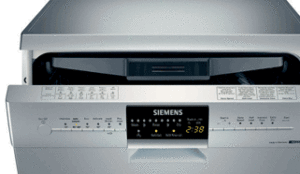
E8 is an error code indicating low water intake. This code indicates the dishwasher's heating element isn't receiving a signal to turn on, and the circulation pump can't pump water due to low pressure, resulting in the wash not starting. A common error is low water inlet pressure. A faulty pressure switch may be the cause.
E15 is an error code that indicates the Aqua Stop protection system is activated; water has likely entered the tray. To resolve the E15 error, drain the water and locate the leak, such as a leaky hose or pipe connection. Sometimes, the Aqua Stop float gets stuck; to fix this, tilt the dishwasher, which will clear the E15 error.
E16 – appears on the display when the dishwasher fills with water on its own. This may be caused by:
- increased foaming due to overdose of detergent or its use for other than its intended purpose;
- malfunction of the pressure switch or fill valve.
E17 is an error that occurs when filling the dishwasher's reservoir with water. This error indicates a malfunction of the water flow sensor, which means the water pressure is too high. First, check the water pressure at the faucet and replace the flow sensor if necessary.
E21 is a dishwasher pump fault code. The dishwasher's drain pump is blocked, preventing water from draining. This is due to either a clogged or worn pump.
Please note! Some Siemens dishwasher models may display error code E22, sometimes interspersed with error code E24. In 80% of cases, E22 is caused by a clogged filter located at the bottom of the wash chamber. It very rarely occurs due to a faulty pump.
E24 is an error code indicating that the water is not draining properly. This could be due to one of the following reasons:
- the drain hose is kinked;
- clogged drain filter or drain hose;
- sewer blockage.
Error codes related to water heating and sensors
Now let's look at the error codes for Siemens dishwashers that indicate more complex faults.
- E1 – error code that occurs when the water is overheated or not heated. Most likely, the cause is a faulty heating element. The heating element's triac on the control module can also fail. Less commonly, a water heating error occurs due to a faulty pressure switch or inlet valve.
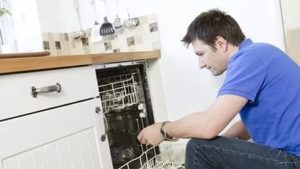
- E2 – The temperature sensor (NTC sensor) is not working. This sensor in Siemens dishwashers is located inside the heating element; replacing it is not difficult if you know how to disassemble the dishwasher.
- E4 is an error code indicating a faulty flow switch. This switch is located under the heating element and distributes water to the rocker arms. The error may be caused by either a clogged switch or a faulty motor that controls the switch.
- E6 is the error code for the water turbidity sensor (Aquasensor). The Aquasensor monitors the turbidity of the water during the initial rinse of dishes. This sensor can reduce the number of rinse cycles. It is located near the heating element.
- E9 is the heating element error code. This error is typical for dishwashers with a flow-through heating element. Check the unit with a multimeter and replace the heating element with a new one if necessary.
- E11 is an error code that occurs when the dishwasher operates without heating the water. This means that you need to check the temperature sensor, electrical wiring, or electronic board.
- E14 is an error code related to a malfunctioning water flow sensor. The dishwasher may still operate. In this case, professional diagnostics are required. For information on DIY repairs, see the article. Siemens dishwasher repair.
Important! Error code E18 is the only one that doesn't require any action. Instead, wait until the dishwasher finishes running, and do not disconnect the power during this time.
- E27 is an error code informing the user about a drop in voltage in the electrical network. Most often, this error occurs when the network is overloaded in the evening. In this situation, you need to check the voltage in the network, and to ensure normal, uninterrupted operation of the unit, install a voltage stabilizer, which can save the machine from repair.
So, there aren't many codes indicating malfunctions in Siemens dishwashers. Some of them have similar causes, so be careful when identifying the problem, and if you have any difficulties, contact a specialist. Otherwise, you risk damaging the machine instead of repairing it.
Interesting:
Readers' comments
Headings
Washing machine repair




For buyers




For users


Dishwasher




Add a comment