
What is a condenser dryer?
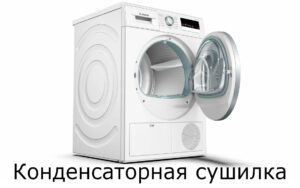 The problem of how to dry washed items is a pressing one for many housewives. Laundry hung on radiators or special drying racks looks unsightly. The solution is to install a tumble dryer.
Condenser dryers are the most popular appliances. Most homeowners prefer these models. Let's explore the main advantages of this type of equipment and explain how they work.
What is a condensation dryer?
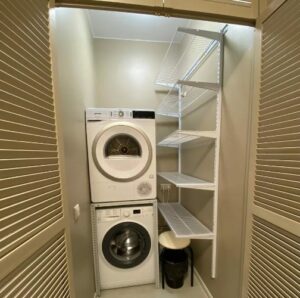
What is the advantage of this type of equipment? Machines with condensation drying type do not need to be connected to a sewer or ventilation system. These dryers only require a power connection to operate. This convenience is why many buyers choose condenser dryers.
Some models can be connected to the building's utility lines, allowing excess moisture to drain directly into the pipe. This is optional and optional, but not mandatory. A condensation machine only requires a power outlet to operate.
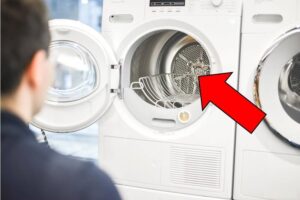
The design of a condensation dryer is quite simple. The unit consists of the following components:
- drum – wet items are loaded into it;
- drive belt required to spin the drum;
- engine;
- Heating element – an element that heats the air inside the working chamber;
- pump – pumps out condensate;
- fan;
- container – water is drained into it.
Condenser dryers have a container to collect condensate, so they do not need to be connected to the house's utility lines.
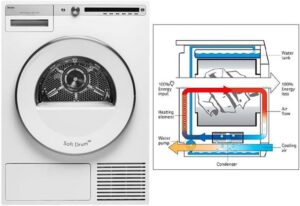
The condensation machine works on the following principle:
- The heating element heats the air;
- thanks to a special blowing system, hot air enters the working chamber;
- under the influence of high temperature, moisture “leaves” things;
- the pump pumps condensate into a special container;
- The machine takes in air again and the algorithm repeats.
The functionality of condensation dryers can vary depending on the model. Dryers offer the following options:
- easy ironing (due to this function, things are practically wrinkle-free);
- delicate drying;
- delayed start;
- express drying;
- drying items to a certain level of humidity (you can dry the laundry completely or leave it slightly damp, under the iron);
- drying different types of fabrics (from cotton to wool and silk products);
- drying shoes and outerwear.
Condenser dryers are just as easy to maintain as they are to install. The user only needs to periodically drain the water container and clean the filter, which collects lint and dust. With heavy use, this should be done every 1-2 weeks.
The main drawback of condenser dryers is their high energy consumption. The device requires constant hot air generation, which consumes a significant amount of energy. When purchasing such a unit, be aware that your electricity bill will increase.
There is still a way to achieve optimal energy consumption. Consider condenser dryers equipped with a heat pump. These machines are more energy efficient. We'll explain the key features of this advanced equipment.
Advanced type dryer
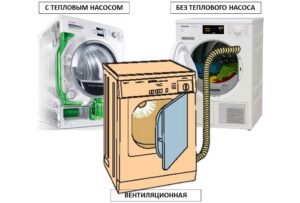
When choosing drying equipment, it is worth considering machines equipped with a heat pump. They are based on modern technology. Heat Pump, combining two operating principles: condensation and ventilation at the same time. In this case, the initially collected air is not “thrown out” outside the unit, but remains inside and is reused.
Dryers with a pump have a closed heat exchange circuit, which allows for low energy consumption.
After the first "run," the moist air isn't removed from the machine but rather passes through the heat pump. The condensate is retained in a special tray (or sent to the sewer if the dryer is connected to the utility system). The still-warm air is slightly warmed and reintroduced into the drum. This reduces the appliance's energy consumption.
Heat Pump dryers consist of the following elements:
- drum;
- engine;
- drive belt;
- evaporator;
- heat pump;
- fan;
- container for collecting condensate.
The operating principle of dryers equipped with a heat pump is as follows:
- the dryer draws in air, which is heated by a pump;
- The fan-dryer directs a hot stream of air into the working chamber;
- under the influence of high temperature, moisture evaporates;
- moist air is directed to the evaporator;
- the condensate remains in a special tray;
- Dry air enters the heat pump again and the algorithm repeats.
It's worth noting that machines equipped with a heat pump dry laundry more gently. The air in the drum is heated to a maximum of 40°C, avoiding extreme temperatures on delicate fabrics.
The operating temperature within the evaporator itself ranges from 15 to 20°C. This temperature allows the air to cool and condense. The water remains in the tray, and the airflow is reused.
The air in the evaporator is cooled slightly, to approximately 30°C. Therefore, reheating the airflow occurs much more quickly, requiring little energy. This process occurs cyclically until the items in the drum are completely dry.
Advanced tumble dryers are more expensive than standard condenser dryers. However, they can use less energy, meaning your bills will be lower.
Which device is better to buy?
When deciding which dryer to buy, review all the specifications of the models you like. By comparing them, you'll know which is better. We'll explain what to look for, what parameters may differ, and which will be roughly the same.
One of the most important characteristics is the maximum drum load. This will vary depending on the model, but both conventional machines and heat pump dryers can hold as little as 6 kg and as much as 9-10 kg of laundry. It's important to consider your specific family's needs.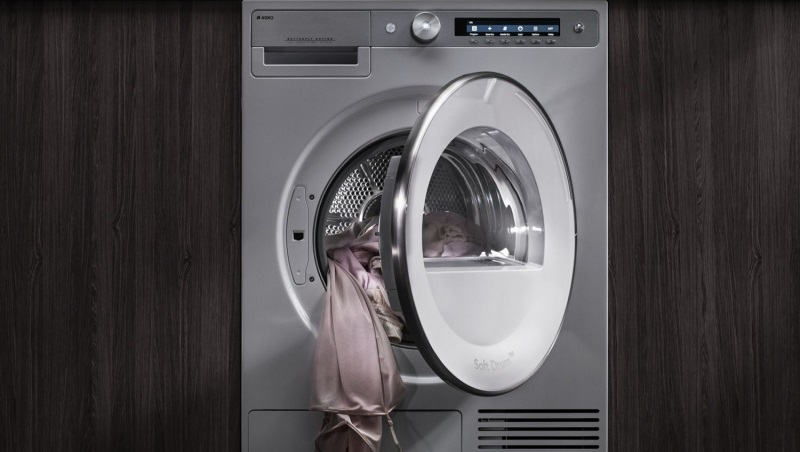
Ease of control and interface. Both machines have standard controls. The dashboard features buttons, a program selector, and some models even feature a display.
Functionality. Another important criterion. Before purchasing, it's worth checking what modes the dryer offers, whether it has a delayed start option, a delicate drying program, etc. Typically, standard machines have at least 10 different algorithms.
Supported modes are independent of whether the machine has a heat pump or not. Special programs, such as drying shoes, outerwear, and delicates, are available in both standard and advanced models.
Both the first and second generation machines have roughly the same number of sensors. These include a temperature monitor, an indicator that monitors humidity levels, and the fullness of the excess moisture container. There may also be a filter clogging indicator.
If we talk about installation methods, then here too the differences are insignificant. Both standard condensation dryers and pump dryers can operate independently, requiring only a power outlet. The first ones can be connected to the sewer system to drain liquid, the second ones – to ventilation, but this is not necessary.
Heat Pump condensing machines are capable of providing more gentle drying, as the air inside is heated to a maximum of 40°C.
For some, gentle drying will be a definite plus. However, it's important to understand that gentle drying takes longer, which may not suit all users. Machines equipped with a special pump are more expensive but use less energy during operation.
What conclusion can be drawn from the above? Standard condensation dryers are suitable for users with a limited budget. These devices also help dry clothes more quickly. One drawback of these units is their high energy consumption. When choosing this type of dryer, consider the Electrolux EW6CR527P, Electrolux EW6CR428W, Candy GVS4H7A1TCEX-S, and other models.
Machines equipped with a pump are a good option that will help you save money not immediately, but in the long run. While they are more expensive, they use much less energy, significantly reducing your bills. These dryers are ideal for users who frequently wear delicate fabrics. Consider models like the Bosch WTW85540EU, Siemens WT47Y782OE, and others.
The average price of a standard condenser dryer is $450–$470. Heat pump dryers cost around $550. Cheaper models are available, but they typically have limited functionality or a small drum capacity.
In fact, both types of dryers are capable of performing their intended functions efficiently. Choosing a condenser dryer depends on your budget and your preferences for built-in programs.
Interesting:
Readers' comments
Headings
Washing machine repair




For buyers




For users


Dishwasher




Add a comment