
Selecting and installing a tee tap for a washing machine
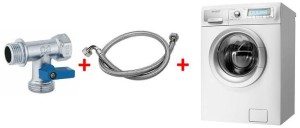 A crucial, and perhaps most important, step in installing a washing machine is connecting it to the water supply. If you choose the wrong components and perform the work poorly, it will all end badly for you and your neighbors. Moreover, you could end up flooding the entire lower floors. In this article, we'll discuss choosing the right faucet for connecting your washing machine to the water supply, other components, and connection diagrams.
Choosing a faucet to connect a washing machine
When purchasing components for a washing machine, many people often wonder why they need a tee faucet. Why can't they just do without a faucet, or, for example, choose a regular flow-through faucet? While it's certainly possible to do without a faucet, you'll need to be prepared to do repairs for the neighbors downstairs.
For those familiar with the phenomenon of water hammer in plumbing systems, there's no need to explain how this unpleasant, yet quite common, phenomenon ruptures metal and metal-plastic pipes at the seams. Just imagine for a second what would happen to a flexible washing machine inlet hose connected directly to a water pipe? It would rupture in seconds, and within 15 minutes, your apartment and your neighbors' apartments would be flooded with water.
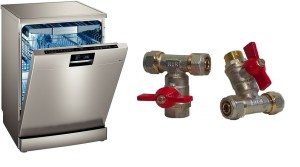
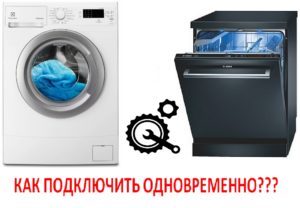
So, you can't do without a faucet, but why a tee faucet? This type of faucet allows you to connect two or more appliances, such as a washing machine and a dishwasher, to a single water pipe connection. A standard continuous-flow faucet won't do this.
When choosing a faucet, it is very important to pay attention to the following points.
- On the material from which the faucet is made. There are faucets made of brass and silumin available commercially. It's best to avoid the latter, as they won't last long.
- On the design of the shut-off mechanism. The valve mechanism can be either ball or multi-turn. It's better to choose a ball valve—it will last longer.
- On the design of the valve. The valve is needed to quickly shut off the water flowing into the machine. Therefore, the valve handle should be large and comfortable enough to prevent your hand from slipping and wasting precious seconds in the event of an emergency.
Please note! Silumin faucets wear out approximately four times faster, but they are cheaper than brass ones, so it's better to pay an extra $1.50 upfront than to deal with the aftermath of a flood later.
What other taps are suitable for a washing machine?
If you don't use a tee to connect your washing machine, what other faucets are potentially suitable for connecting household appliances to the water supply? Depending on the position and number of outlets, washing machine faucets are classified as: straight-through (flow-through), tee-type, and angle faucets.

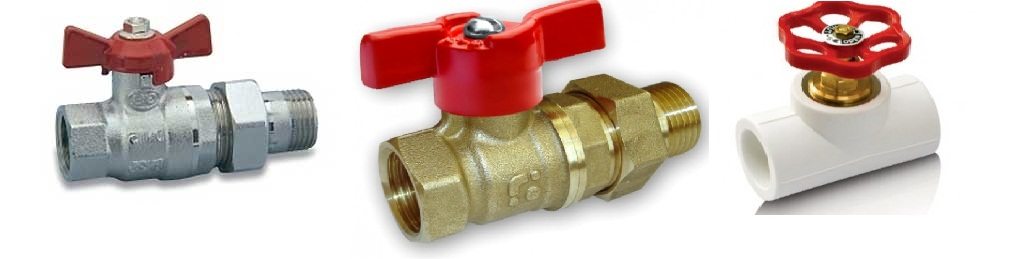
Flow-through taps with two outlets. They are installed on a separate pipe that runs from the main water supply to the washing machine. Two-way valves divide the branch pipe in half, isolating the appliance from the utility lines.
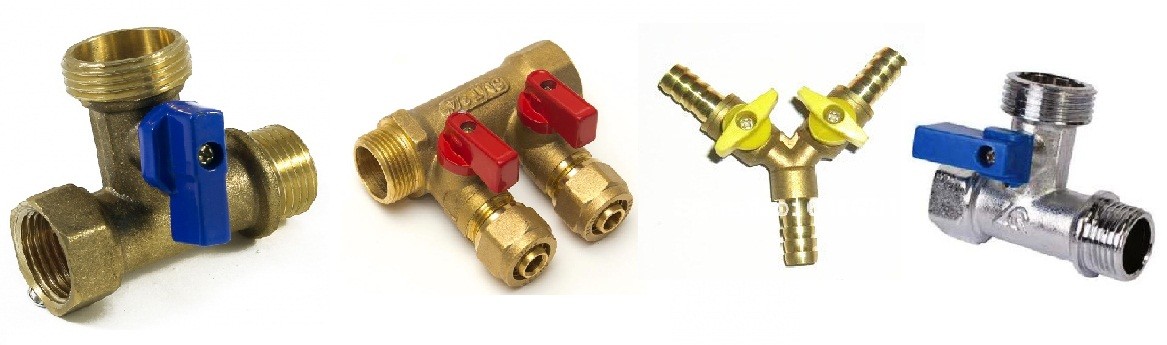
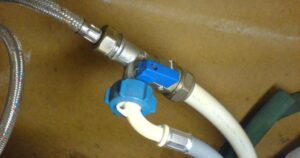
Tee tap. As the name suggests, this faucet has not two, but three outlets. Only one outlet can be shut off. The other two outlets are flow-through and serve to connect the water pipe to its branch. There is also a variant where two branches have faucets, but one outlet is not shut off. Triple faucets also come in different shapes.
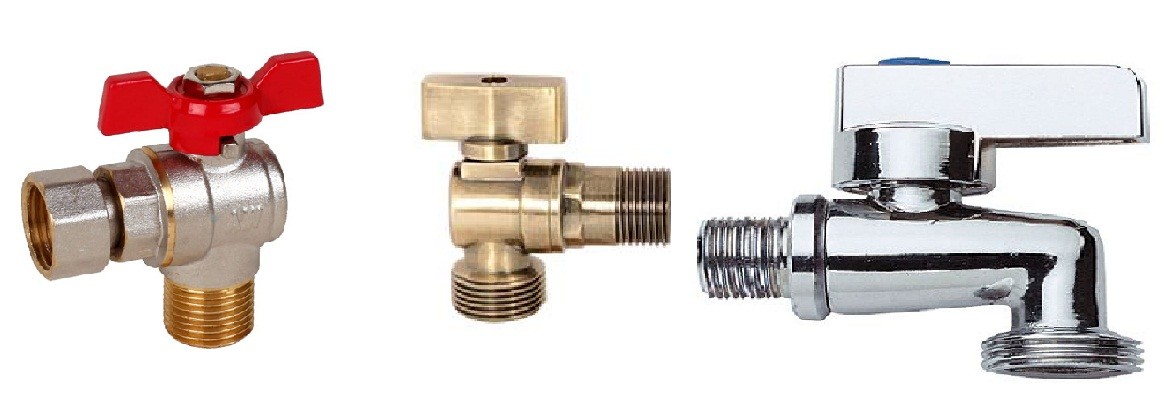
Angle tap. This is a two-way valve with a modified design that allows the outlet pipe to be divided into two parts by turning it 90 degrees.0This is quite convenient if you're connecting a washing machine to a water pipe in a tight space where a straight pipe can't be installed. Besides washing machines, this type of faucet can also be used to connect toilet cisterns, bidets, and other plumbing fixtures.
Please note! Washing machine manufacturers often recommend accessories (including faucets) for connecting their appliances to water and electrical systems. You may want to consider their recommendations.
How to connect a washing machine to the water supply?
Once you've selected the right faucet, you can begin connecting the washing machine to the water supply. Before you begin, you'll need to gather the necessary tools and supplies. What will you need?
- Double hose. If your washing machine comes with a standard single-wall inlet hose, we recommend skipping it and instead opting for a double-wall, wire-reinforced hose—it's much more reliable. Also, consider the required hose length before purchasing; short hoses are often included with the machine.
- Flow filter for water purification. This filter connects to the faucet thread and is installed on a branch of the water pipe. As you can imagine, tap water quality leaves much to be desired, so the more filters there are along the route from the riser pipe to the washing machine, the better.
- Sealing rings, nuts, winding, etc. Accessories required to ensure a reliable and tight connection of all pipes and hoses.
- Adjustable wrench. We will need it to tighten all the nuts, ensuring the connections of pipes and hoses.
- Calibrator for plastic pipes. Needed to fit and install the tap into the pipe cut-in.
Once you've collected all the necessary components and tools, you can begin installing the washing machine to the water supply, first choosing a suitable connection diagram. Let's start with the diagrams for connecting the machine to the water supply.
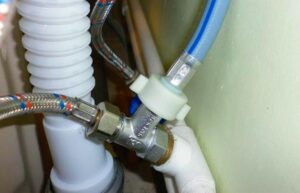
 Connection via a tee tap with a cut-in pipe. We turn off the water by shutting off the cold water riser. We cut a section of pipe, calculating the length of the tee valve (excluding threaded connections). We attach the mounting nuts to the pipe; these nuts should first be removed from the faucet. We use a caliper to widen the holes in the pipes and install the tee valve, remembering to tighten the connections between the pipe and the faucet outlets with compression rings. We connect the machine's inlet hose to the outlet shut off by the valve.
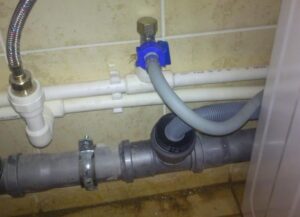
Connection via a two-way valve. A two-way faucet can be used if a pipe outlet is installed specifically for the washing machine. Typically, such an outlet already has a threaded bushing, so all we need to do is screw the two-way faucet onto it, connected to the flow-through filter. Then, the washing machine's inlet hose can be attached to the filter. It's a 5-minute job!
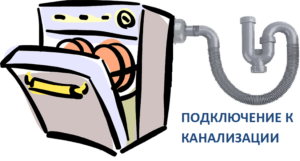
Connection via angle valve. This diagram for connecting the machine to the water supply is very similar to the diagram above. The only difference is that we attach an angled faucet to the pipe outlet rather than a straight two-way faucet. You can read more about connecting a washing machine to the water supply and sewer system in the article about DIY machine installation.
In conclusion, it's entirely possible to select and install a tee for your washing machine without hiring a professional. If you're determined to do the job yourself, consider the tips in this article. Good luck!
Interesting:
Readers' comments
Headings
Washing machine repair




For buyers




For users


Dishwasher




Add a comment