
Dyeing clothes in the washing machine
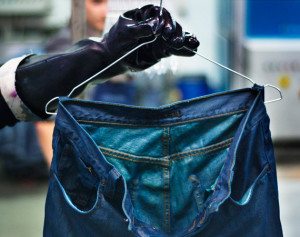 Don't want to part with your favorite jeans or trousers, but they're looking faded? Then we suggest dyeing them. Many people find this procedure intimidating, but if you dye them in an automatic washing machine, it's quite simple. This article will detail how to do it correctly, which dye to choose for washing machines, and whether it will damage the appliance.
The procedure for dyeing clothes in a washing machine
Before dyeing clothes in the washing machine, they must be thoroughly washed. Only then should you follow these steps:
- Take fabric dye and dilute it according to the instructions. If the dye is liquid, pour the required amount into a measuring cup.
- Pour the paint into the powder tray.
- Place the wet clothes (jeans, coats, or T-shirts) you want to dye into the drum. Wet items dye better.
- Depending on your washing machine model, select a wash cycle that heats the water in the drum to 90-950°C. The wash cycle should last at least 30 minutes. You can read more about the available functions in the article. Functions and modes in a washing machine
Please note: A longer wash will ensure better dye penetration and a more vibrant color.
- You can set an extra rinse to ensure that excess paint is thoroughly rinsed out of the clothes.
- We start the wash and wait.
- Now select a cold water wash cycle and wash the dyed garment with detergent. Cold water will set the dye into the fabric. You can rinse the item by hand, but be sure to use cold water.
- Once the process is complete, the washing machine needs to be de-dyed. To do this, run a wash cycle with one cup of bleach. You can add old and unwanted items. If you don't have any, run the machine in an empty cycle. This procedure ensures that any remaining dye particles are washed out of the machine and won't damage your items in the next wash.
So, the item is painted, all that remains is to dry it, and you can wear it again.
Does paint harm the washing machine?
 When people hear that they can dye clothes in a washing machine, they might wonder what will happen to the machine afterward. This is a perfectly reasonable question, so let's try to answer it. After dyeing clothes with fabric dye as usual, nothing will happen to the machine, because The dyes do not contain aggressive chemicals. It is much more dangerous to pour vinegar or other acids into the car, which can lead to the destruction of rubber parts.
But it's not that simple. This procedure can leave paint particles in the machine, requiring additional cleaning and rinsing. If you neglect this, you could end up with stained items in the machine the next time you wash. That's why it's a good idea to wash some unwanted items at least once.
Machine dyeing jeans and fabrics has a major advantage. You don't have to constantly stir and turn the item by hand while handling the dye and boiling water. The machine does all the work, ensuring even dyeing. However, the final decision on how to dye jeans in a washing machine or in a basin is up to you.
Dye for dyeing clothes
To dye clothes at home, you need to choose the right dye. The most important thing to consider is the type of fabric. If you're unsure what the garment is made of, choose a universal dye. Let's look at the most common dyes.
- Dye "Priboy" — a universal dye suitable for natural and synthetic fabrics such as cotton, wool, and nylon. This dye's palette includes 10 colors. One sachet of dye is sufficient for dyeing 0.5 kg of fabric.
- Paint under the Simplicol brand – a dye designed for dyeing natural fabrics, as well as clothing made from a mixture of synthetics. Manufacturers warn that it is not suitable for dyeing wool, silk, cashmere, polyamide, and polyurethane-coated clothing. There is a special dye labeled for silk and wool. Note that, unlike the previous dye, this dye contains a dye fixative. It is machine-washable.
- Paint under the Fashion Color brand – German-made fabric dye suitable for washing machine dyeing. One package is enough for 1.5 kg of clothing.
Important! The manufacturer's stated paint color will only be accurate when used on white clothing; otherwise, the tone will vary.
Alternative dyeing methods
If you still haven't decided to dye your garment in the washing machine, you can try hand-dying it using one of the following methods.
The first method involves dyeing fabrics with natural dyes. Natural plants are used as such dyes. For example:
- Orange color is given by: carrots, plantain seeds, onion peels.
- Brown color is obtained from oak bark shavings, coffee, tea, nut shells, and dandelions.
- The pink color is given by berries: Victoria, cherries, raspberries.
- Blue dye is found in cauliflower leaves, cornflower petals, blueberries, irises, and dark grapes.
- Red with a brownish tint can be obtained by coloring with pomegranate juice, elderberry, beetroot, or hibiscus.
- The black color comes from gall nuts and blackberries.
- Green color is typical for sorrel roots, spinach leaves, lilac flowers, and yarrow.
- Yellow is obtained from bay leaves, calendula flowers, dandelions, St. John's wort, narcissus or turmeric.
Before dyeing an item, it needs to be treated with a fixative to help the dye adhere to the fabric. If the dye is berry-based, use a salt solution as a fixative: 125 grams of salt per 2 liters of water. If the dye is vegetable-based, use a vinegar solution diluted 1:4 (4 parts water).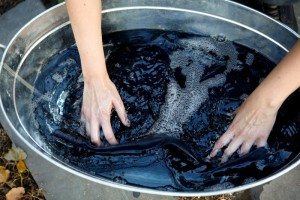
Once the plant material has been collected (leaves and berries must be ripe), it is cut into small pieces and placed in a large container. This container will be used to dye the clothes. Pour the dye into the water and bring to a boil, then simmer the solution for about an hour.
Please note: You will need twice as much water as dye.
After boiling, strain the water to remove any leaves or berries and place the garment in it. Boil the garment for an hour, turning it occasionally. The longer the garment remains in the dye water, the more intense the color will be. Afterward, rinse the garment thoroughly in cold water and air dry.
The second method involves the use of chemical dyes. To do this, pour water into a large container and bring it to a boil. Next, add a fixative solution. For cotton items, use 1 cup of salt per 3 liters of water; for synthetics, use 1 cup of white vinegar per 3 liters of water.
Now add the dye and stir until it's completely dissolved. Next, drop the garment into the container and simmer over low heat for half an hour, stirring constantly. Rinse the garment thoroughly with water. You can start with hot water, then gradually reduce the temperature. Rinsing with ice water will set the dye in the fabric.
Some tips for coloring
In conclusion, we offer some useful tips to help you avoid common mistakes when dyeing clothes at home.
- Berry and plant dyes produce better color on silk, wool and cotton.
- It is not recommended to dye clothes made of polyester, acrylic, elastane, as well as clothes that are washed in cold water or only dry cleaned.
- Before the procedure, have some wipes ready in case of accidental paint spills. Wear gloves and an old lab coat.
- Follow the instructions that come with the dye carefully.
- When dissolving paint, avoid inhaling it. Be sure to ventilate the area during and after work.
Wishing you the best of luck with your machine dyeing experiments!
Interesting:





3 reader comments
Add a comment
Headings
Washing machine repair




For buyers




For users


Dishwasher




Thanks! Great tips!
Thank you
Thank you, I find the article very useful!
However, I also believe that “universal fabric dye” is a very controversial definition!
Therefore, before dyeing, it is necessary to study the material regarding what classes of dyes exist and for what textile materials they can be used. The relevant literature and resources can be easily found on the Internet.