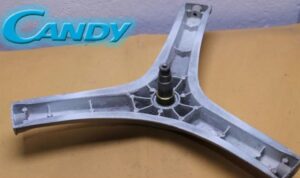
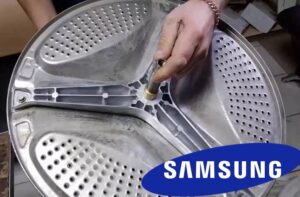
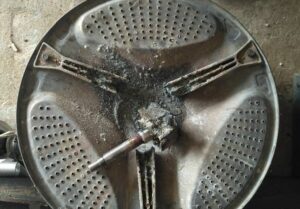
The drum spider is the foundation that supports the moving parts of the washing machine. Any defects in the spider can affect the machine's operation, leading to damage to the bearings, drum, heating element, and even the tub body. Therefore, if you suspect or are aware of problems with the spider, you must begin repairs immediately.
Causes of crosspiece failure
Generally speaking, all causes of spider failure can be traced back to the carelessness and inattention of the washing machine user, who failed to pay attention to its operation in time. In this case, there's no need to pay much attention, because if the machine has been running for some time with a terrible creaking and metallic grinding noise, it's likely due to a broken spider. What causes spider failure?
Bearing defect;
manufacturing defect;
hard water;
unsuccessful repair.
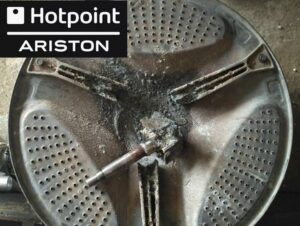
The main reason is, of course, the untimely replacement of bearings, which led to their complete destruction, which in turn led to damage to the universal joint shaft.
Please note! A damaged bearing race and balls will severely scratch the shaft during rotation, causing wear. This, in turn, means that a new bearing cannot be installed on the shaft. Replacement must be performed promptly.
Manufacturing defects are less common, although they're not uncommon on Italian-made machines. Why does this happen? Perhaps it's due to the quality of the alloy or insufficient quality control during component production. History is silent, but the fact remains: the universal joint breaks.
Even in a perfectly working washing machine LG or any other, the crosspiece can be damaged by constant exposure to hard water. Although, of course, hard water is a secondary cause, since it leads to difficulty in rotating the drum, and this in turn damages the bearings, which then damage the spider shaft.
Another cause of U-joint failure can be a poorly repaired component. This is a whole other topic for discussion, as technicians who attempt to remove and replace U-joint bearings vary widely. Some, attempting to remove the bearing with a grinder, cut the shaft, while others strip the threads while attempting to unscrew the mounting bolt. The point is clear: if your hands are in the wrong place, there's nothing to be said!
Do you need repairs or not?
Perhaps only an experienced mechanic can determine whether the universal joint is worth repairing or not, whether it needs to be replaced, or whether an attempt can be made to restore the part. It is necessary to examine the shaft wear and the condition of the threads, so we recommend that you be extremely careful and, if you have the slightest doubt about the shaft's serviceability, contact a service center for advice. A faulty crosspiece must not be left in operation.
If the bearings on an LG washing machine's spider have failed and the shaft is only slightly worn, there's no need to replace the entire part, much less the spider and drum, as ARDO service centers suggest. Such a repair would cost almost as much as a new washing machine, and it can be done separately. install new bearingsHowever, if there is obvious damage to the universal joint shaft or its components (especially the mounting surfaces), replacement of the part is unavoidable.
Repair or replace?
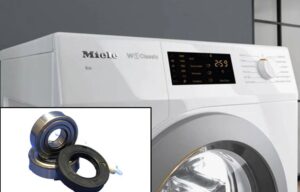
So, repairing this part of an LG washing machine, or any other, is only possible if the bearings located in the drum lid bushing are damaged. It's worth noting that some technicians install non-original, inappropriate bearings that aren't designed for the specified load. As a result, the bearings fail, and the repair must be redone. To prevent this, you need to purchase bearings that are specifically designed for your specific LG (or other) washing machine.
To replace the bearings of a washing machine's spider, you need to:
remove the old bearings from the shaft (since they stick to the shaft);
remove old seals;
install new seals;
press in new bearings.
But, as they say, easier said than done. The main problem is carefully removing the old bearings from the drum cross shaft. Damaged bearings are usually so firmly welded to the shaft that removing them is extremely difficult. It requires considerable force.
Under no circumstances should you hit the bearings with a hammer in an attempt to destroy the race; you can damage the shaft along with the race, since it is made of soft metal.
Knocking off bearings with a chisel is also quite dangerous, although it is still possible to use a chisel, albeit in a slightly different way. How should this be done?
Take a grinder or a drill.
Make cuts on the old bearings on both sides.
Then place a chisel in the cut areas and knock the bearing off the shaft.
If there are cuts, it is easier to knock off the bearings; it does not require much effort, and therefore the risk of damaging the shaft is less. The most important thing is to take your time, as haste is the enemy of any endeavor. Old seals also need to be removed. They should always be removed, even if you think they'll still work. It's better to spend the extra money on seals than to have to repair your LG or other washing machine soon because of them.
We replace the old bearings and seals with new ones, reassemble the car, and enjoy. Sometimes the bearings are difficult to seat in the bushing or don't fit at all. In this case, you can gently heat the steel bushing with a blowtorch and carefully press the bearings in – they'll hold like glue! The universal joint is attached to the outer wall of the drum with six bolts, or in some cases, three bolts. We unscrew these bolts, remove the universal joint, install the new one, and reassemble the car.
Important! Some washing machine models have crosspieces that are welded to the drum. Since the crosspiece is integral to the drum, it must be replaced along with the drum.
To summarize, repairing the drum of an LG or any other washing machine, or more specifically, replacing the spider, is a very labor-intensive undertaking. The main problem isn't even the repair or replacement of the spider itself, but the long and tedious disassembly of the washing machine. If you're determined to see the job through, this article is for you!

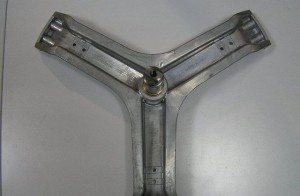 The drum spider is the foundation that supports the moving parts of the washing machine. Any defects in the spider can affect the machine's operation, leading to damage to the bearings, drum, heating element, and even the tub body. Therefore, if you suspect or are aware of problems with the spider, you must begin repairs immediately.
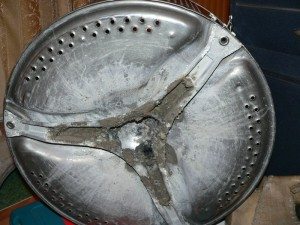 Even in a perfectly working washing machine LG or any other, the crosspiece can be damaged by constant exposure to hard water. Although, of course, hard water is a secondary cause, since it leads to difficulty in rotating the drum, and this in turn damages the bearings, which then damage the spider shaft.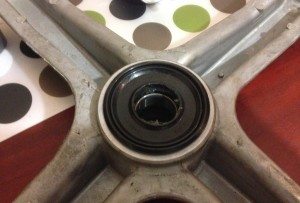
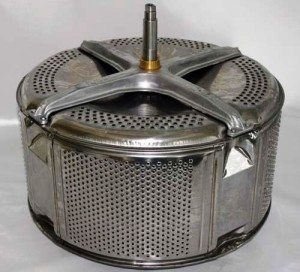 If there are cuts, it is easier to knock off the bearings; it does not require much effort, and therefore the risk of damaging the shaft is less. The most important thing is to take your time, as haste is the enemy of any endeavor. Old seals also need to be removed. They should always be removed, even if you think they'll still work. It's better to spend the extra money on seals than to have to repair your LG or other washing machine soon because of them.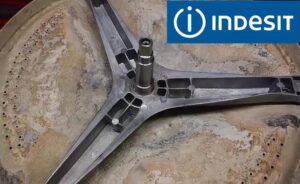














What alloy is it made of?