
Who invented the dishwasher?
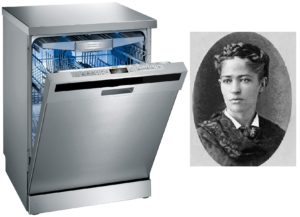 Some modern housewives believe that it was women who invented the dishwasher to make a difficult task easier, since housekeeping is also a job, and a difficult one at that. In fact, history has preserved some information about the man who first designed and manufactured the dishwasher. It's his invention, as well as the historical evolution of dishwashers, that we'll discuss today.
The first dishwasher
Dishwashing devices are frequently mentioned in various historical sources. It is believed that such devices were already known to the Romans, but not a single image or even verbal description of such devices has survived, meaning that history has lost the name of the brilliant inventor of the first dishwasher.
The first documented mention of a dishwasher dates back to 1850. In the scientific community, this year is considered the year the dishwashing machine was invented. A young American, Guoton, patented the design, although his invention, to be fair, was a complete failure and had no commercial prospects.
This is precisely the case when the idea is good, but its implementation is woefully inadequate. Only one prototype of the Guoton machine was built, and testing immediately revealed the design's inadequacy.
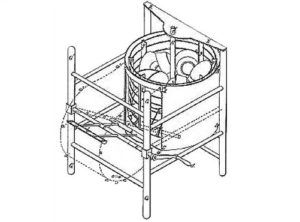 By the way, almost at the same time King invented the washing machine, so these two household appliances have been in close proximity since their invention. However, the washing machine is far more popular than the dishwasher. Few housewives worldwide are unfamiliar with washing machines, but many still prefer to wash dishes by hand, especially in Russia and the CIS countries.
The inventor of the dishwasher created a hand-operated device with a tub, a piston pump for water supply, a complex frame supporting the tub, and a handle that operated the pump. The main advantage of this invention was its revolutionary concept, which gave housewives hope for the imminent advent of a truly effective "home helper." However, Guoton's invention had far more disadvantages than advantages.
- The dishes in his car were hardly washed at all.
- It was difficult to place dishes in the tank, which often resulted in them breaking.
- The water supply to the dirty dishes was poorly designed, which is why some of the kitchen utensils placed in the tank did not receive any water at all.
- There was no system for pumping out waste water or supplying clean water, so dishes were rinsed with the same water that was used for washing.
The creation of women's hands
 We've figured out who invented the dishwasher, and in doing so, we've learned that the first dishwasher design proved unviable because it completely failed to fulfill its primary function. Why was this? Perhaps because Guoton wasn't familiar with housekeeping or didn't fully understand the mechanism of dishwashing. In any case, we'll never know the truth, as information about the circumstances of the invention has vanished into oblivion along with the inventor.
So what next? A woman took charge, earnestly and with great passion, to develop the first mass-produced manual dishwasher. Her name was Josephine Cochrane. Unlike Guoton, the enterprising Josephine not only managed to create a working hand-cranked dishwasher but also integrated a primitive water heater into it. The first dishwasher, built by a woman, consisted of the following components.
- A wooden or metal box that serves as a washing bin.
- Baskets for dishes, which were presented in the form of a curved metal grid on which plates, saucers and cups were mainly placed.
- Manual drive mechanism.
- Two piston pumps.
- A hinged lid that hermetically sealed the box with dishes.
- Water heater.
This machine had many advantages, which is why it sold so well. Firstly, it washed dishes quite well, especially saucers and plates. Secondly, this dishwasher heated the water itself, allowing for hot water washing. Thirdly, it had a compact and convenient design, as well as a basket that held dishes securely in place, virtually eliminating the risk of breakage during washing and loading.
Advantages are advantages, but there were also disadvantages, and significant ones at that. The Cochrane machine could not wash large or non-standard dishes, and it was also impossible to wash cutlery in it. The machine was manually operated, meaning the housewife had to stand next to it and turn the handle—a very tedious task, perhaps even more tedious than washing dishes by hand. Most importantly, this dishwasher was very expensive, and only the very wealthy could afford it, which ultimately sealed the fate of this, in its own way, revolutionary invention.
Josephine Cochrane released several modifications of her brainchild. The final version was intended to not only wash but also dry dishes, although the design proved too bulky and expensive and failed to gain the popularity of the original model.
The first electric dishwasher
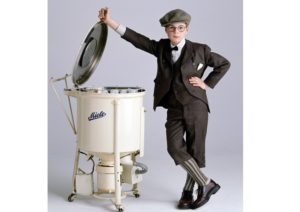 Josephine's inspiring invention should have given a boost to the development of dishwashers, but no, dishwashers remained unknown to most housewives. Only a few companies were able to produce dishwashers, and even then only in very limited quantities for a select group of consumers.
The very first electric dishwasher was the brainchild of the rapidly growing German company Miele, which manufactured it in 1929. While technically attractive, in practice, the machine was bulky, poorly cleaned dishes, and extremely noisy. Furthermore, the Miele dishwasher was astronomically expensive, so it was rarely purchased and was soon discontinued.
A year later, in 1930, electric dishwashers began selling in the United States under the Kitchen Aid brand. While there was initial consumer interest, it quickly faded due to the imperfections of the dishwasher technology and the low purchasing power of the population.
The Great Depression took its toll. Nine years later, World War II broke out, and people had no time for dishwashers. During the war and for the first five years afterward, no one even thought about dishwashers. In 1950, Whirlpool, a major home appliance manufacturer, launched limited-edition electric dishwashers.
The advent of the automatic dishwasher
The real breakthrough was not made by the engineers working at Whirlpool. In 1960, the rapidly developing Miele company released a fully automatic dishwasher, although it had been invented a little earlier.
This machine was much more affordable than all previous dishwashers and cleaned dishes quite well. Customers responded quickly. The first machines that rolled off the production line sold like hotcakes. This marked the beginning of the era of automatic dishwashers, which we still use successfully today.
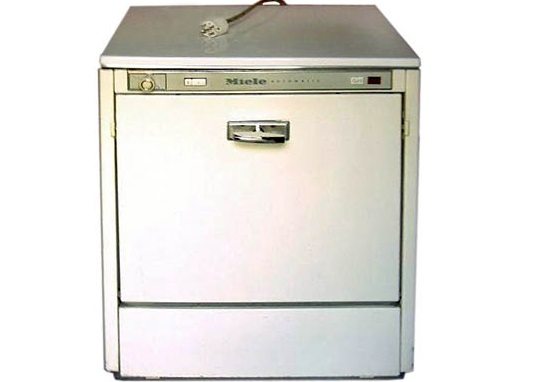
It's hard to say who invented the automatic dishwasher, but Miele filed a patent for the invention.
German engineers working at Miele decided to go further and, in 1978, released an automatic dishwasher with microprocessor control. The first electronically controlled units were unreliable, but all the shortcomings were quickly resolved. The machines were so successful that some elderly Germans refused to part with them for 30 years.
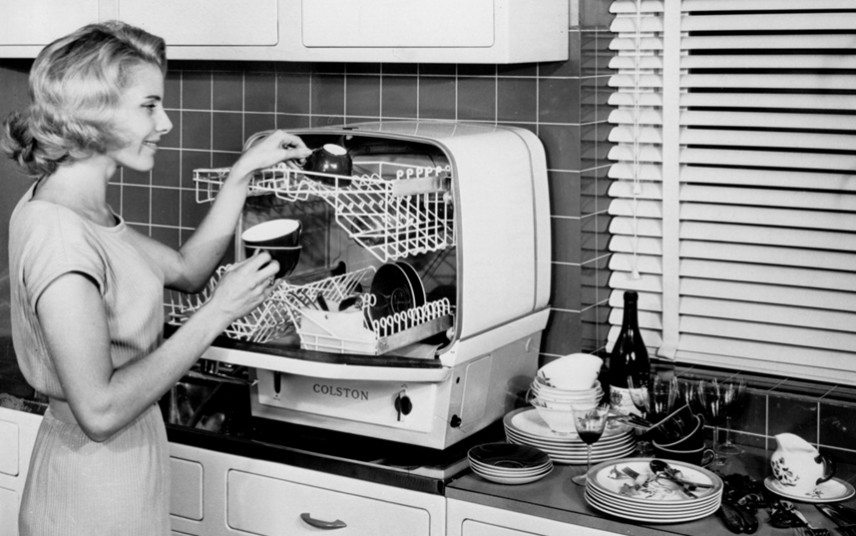
Miele and dozens of other major appliance manufacturers now offer hundreds of dishwasher models. Dishwashers no longer intimidate anyone; quite the opposite, as more and more people want to equip their homes with dishwashers, and that's very good news!
Interesting:





Readers' comments
Headings
Washing machine repair




For buyers




For users


Dishwasher




Add a comment