
How to remove odor from kitchen towels?
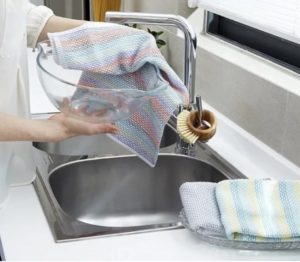 The distinctive smell of kitchen towels often lingers even after washing. This isn't surprising, considering that we traditionally use towels almost like kitchen rags: they're used to wipe dishes, hands, countertops, and even to remove hot cookware from the stove. Absorbing all the kitchen aromas, the towels concentrate them into a single, unpleasant odor. As a result, even a washed towel, albeit with a slightly altered "bouquet," doesn't have a pleasant aroma, but rather a distinctive, unpleasant odor that can't be masked by the scent of laundry detergent. Is it possible to remove the odor from kitchen towels?
Basic methods
To prolong the life of your kitchen towels, it's recommended to use separate towels for different purposes. To restore the freshness of clean towels after each wash, experienced homemakers have developed practical tips for caring for these versatile kitchen helpers. A number of proven methods and products will help remove odors.
- Before washing, soak towels overnight in a solution of water and vinegar or baking soda, then wring them out and wash. This solution is especially helpful when the towel smells fishy.
- To remove coffee or tomato juice stains from towels, a solution of table salt is best: 5 tablespoons per 5 liters of water. You need to soak the towels for an hour in a salt solution at room temperature, after which they can be washed in the machine with other things.
- Before machine washing, soak towels in bleach for whites or colors (depending on the color of the towels) according to the product's instructions. This effectively removes grease and odor.
- To boil white towels, it is better to use a special solution of water with regular soap or washing powder, with the addition of a small amount (about 1 tablespoon) of silicate glue. You should boil the towels in this solution for half an hour.
- Light-colored kitchen towels can be effectively bleached using dry mustard, diluted with water to the consistency of sour cream. It's best to apply this solution not only to the stains but to the entire towel, leaving it for a couple of hours, then rinsing and washing.
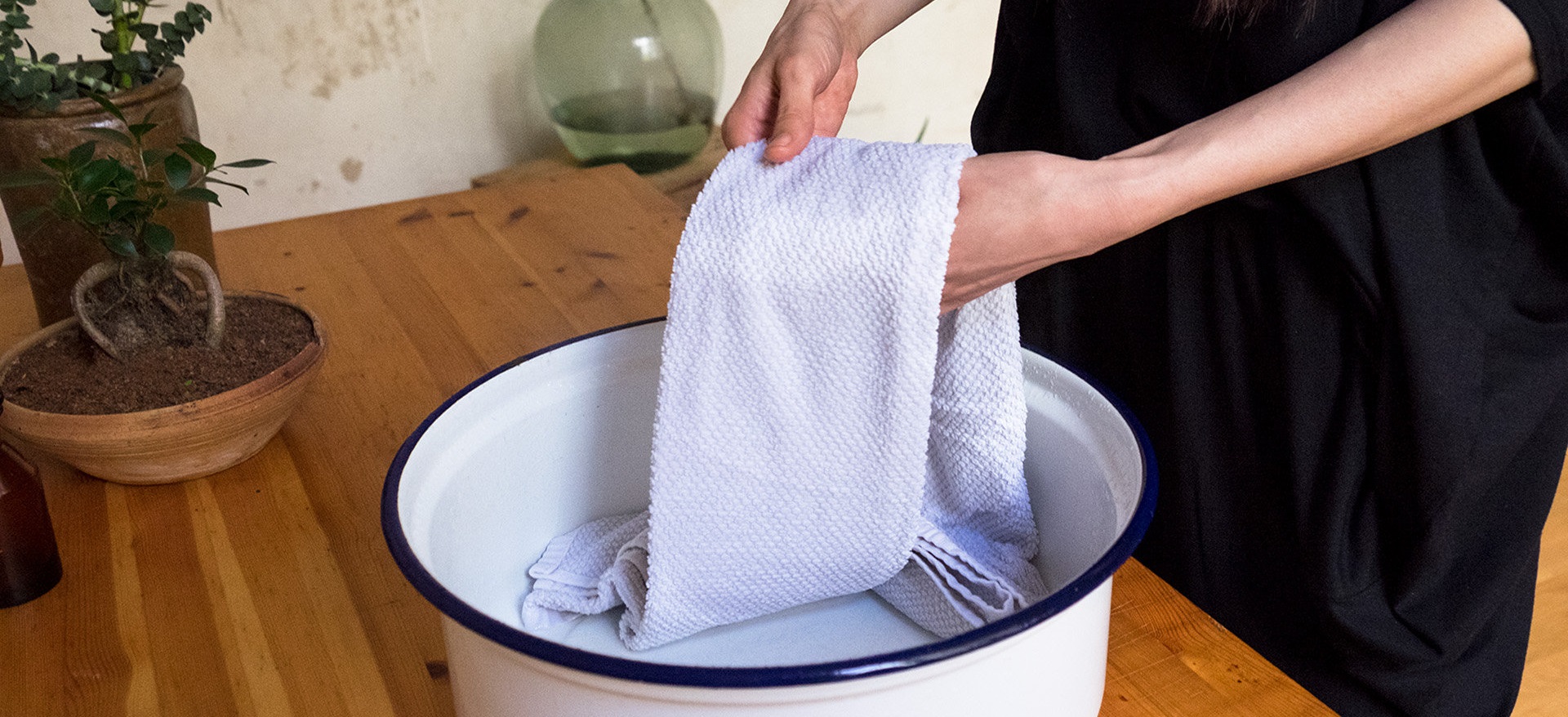
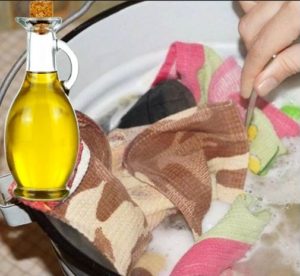
- White towels wash well if soaked in boiling water with 2 tablespoons of dry bleach, 2/3 cup of laundry detergent, and 2 tablespoons of vegetable oil. Soak the towels in this thoroughly mixed solution until the water cools completely, then remove and rinse thoroughly to completely remove the solution before washing.
- Stains from towels can be easily removed with dishwashing gel, which should be applied in a small amount to the stains and left for 24 hours.
Before washing in the washing machine, thoroughly rinse the towels to remove any dishwashing detergent, as it foams heavily.
Laundry soap is considered the simplest and most versatile of all laundry detergents. It easily removes virtually any stain and odor, and it can be used on both white and colored towels. To do this, rub them thoroughly with soap, seal them in a bag, and leave them overnight, then machine wash.
Care instructions
To prevent the towel from becoming stifled over time, hang it in the kitchen fully straightened rather than folded. This will ensure it dries quickly after each use. A wet, crumpled towel quickly breeds bacteria and germs, which not only cause bad odor but are also dangerous to your health.
Kitchen towels should be replaced with fresh ones at least once a week. If used intensively, replace them more often, as they become soiled, preventing greasy stains from setting in. These stains are a major source of unpleasant odors in towels. Towels are often the cause of unpleasant odors in the kitchen, as they absorb odors quickly and then release them. Therefore, it's important to monitor these processes regularly.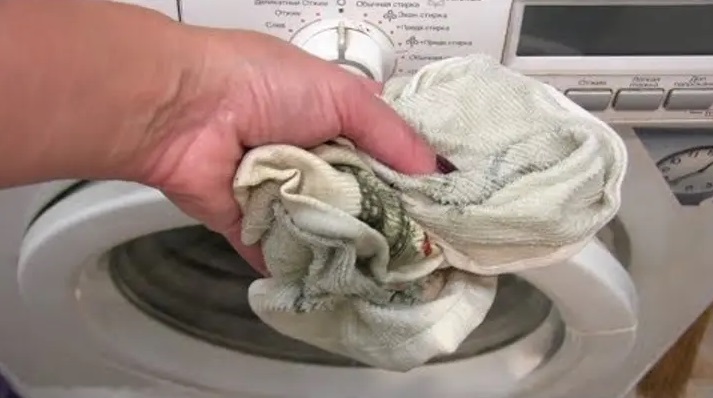
Tips from experienced housewives
To ensure that kitchen towels are as comfortable as possible, they should be made from natural fabrics. Cotton or bamboo towels are best, as they offer excellent moisture absorption, breathability, and sufficient durability. Terry towels are also suitable for the kitchen, but are often less comfortable due to their thickness.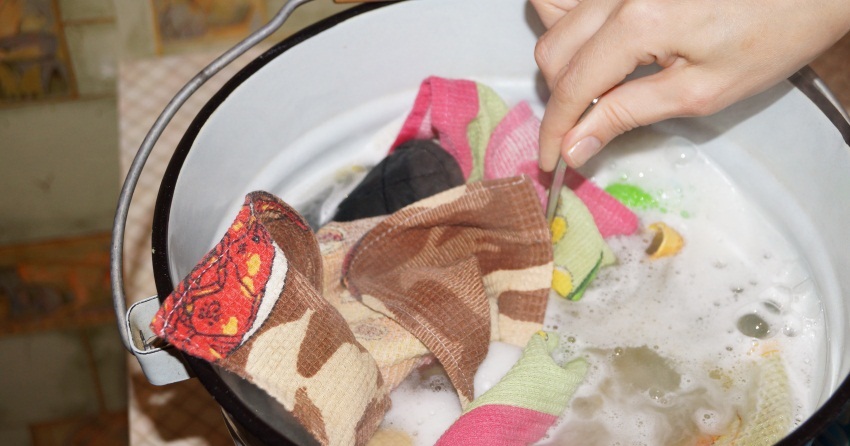
Before using a new towel for the first time, it's important to wash it. This is essential because during production, transportation, and distribution, the fabric of the towels absorbs all foreign odors, along with harmful bacteria, which have no place in the kitchen. In general, kitchen towels should be washed frequently. It's best to wash them at the highest temperature, with the exception of colored towels, which have washing limits specified by the manufacturer.
Important! Some types of colored towels cannot be washed at temperatures above 65 degrees Celsius.
If you wash your kitchen towels regularly and frequently at 90-95 degrees Celsius, they will never harbor germs and bacteria that can cause unpleasant odors. It's also important to remember to wash kitchen towels with minimal amounts of chemical detergents.
It's best not to use fabric softeners designed for washing regular items on kitchen towels. After washing, double rinse to completely remove the chemicals, which reduce the towels' absorbency and pose a health risk when used to wipe dishes.
Interesting:





Readers' comments
Headings
Washing machine repair




For buyers




For users


Dishwasher




Add a comment