It's a well-known fact that jackets are generally forbidden to be washed in washing machines, as vigorous washing at high temperatures can damage the filling, causing it to clump. Therefore, such items are typically either dry-cleaned or washed with extreme caution. However, thoroughly and carefully washing a jacket is only half the battle; careful drying is also essential, as it can be damaged during the drying process. That's why it's so important to dry your jacket in a dryer, observing all safety precautions. We'll cover the rules for this method today.
A dryer is the best option for a jacket.
Drying your jacket in a tumble dryer is preferable for many reasons. First of all, housewives note the pleasant opportunity to reduce physical stress associated with repeated monotonous actions aimed at fluffing, shaking and crumpling the jacket. Even more importantly, don't waste time or skimp on drying, otherwise the jacket's filling will clump together, making it nearly impossible to fix. If this happens, you'll likely have to either throw the jacket away or use it for yard work.
The second reason is the long drying time. If the jacket was machine washed in winter or in a high-humidity area, drying it properly will be nearly impossible. In such harsh conditions, the garment can take several days or even longer to dry, which can cause the filling inside the jacket to become damp and develop a very unpleasant odor.
It's important to remember not to dry jackets vertically on clotheslines or by placing them on heating devices. The former will negatively impact the distribution of the filler, causing it to form in one or more areas, while the latter will damage the synthetic fabric due to high temperatures, such as from a radiator.
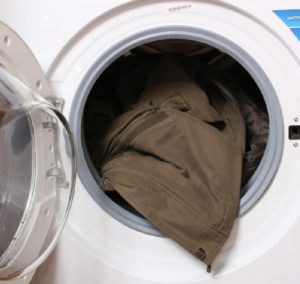
Therefore, it's much safer and more effective to dry your jacket in a tumble dryer, if the garment is approved for this purpose. However, not every tumble dryer has a dedicated setting for jackets and similar heavy items. However, if there's no dedicated setting, you can activate the most gentle cycle at the lowest temperature and repeat it several times if necessary for proper drying.
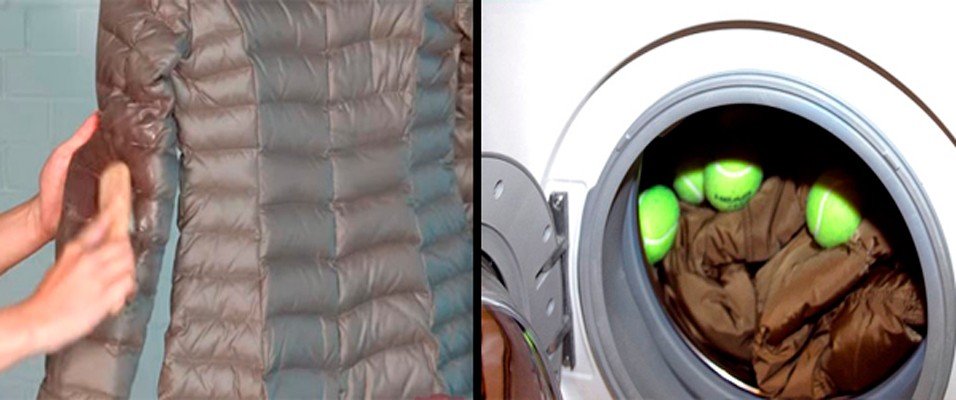
Before starting the cycle, be sure to check the pockets, zippers, and zipper closures—they should all be closed, and the jacket itself should be turned inside out. You can also add a few soft tennis balls to the machine so they bounce off the sides and loosen the jacket's filling during the cycle, preventing it from clumping.
When washed, any warm jacket with padding becomes much heavier due to the fact that it absorbs liters of water, so it is better to use a machine with a load capacity of at least 5-6 kilograms, no less.
Despite all precautions, the item may still deform slightly during drying, as this depends directly on the quality of the item. Because it's impossible to accurately determine the origin of the filler and other lining materials, it's also impossible to predict how the jacket will behave during drying, so minor imperfections may remain afterward.
However, this isn't a reason to worry or skip the drying process. If the item is high-quality, made by a reputable manufacturer, and has served you well for a long time, it should survive the drying process. In any case, fearing for the item isn't a reason to walk around in dirty and wrinkled clothes.
How to properly remove moisture from an item?
First, be sure to read the instructions for drying your jacket in your "home assistant" to avoid common mistakes. This will help keep your expensive item safe and sound.
After the washing machine has finished its cycle, remove the jacket and temporarily place it in a large container. Winter and other warm jackets should not be spun at high speeds, or better yet, not at all, as this will inevitably fill the garment with liquid, preventing it from drying immediately. Therefore, it's best to leave the jacket horizontally in a basin or other large container for about an hour.
After an hour, place the clothes in the dryer drum along with a couple of tennis balls.
Set a special program for jackets and other outerwear. If there's no such program, you can use the down duvet or "light air" program.
Choose your duty cycle carefully, taking into account its temperature and RPM – the temperature should be low and the RPM high, for example, 100.
Once the program is complete, remove the jacket and check if everything is OK.
If the filling remains damp after drying, we recommend repeating the process again. If the jacket is almost dry, lay it flat in a well-ventilated room. This will remove any remaining moisture in just an hour, and the garment will be ready for wear.

 It's a well-known fact that jackets are generally forbidden to be washed in washing machines, as vigorous washing at high temperatures can damage the filling, causing it to clump. Therefore, such items are typically either dry-cleaned or washed with extreme caution. However, thoroughly and carefully washing a jacket is only half the battle; careful drying is also essential, as it can be damaged during the drying process. That's why it's so important to dry your jacket in a dryer, observing all safety precautions. We'll cover the rules for this method today.


















Add a comment