
Can you wash latex pillows in the washing machine?
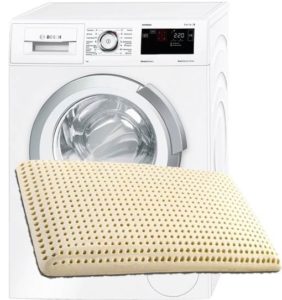 Latex pillows are incredibly popular. They are prized for their uniqueness, glossy finish, softness, hypoallergenic properties, and their ability to resist odors thanks to their porous structure. However, even so, these pillows occasionally get dirty and require washing, and almost no one knows how to do it. Let's explore whether it's safe to machine wash a latex pillow or whether another method is better. We'll explore the material's properties and other nuances.
Is such a pillow “afraid” of an automatic washing machine?
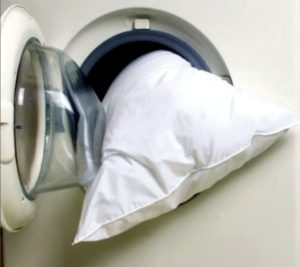
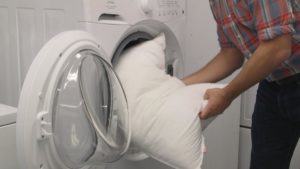
The easiest way to clean a pillow is in the washing machine. But whether latex can withstand the tumble is debatable. Manufacturers strongly recommend avoiding machine washing, citing the delicate nature of the material. On the contrary, sellers assure that periodic cleaning in the washing machine poses no threat to latex products.
Before choosing who to trust, it's worth understanding the material's properties. For example, 100% latex must be protected from three destructive factors.
- Ultraviolet radiation. If you leave a latex roller in direct sunlight, it will almost immediately become covered in oily, dark spots. Furthermore, prolonged exposure will cause severe deformation and structural changes. Reversing this is virtually impossible—the marks will remain, and the original shape will never be fully restored.
- Frost. Latex reacts extremely negatively to temperatures below -40 degrees Celsius. The material becomes brittle, cracks, and breaks. Simply pressing on the product with your finger is enough to permanently damage it.
- High temperatures. Latex cannot withstand high temperatures, especially if water and chemicals are added to the elevated temperatures.
Latex does not tolerate direct sunlight, as well as temperatures above 40 and below -40 degrees.
In theory, latex pillows can be washed in cold water with the machine turned off, but manufacturers insist on hand washing. It's important to understand that mechanical rotation is risky for fragile latex. If the item is expensive, it's best to avoid experimenting and avoid the machine wash option.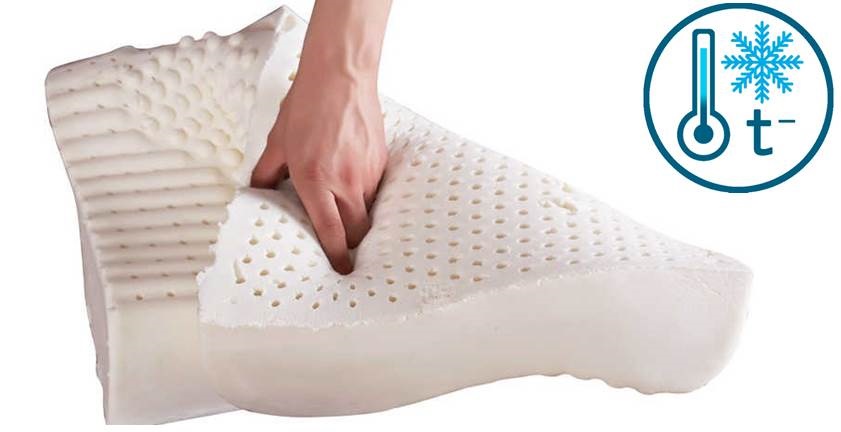
Washing a pillow by hand
There's a high risk that a washing machine will damage the latex, so hand washing is best. This is more difficult and takes longer, but it poses virtually no risk to the garment. Just follow these instructions:
- fill a basin the size of the pillow with water heated to 20-40 degrees;
- add a little cleaning agent (preferably gel concentrates for delicate washing);
- wet a cloth or sponge in the solution;
- gradually process the product;
- After cleaning, wait until most of the water has drained from the item.
Don't wring out a latex pillow—the material can easily deform with even the slightest twist. It's best to let the water drain freely and then wrap it in two terry towels.
Dry the item
Latex is dried according to a specific procedure. As with washing, a gentle approach and strict adherence to the rules are essential. The instructions are as follows:
Latex should not be wrung out or dried near heating appliances.
- After the procedure with towels, take out the pillow and hang it vertically in the open air, on the street or on the balcony;
- if there is no option with fresh air, place the product in a well-ventilated area;
- Avoid open flames, direct sunlight and heating devices.
Latex does not tolerate artificial drying—it should be left to dry naturally while hanging. Laying the product horizontally is not recommended, as it will quickly and irreversibly deform.
About the pillow material
Only natural latex requires special care. If the roller is made of artificial materials, mixtures or synthetics, then machine washing is not contraindicatedTherefore, before throwing an item into the drum or wash basin, it's worth checking it for naturalness. Certain signs can help you determine 100% quality.
- Label. Products made from natural latex must have a special label indicating the manufacturer and stating "100% Latex."
- Matte finish. A quality pillow should have a porous, matte surface. Counterfeits, on the other hand, are characterized by smooth material and a glossy sheen.
- Smell. New natural latex pillows will inevitably have a milk powder scent; if not, it's a synthetic alternative.
- Water resistance. 100% latex should be impermeable. Synthetic materials don't have these properties and absorb liquid like a dish sponge. To dispel any doubts, simply wipe the roller with a damp cloth and assess the result. If water seeps through, it's a fake.
100% latex has increased moisture resistance – it doesn’t let water through!
Before cleaning, it's important to ensure that the latex you're using is natural and not synthetic. Afterward, wash the pillow according to the instructions above. If done correctly and carefully, the item won't be damaged and will enjoy you for many years to come.
Interesting:

Readers' comments
Headings
Washing machine repair




For buyers




For users


Dishwasher




Add a comment