
Review of compact washing machines
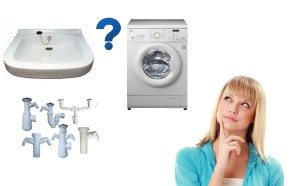
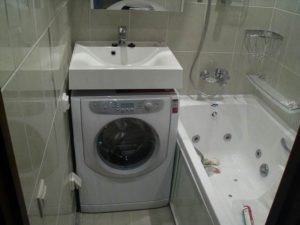
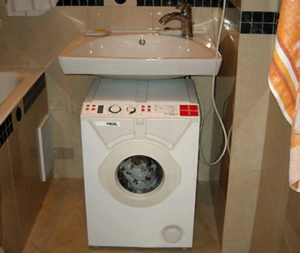 In the cramped spaces of Khrushchev-era apartments, you're bound to think about space management. People often wonder where to put their washing machine. They'd like to shove it under the sink, but it doesn't fit. After all, it's not exactly a bathroom, although that's an option. Residential design experts advise organizing the space first, determining how much space you can dedicate to the washing machine, and then buying a "home helper." Perhaps you need a compact washing machine.
What kind of washing machines are these?
Which automatic washing machines can be considered compact? Naturally, those that are smaller than regular ones, but it's not that simple. In this case, manufacturers are being clever, simply calling them compact. narrow washing machinesLet's look into this issue in more detail.
A compact washing machine should be smaller in width, depth and height than a standard automatic washing machine.If even one parameter of a compact car exceeds or does not meet the standard, the car can no longer be called a compact car. The following parameters are considered standard and are applicable to most automatic washing machines:
- width – 60 cm;
- depth – 60 cm;
- height – 85 cm.
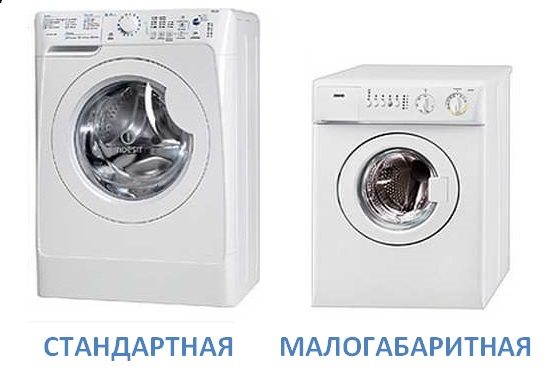
Important! The difference from standard dimensions must be more or less significant. If the washing machine's dimensions are 59 x 58 x 84 cm (W x D x H), it is not compact.
Their pros and cons
The main advantage of compact washing machines is that they can fit in places where a regular automatic washing machine can't. That's where the advantages end, and the disadvantages begin.
- To create a compact washing machine, the manufacturer, by reducing the size of the body, is forced to place internal components more compactly, which often leads to their faster wear.
- The body of a small machine often does not have room for a full-fledged counterweight, so the manufacturer is forced to eliminate some weights and make the rest smaller and lighter. This causes the washing machine to lose stability and, when operating at high speeds, it simply starts to bounce.
- Now about loading. A smaller washing machine doesn't have room for a large, capacious drum, so if you're looking for a machine that can handle a large blanket and a couple of down jackets, consider a standard washing machine.
Please note! Compact washing machines don't have drums with actual load capacities exceeding 5-6 kg. Smaller models with load capacities of 3-5 kg are more common. Manufacturers who claim their compact machines can wash up to 8 kg of laundry are simply being disingenuous.
Models and specifications
Now let's look at washing machine models that are significantly smaller than standard sizes. We'll start our brief overview with a small washing machine from Candy.
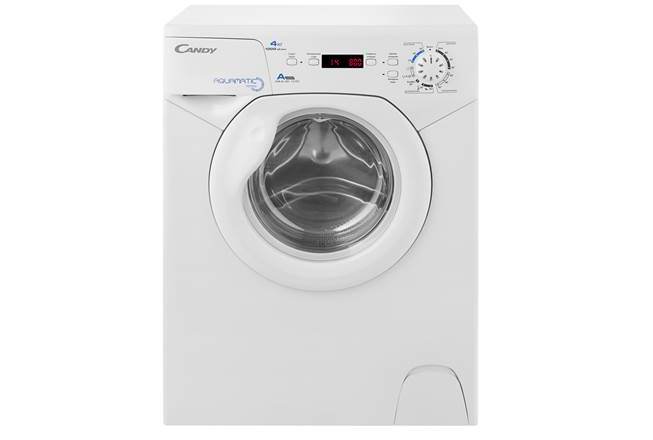
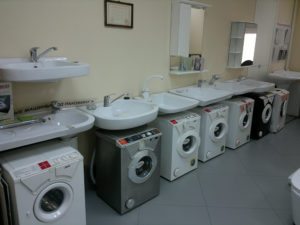
Candy Aquamatic 1D835-07. A compact automatic washing machine from a well-known manufacturer. Dimensions (W x D x H) are 51 x 46 x 70 cm. This machine fits easily under a kitchen or bathroom sink. It's not built-in, has a load capacity of up to 3.5 kg, and spins at up to 800 rpm. It also features 16 different wash modes and leak protection—all for $276, not bad at all.
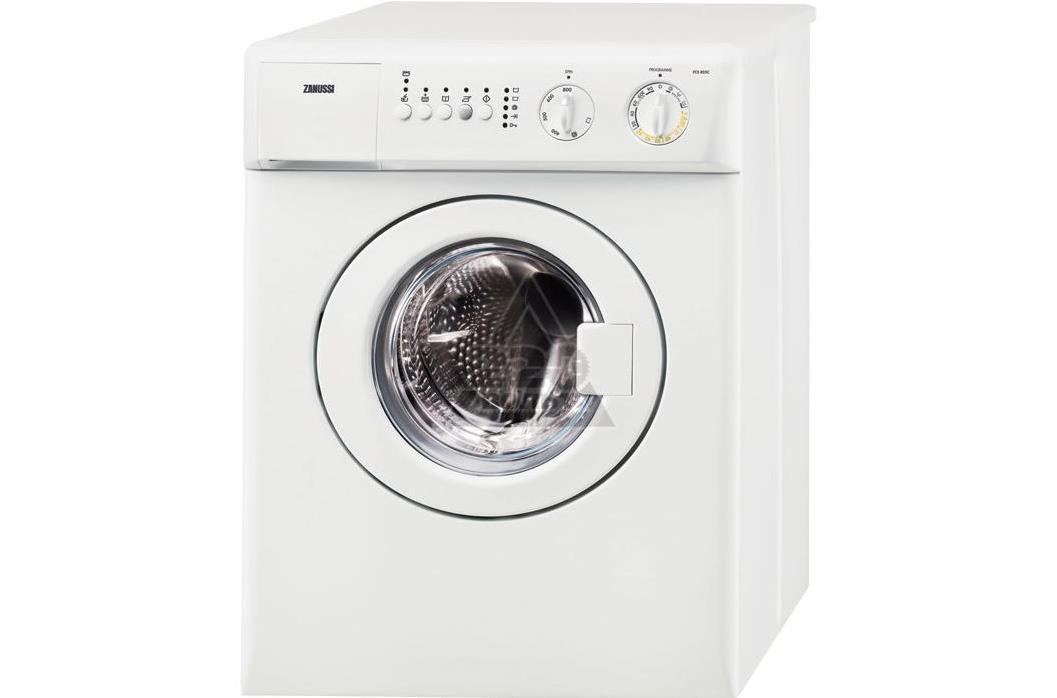
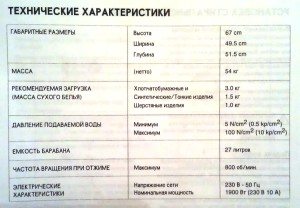
The Zanussi FCS1020C is a true creation of the Zanussi brand. This washing machine measures 49.5 x 51.5 x 67 cm (W x D x H). This is quite impressive, as it can easily fit into even the smallest of rooms. The automatic machine has two serious drawbacks: a load capacity of only 3 kg and a price of $523. The load could still be tolerated, but the price is steep.
The Electrolux EWC 1350 is another expensive member of the compact washing machine family. You won't find this model for under $570, but what's so special about it that it's worth the price?
- The laundry load capacity is only 3 kg.
- The spin speed is 1300 rpm, and the machine jumps like crazy.
- 15 washing programs, but mechanical control.
- Leakage protection and reduced energy consumption.
The main advantage, of course, is the dimensions (W x D x H) – 49.5 x 51.5 x 67 cm, but is it worth shelling out a whopping $570 for? It's up to you to decide.
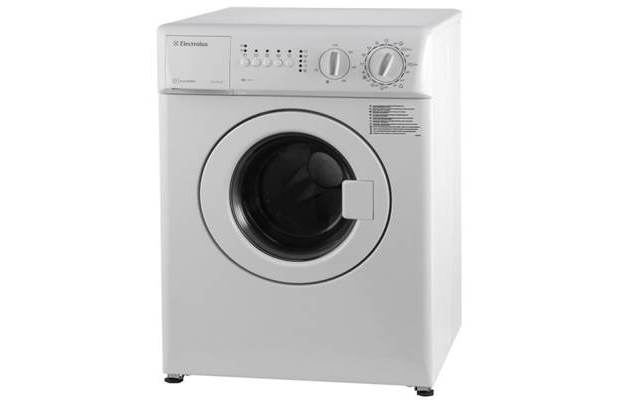
Eurosoba 1000. Another "representative of the biting family" from Switzerland costs a whopping $620. It can wash 3 kg of items at a time. It has partial leak protection, and the drum spins at up to 1000 rpm. There is imbalance control and foam level control. The width of the machine is 46 cm, the depth is 46 cm, the height is 68 cm.
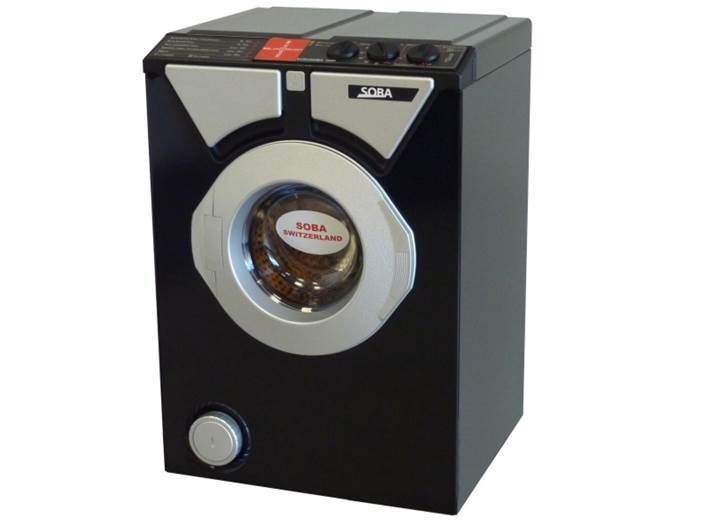
Eurosoba 1100 Sprint. A more advanced washing machine than the Eurosoba 1000, but also priced higher at $846. Overall, this model doesn't offer any significant differences. The dimensions are the same, and the load capacity is 3 kg. The drum speed has been increased to 1100 rpm, and the energy efficiency class has been upgraded from A to A+. These improvements aren't really worth the extra $226, what do you think?
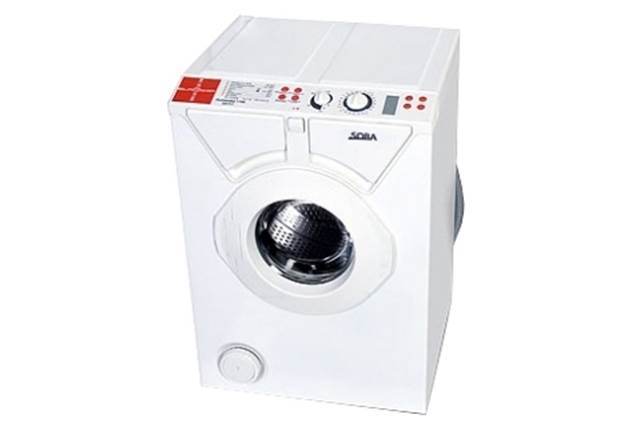
In conclusion, we'd like to point out that a good compact washing machine is almost always more expensive than a standard-sized machine. And despite the higher price, the small model's features will be quite modest. In our opinion, it's better to consider how to best organize your space to accommodate a standard washing machine than to buy an overpriced compact model and then suffer from a lack of functionality. But that's our opinion; the final decision is yours!
Interesting:

Readers' comments
Headings
Washing machine repair




For buyers




For users


Dishwasher




Add a comment