
Bosch washing machine power
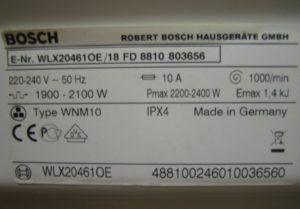 When choosing a new washing machine, buyers primarily consider its price, capacity, and features. Power consumption is rarely considered, although it is responsible for energy consumption, helping to save money or, conversely, causing overpayments.
To avoid making a mistake when buying a Bosch washing machine, it's best to consider this parameter as well. We suggest exploring how and why you should analyze the power consumption of your Bosch washing machine. We'll provide all the calculations, recommendations, and an overview of the most energy-efficient machines.
Features of power determination
Calculating the machine's power consumption is a mandatory and strictly regulated procedure. Before listing this parameter on the label, the manufacturer conducts testing. The washing machine drum is loaded with cotton laundry of the maximum permitted weight, then a cycle is started with water heated to 60 degrees Celsius. The electricity consumed by the equipment is measured and divided by the total capacity and time. As a result, you will find out how many kW are spent per hour per 1 kg of items.
The power consumption of the washing machine varies depending on the washing conditions.
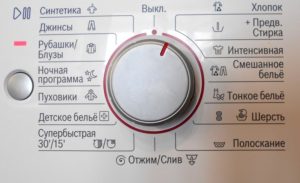 The displayed value isn't static—it only remains the same when washing cotton at 60 degrees Celsius with a maximum load. In practice, the conditions often differ from the factory settings: a smaller load is loaded, a different program is selected, or a different type of fabric is washed. All of this affects the final energy consumption. Thus, the number of kilowatts consumed by the appliance depends on:
- the operating principle of the unit (semi-automatic washing machines consume less, while fully automatic machines consume more);
- type of underwear fabric (wet synthetics, wool, and silk differ in weight from cotton, so the energy spent on washing them will differ);
- the selected program (as a rule, everything depends on the set duration and heating of the water: low-temperature and fast modes are considered more economical than cycles at 90 degrees and for 1.5-2 hours);
- the fullness of the drum (the more things are loaded, the more the electricity “winds” around).
Variability in power doesn't make it a useless parameter. This value allows you to compare different models and choose the most cost-effective option. Low kW consumption when washing cotton indicates that the machine will be more efficient in other modes as well.
All information in icons
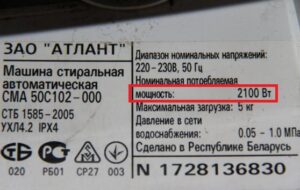
Finding out the power of a Bosch washing machine is easy—it's always indicated on the label and price tag. Typically, it's designated by a Latin letter, each of which represents a specific range of kilowatts consumed. Sometimes a "+" is added, indicating the machine's increased efficiency. Washing machines are currently assigned one of the following energy efficiency classes: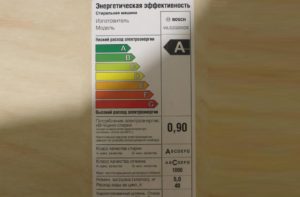
- A+++ – with this class, the machine washes one kilogram of cotton laundry at 0.13 kilowatts per hour;
- A++ – consumes up to 0.15 kW;
- A+ – consumption increases to 0.17 kW;
- A – about 0.19 kilowatts are wound;
- B – in this case, the washing machine uses at least 0.23 kW for an hour-long wash of 1 kg of cotton;
- C – here consumption reaches 0.27;
- D is the lowest energy consumption class, which consumes up to 0.31 kW per kilogram of items.
The most economical energy consumption class is A+++.
You can estimate energy consumption by multiplying this figure by the machine's capacity. For example, a 4 kg washing machine with an A++ rating consumes approximately 0.6 kilowatts per cycle on average.
It is important to remember that these calculations are approximate, as they reflect the washing machine's consumption under "ideal" conditions - a full load of cotton and heating to 60 degrees. When washing synthetics and increasing the temperature to 80-90, the machine will use more, and on short and low-temperature cycles – less. For semi-automatic machines, the classification of classes is different, as they have a separate power gradation.
Parameters of modern Bosch washing machines
Energy efficiency classes lower than "D" are no longer produced, as they are too expensive to operate and have completely lost popularity. It's now rare to find machines with "C" and "B" ratings, especially among Bosch—even the most affordable Bosch washing machines are labeled "A" or "A+." We'll explore the benefits of these models in this mini-review.
- The Bosch WAN 28290 is a freestanding front-loading washer with an 8 kg load capacity, direct drive, display, and electronic controls. Despite its impressive performance—spinning up to 1400 rpm, 15 programs, and full leak protection—it consumes only 0.13 kW per kg of laundry. This machine has been awarded the most efficient energy efficiency class, "A+++." Water consumption is 55 liters per cycle. This model also boasts a number of features, including a child lock, a delayed start timer, a sound system, and automatic imbalance and foam control. The machine is priced between $450 and $460.
- The Bosch Series 4 WLL2416M is another freestanding front-loading model with energy efficiency. It boasts an A++ energy rating and uses approximately 41 liters of water per cycle. Its wash and spin efficiency are rated A and B, respectively, which is considered quite good. As for safety, it features partial leak protection, a panel lock to prevent accidental operation, and automatic balance and foam level monitoring. There are 15 basic programs, including the rarely encountered “Direct Injection”, “Night”, “Mixed” and “Preliminary”. Noise levels range from 51-75 dB, and there's a delayed start of up to 24 hours, along with Bosch's unique EcoSilence Drive and VarioSoft technologies. Price: approximately $290.
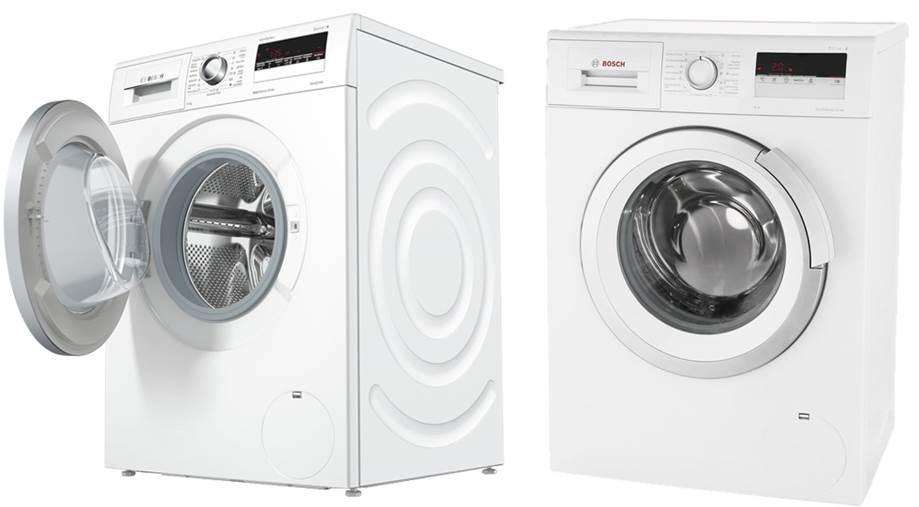
- The Bosch WLL 24241 is another washing machine with the most efficient energy rating – A+++. Interestingly, it's designed for a 7 kg load, features a digital display, 17 different programs, and a 1200 rpm spin cycle. One of the reasons for the slow power consumption is its low water consumption of 42 liters per cycle. Unique brand technologies such as EcoSilence Drive, VarioSoft, and VarioPerfect also help optimize the machine's performance. The washing machine also offers additional features, including a delayed start, fully leak-proof housing, a digital display, and touch controls. It retails for approximately $290.
- Bosch WLG 20261 OE. A narrow front-loading washer with an "A" energy rating. It's a budget option: priced at around $240, it features a load capacity of up to 5 kg, a display, a spin speed of up to 1000 rpm, and a water consumption of 40 liters per cycle. It also features partial leak protection, over 10 programs, a 24-hour delayed start, a liquid detergent compartment, and a sound system.
Almost all modern Bosch products have an energy efficiency class from “A” to “A+++”.
Modern Bosch machines offer both reduced energy consumption and advanced functionality. Build quality is also important – Bosch has a proven track record of high quality and long service life. The key is to choose your model carefully, comparing all technical specifications.
Is it wise to obsess over energy consumption?
When choosing a washing machine, focusing on just one parameter isn't practical. Ideally, a machine should meet all criteria: it should have a convenient capacity, be energy-efficient, offer advanced features, and be affordable. But "golden" models aren't all that common.
However, a balance must be maintained. Minimal consumption is good, but the engine power also matters: if the washing machine doesn’t rinse well, you won’t be able to save money. Water consumption and wattage are interconnected – a drum with a small amount of liquid is easier to heat and rotate, which affects the final kWh. Super-efficient machines that require multiple rinses for a thorough rinse will not provide any benefit.
Interesting:
Readers' comments
Headings
Washing machine repair




For buyers




For users


Dishwasher




Add a comment