
Candy washing machine power
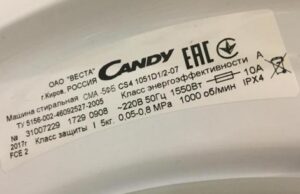 A washing machine's efficiency is directly related to its power consumption. It might seem like a little more or a little less makes a difference. But it's not for nothing that manufacturers prominently display the power consumption ratings of Candy washing machines. A careful calculation reveals that a machine that consumes too much power will cost the user a pretty penny over the course of several years. For this reason, when purchasing a machine, you should consider not only its price, features, and other specifications, but also its power consumption. Which Candy washing machines have the lowest power consumption?
How is power determined?
The power consumption of washing machines is calculated during production. There's a specific algorithm for this:
- The new model can accommodate cotton laundry by weight up to the maximum load capacity;
- the temperature is set to 60 degrees;
- the unit is connected to a special device that reads the amount of kW consumed, and the cycle is started;
- The resulting values are divided by the laundry weight and program duration. The result is the machine's power consumption per kilogram of laundry per hour.
Important! As washing parameters vary, power consumption also changes.
Accordingly, if you use synthetics instead of cotton, fill the drum only halfway, and use the express cycle instead of the standard cycle, your energy consumption will change. If you try to discern a pattern from all of the above, you'll find that the following factors influence the total kWh consumed during a wash: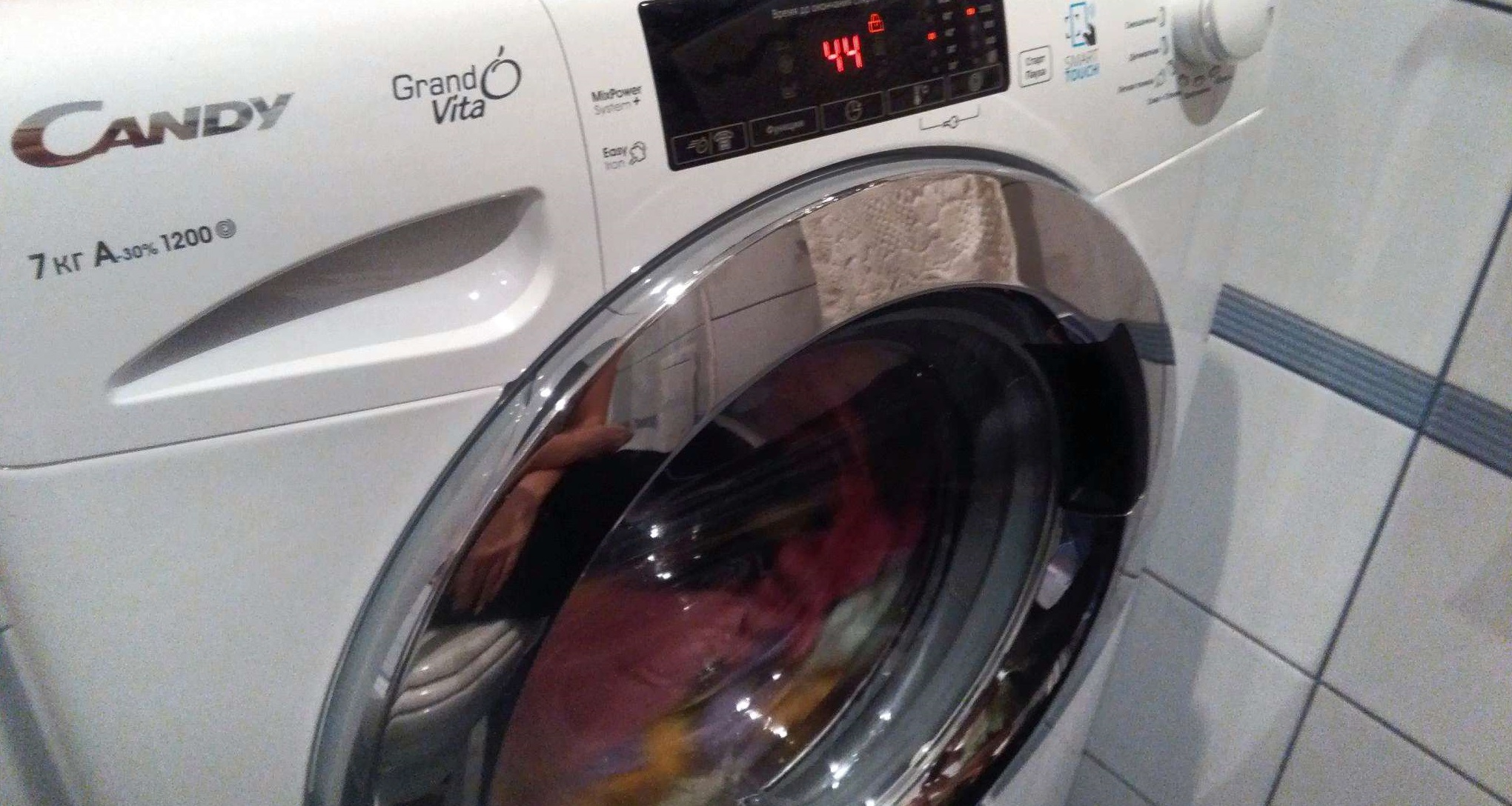
- type of washing machine (semi-automatic models “eat” much more power than automatic models under identical washing conditions);
- Fabric type. Synthetic, blended, and woolen fabrics differ from cotton in weight and structure. This also affects power consumption;
- The selected mode. The lower the temperature and the shorter the wash cycle, the less the heating element and motor operate, and therefore, the less electricity is consumed per cycle;
- Load volume. Components whose operating intensity is directly related to the weight of the laundry in the drum also consume energy, so this parameter affects power output no less than other parameters.
Although power consumption is a highly variable parameter, it can be used to assess the overall performance with 100% certainty. All units are tested at the factory using a uniform algorithm. Accordingly, if under certain conditions one unit consumes less than another, then this will be the case under any washing parameters.
Letter designations of power
To simplify energy efficiency labeling, energy efficiency classes were developed. They are designated by letters of the Latin alphabet from A to D, where A is the highest rating and D is the lowest. As technology improved and became more efficient, plus signs were added to the A-class label to more accurately reflect power consumption. What is the breakdown by kW according to the classes?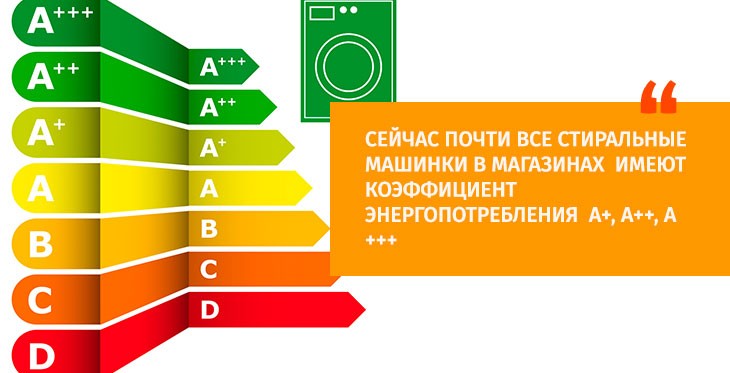
- A+++. Currently the most energy-efficient class. Machines with this rating consume 0.13 kW of electricity per 1 kg of laundry per hour.
- A++. 0.14-0.15 kW is consumed per 1 kg of cotton per hour.
- A+. Maximum consumption for the same parameters is 0.17 kilowatt-hours.
- A. When washing 1 kg of laundry, the machine consumes up to 0.19 kilowatts per hour.
- Power consumption reaches 0.23 kilowatts per hour per 1 kg of cotton.
- The machine “eats” 0.27 kW of energy per hour.
- The least efficient consumption class is 0.31 kilowatts per kilogram of cotton per hour.
Knowing the energy efficiency class of the machine makes it easy to calculate the power consumption per cycle. To do this, multiply the power rating by the number of kilograms of laundry and the program duration in hours. For example, the most efficient class A+++ washing machine will use about 0.65 kW for an hour-long wash of 5 kg of laundry.
Obviously, any calculations are approximate, since in everyday life washing machines are almost never washed under so-called ideal conditions, that is, corresponding to the measurement conditions in production.
Please note! Energy efficiency ratings for semi-automatic washing machines differ because the maximum power rating is calculated differently.
Low energy consumption machines
Nowadays, it's extremely difficult to find a washing machine with the lowest energy rating. Class D is completely unheard of, Class C is extremely rare, and Class B is currently considered the most energy-hungry of all machines. Most Candy machines are rated A. Which models from this manufacturer should you choose?
- Candy GVS34 126TC2/2. This machine has an A++ power rating. It costs approximately $180. It has a maximum load capacity of 6 kg. It offers 15 programs (spin cancellation, crease prevention, delicates, baby clothes, jeans, mixed fabrics, silk, wool, economy, prewash, quick wash, and extra rinse). The spin speed reaches 1200 rpm.

- Candy CS4 1051D1/2. Energy efficiency class A+. Price: $145. Maximum load capacity: 5 kg. It offers 16 programs, including spin cancellation, delicates, baby clothes, jeans, mixed fabrics, sportswear, wool, economy, prewash, quick wash, and extra rinse. Spin speed reaches 1000 rpm.
- Candy CSS4 1072DB1/2. Power consumption class A. The average market price is just under $170. The maximum load capacity is 7 kg. The machine has 16 programs, including spin cancellation, delicates, baby clothes, jeans, mixed fabrics, sportswear, wool, economy, prewash, quick wash, and extra rinse. The spin cycle reaches 1000 rpm.
- Candy GVS34 116D2/2. Energy efficiency class A++. Average price: $170. Maximum load capacity: 6 kg. Spin speed: up to 1100 rpm. Features include 15 programs, including: spin cancellation, wrinkle prevention, delicates, baby clothes, jeans, mixed fabrics, silk, wool, economy, prewash, and quick wash.
You can select a machine model based on its energy efficiency class using filters on home appliance store websites or on Yandex.Market. Candy machines have the lowest energy efficiency class—B.
Interesting:

Readers' comments
Headings
Washing machine repair




For buyers




For users


Dishwasher




Add a comment