
Indesit washing machine power
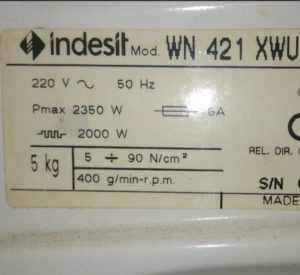 When reviewing the specifications of an automatic washing machine, you may come across its power rating. Not all buyers pay attention to this figure. If you're looking to purchase a washing machine that delivers high-quality washing with minimal energy consumption, we recommend analyzing the power rating of your Indesit washing machine. This will help you choose the perfect "home helper."
How much does the unit consume?
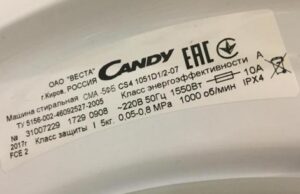
Washing machine power is determined in specialized laboratories. Cotton laundry (always the maximum load for the machine being tested) is loaded into the drum, and then the machine is run at 60°C. Under these operating conditions, the kW required to process 1 kg of laundry is measured. This experimentally calculated information is reflected on the washing machine's label.
It is a mistake to assume that the amount of electricity consumed by a washing machine is constant. The power consumption of a washing machine is influenced by several factors: from the load of the drum to the set washing mode. Let's look into this issue in more detail. With the engine power remaining constant, the amount of kW consumed by the machine depends on:
- the operating principle of the equipment - whether the machine is semi-automatic or fully automatic;
- The type of fabric being washed. For example, wet synthetic clothing won't always weigh the same as cotton. Therefore, the power consumption of the machine will change;
- a given program. If the running mode involves, for example, heating water to 90°C, then the machine will "consume" more kW;
- Drum load. The washing machine isn't always filled to capacity. If the machine is half full, it will use less electricity.
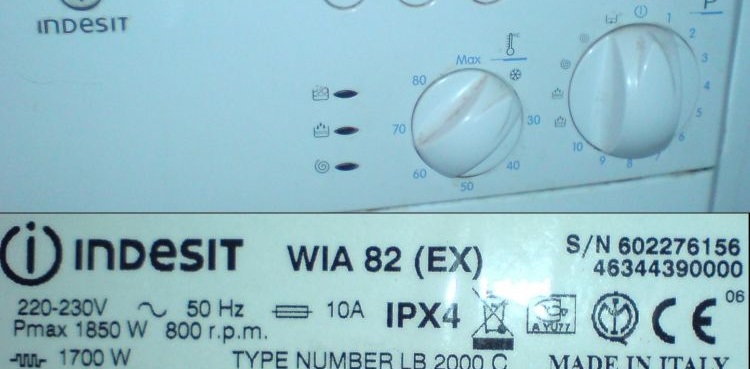
Why specify power if it's such a variable value? In fact, by comparing the power ratings of different washing machine models, you can choose the most efficient appliance. The lower the manufacturer's stated kW rating, the more economical the unit will be, all other parameters being equal (load weight, water heating temperature).
Let's look at the notations
The washing machine's power consumption is indicated on the label and designated by the letters "A," "B," "C," etc. A "+" is also added to the symbol, indicating a more efficient model. Washing machines are currently produced that are assigned one of the energy efficiency classes listed below.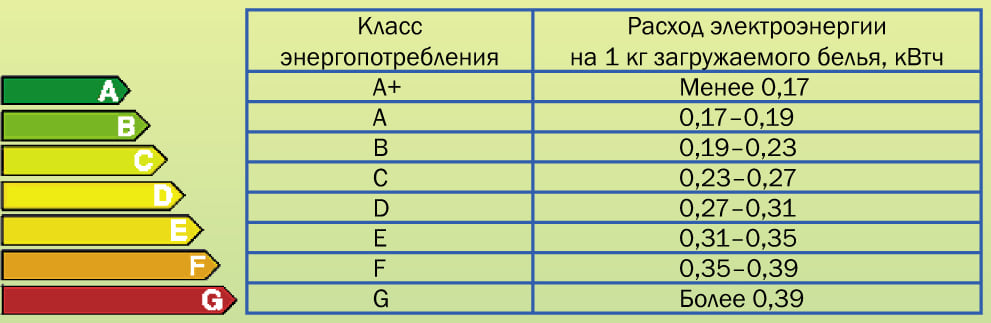
- A++ – indicates that the machine consumes 0.15 kW per kg of cotton laundry, specifically during the wash cycle, when the water temperature reaches 60°C;
- A+ – consumes only 0.17 kW;
- A – the power consumption calculated in the laboratory increases to 0.19 kW;
- B – a machine assigned this class consumes 0.23 kW per hour of washing a kilogram of cotton fabric;
- C – the number of kilowatts required for washing – 0.27;
- D – energy consumption class is assigned to washing machines that “eat” up to 0.31 kW per 1 kg of laundry loaded into the drum.
If the maximum permissible load weight is 5 kg, then the power value is multiplied by 5, and thus the electricity consumed per cycle is calculated.
It's worth reiterating that this figure is calculated for washing cotton at a water temperature of 60 degrees Celsius. If you load synthetics into the drum or require a higher temperature, the machine will consume more watts. These figures are for automatic machines; semi-automatic machines have slightly different values.
Popular model classes
Today, even the most budget-friendly Indesit washing machines meet energy efficiency ratings of "A" or higher, making them quite economical. You can see this for yourself by examining several machines available for sale. Here's a brief overview of some of the models.
- Indesit IWUB 4085. This washing machine can be installed freestanding or built into a cabinet. Its narrow design holds up to 4 kg of laundry at a time, and spins at up to 800 rpm. It boasts excellent energy efficiency, consuming 0.15 kWh/kg per hour. Water consumption per cycle is also low, at 39 liters.
- The Indesit BWUA 51051 LB is a freestanding front-loading washer with a maximum load capacity of 5 kg. It spins at up to 1000 rpm and uses 47 liters of water per wash. Its power rating is 0.17 kWh/kg, which equates to an A+ rating.
- Indesit IWSC 6105. This washing machine has a drum capacity of up to 6 kg. The maximum spin speed is 1000 rpm. It consumes 0.19 kW of energy and uses 48 liters of water per cycle.
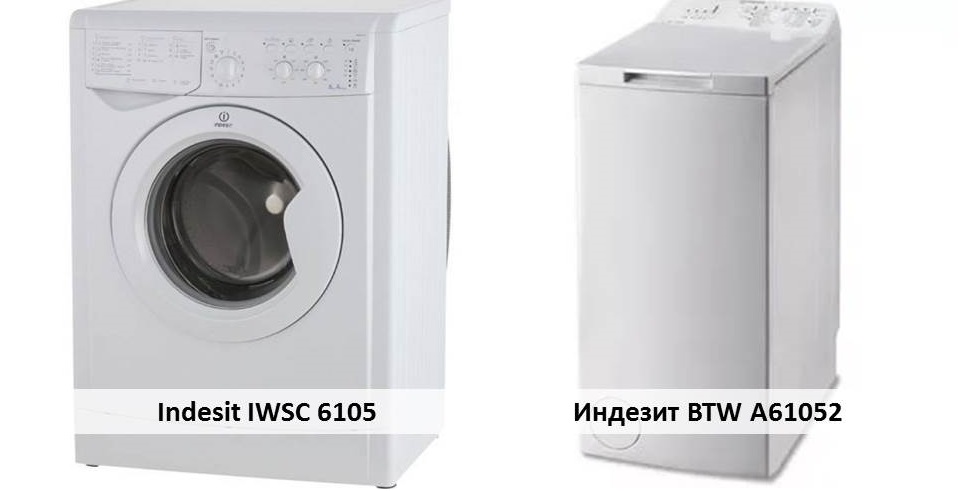
- Indesit BTW A61052. This spacious vertical washer holds up to 6 kg of laundry at a time. Spin speed up to 1000 rpm. Water consumption per wash is 60 liters. The washing machine consumes 0.16 kWh/kg.
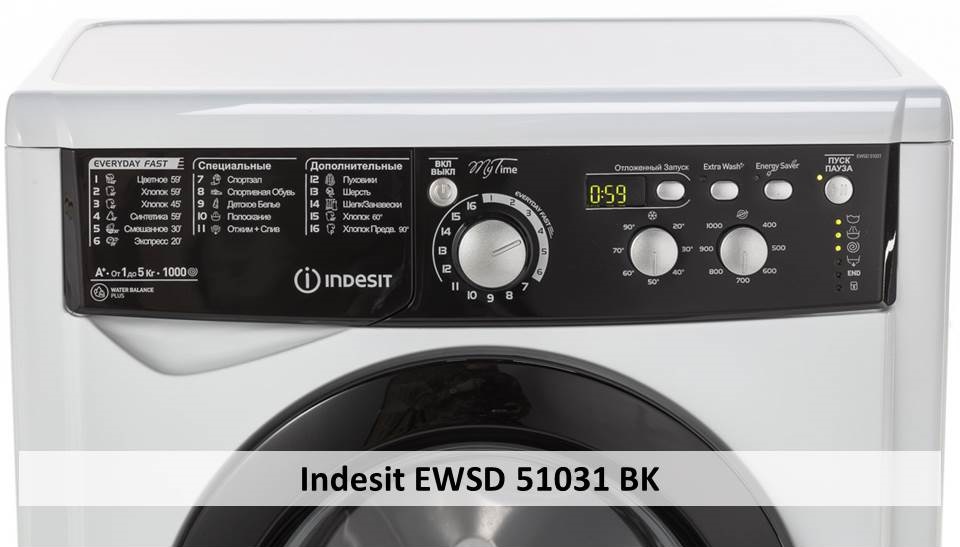
- The Indesit EWSD 51031 BK is another budget-friendly washing machine, with a maximum load capacity of 5 kg. It has a spin speed of up to 1000 rpm. It uses 0.17 kW per kilogram of fabric per hour. It requires 44 liters of water per cycle.
The energy efficiency class of budget-friendly modern Indesit washing machines complies with European energy efficiency standards.
However, when choosing a car, you should also consider other characteristics. The model should be evaluated comprehensively, taking into account all relevant indicators.
Is it worth chasing savings?
It's great if the washing machine's power consumption is minimal. But it's also important to understand that a washing machine that doesn't rinse or wash well will be of little use. Therefore, when choosing a model, it's important to strike a balance.
Water consumption and wattage are interrelated. If the washing machine draws in a small amount of water for washing, it will be easier to heat the liquid, and therefore, electricity consumption will decrease. Also, a tank with less water is easier to rotate, which also reduces the number of kWh used. When choosing a washing machine, you should decide for yourself whether such savings are necessary. Is it worth buying a super-efficient machine that can't rinse clothes properly?
Interesting:
Readers' comments
Headings
Washing machine repair




For buyers




For users


Dishwasher




Add a comment