
Can you wash soft toys in a washing machine?
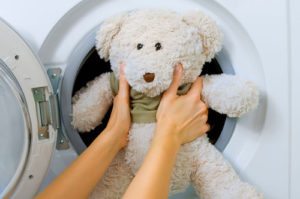 Thinking about how to wash children's soft toys is important when purchasing them; this will make caring for them easier. If the label indicates that the item is washable, there shouldn't be any problems. It's a different story if the toys are only suitable for cleaning. Let's discuss this in more detail.
Is it possible or not?
Toys, especially soft ones, accumulate a lot of dust. Germs and dust mites easily thrive in them, so they need to be washed and cleaned quite often because children play with them. Can toys be washed or not? The answer to this question can be found on the label or packaging of the item. If there are none, then carefully examine the product, and you will understand whether it is worth washing in a washing machine.
Here is a list of soft toys that should not be machine washed:
- toys with glued parts (buttons, eyes, nose, beads, rhinestones, etc.);
- large toys that can hardly fit into the washing machine drum;
- musical products, as they contain batteries and microcircuits;
- products made from natural fabrics, such as wool or linen, such toys lose their shape and stretch;
- toys filled with feathers, buckwheat husks or sawdust.
Please note! Toys with attached fittings and details are machine washable, but you should use a special laundry bag.
Preparing for washing
Before placing all toys in the washing machine, inspect them carefully. Check for any torn parts or loose stuffing. All holes should be sewn up securely.
Take an old pillowcase or a special bag in which to place a soft toy. If you have a lot of toys, divide them into several washes. Conversely, don't wash a single small toy in the washing machine; put a color-safe towel in with it. This will prevent imbalance of items in the drum during washing.
To machine wash toys with musical components, you must first rip them open and carefully remove the batteries and the singing module, and then sew up the opening.
You can pre-soak soiled areas with soap or liquid hair shampoo, let them sit, and scrub with a brush if necessary. This will significantly improve the chances of the toy being machine-washable.
Let's start the machine
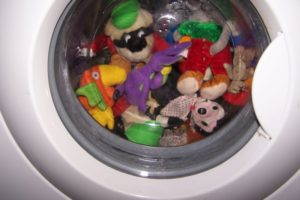 Once you've selected machine-washable toys, load them into the drum. To wash soft toys, use a neutral baby detergent that doesn't contain phosphates or other harmful substances. A liquid detergent is best, as it will rinse out faster.
Next, we select the washing mode in which the water is heated to 30-400With and low spin speed. This mode includes “Delicate wash”, “Hand wash”, “Wool”. It is rare to find toys that have a symbol indicating that they can be washed at a temperature of 700C. After checking the number of revolutions and temperature conditions, do not forget about an additional rinse.
Note! The "Steam Clean" function on your washing machine can be a useful feature; it allows you to dry-clean toys.
Drying the products
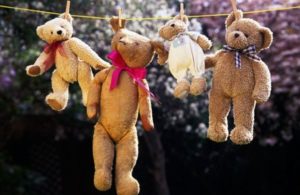 Machine- or hand-washed soft toys should only be dried outdoors; machine drying is strictly prohibited. Larger toys can be hung, for example, on a balcony. Toys that are not subject to shrinkage or stretching can be dried in a hanging position.
If you think your toys might stretch, lay them flat to dry. After hand washing, wrap them in a terry towel to absorb some of the moisture, then hang them to dry on a balcony or in a well-ventilated area.
Methods of hand washing and cleaning
If the manufacturer recommends hand washing toys, do so as follows:
- pour in water at a temperature of 400C, in the basin;
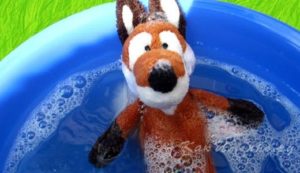
- dissolve detergent, shampoo or baby powder in water;
- place the toy in water, trying not to wet the glued parts too much;
- Use a brush or sponge to clean particularly dirty areas;
- rinse the product, changing the water several times;
- hang the product on a rope and dry.
Important! Do not wash or clean children's toys with chemicals.
Machine or hand washing a stuffed animal isn't enough to disinfect it from germs or mites, as germs only die at high temperatures. More effective methods are needed.
- Method one: You can place a small toy in a bag, tie it up, and stick it in the freezer for a few days, at least two. Low temperatures, like high temperatures, are destructive to ticks. Large toys can be taken out onto the balcony in the cold.
- Method two: Use a special ultraviolet lamp for disinfection, which kills germs.
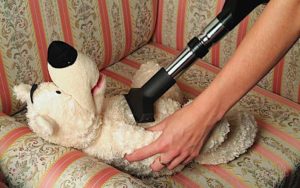 Additionally, toys that can't get wet can be cleaned with a vacuum cleaner. This requires a small attachment. It's best to reduce the vacuum's power when cleaning. Another cleaning method involves placing the toy in a bag and sprinkling it with starch and baking soda. Tie the bag tightly and shake. Then remove the toy and brush off any remaining starch dust.
So, any children's toy can be washed or cleaned. There are various ways to do this. The key is to do it regularly, at least once a month. If children are prone to allergies, wash them more often. And may these "soft" friends bring you nothing but joy.
Interesting:

2 reader comments
Add a comment
Headings
Washing machine repair




For buyers




For users


Dishwasher




Thank you for the very necessary and useful instructions.
Thank you, very useful article.