
How to properly wash dishes in a dishwasher?
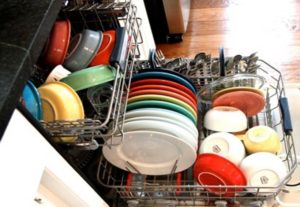 Dishwashers are becoming increasingly popular in Russia. However, some still advocate washing dishes by hand, believing it's both more economical and safer. However, many disagree. If you wash your dishes in a dishwasher correctly, the results will exceed all expectations!
Let's look at the kits
To ensure dishes are washed thoroughly without breaking, chipping, or bending, you need to load the dishwasher correctly. However, new dishwasher owners often have difficulty loading the dishwasher basket. What should they put in which compartment? What should they do if the dishes don't fit?
The main thing to remember is not to overload the basket! There's a good chance that after such a water treatment, the cutlery will have to be re-washed or washed by hand, and then what's the point of a dishwasher?
It's actually quite simple! Focus on the set pieces. A set consists of several types of plates, a mug, a fork, a spoon, and a knife. This is a standard set, but sets can vary. This information should be included in your dishwasher's instructions. Look at what the set contains and how many set pieces the basket can hold. If it holds four, don't load more than four soup bowls, for example.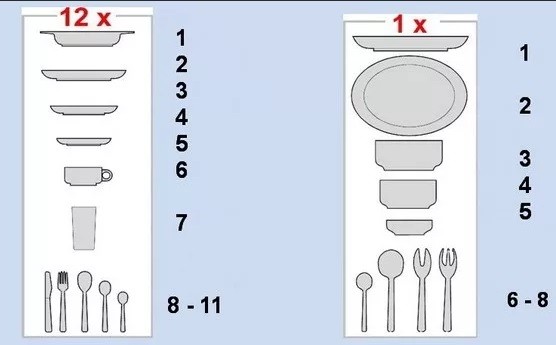
If you need to wash something that goes beyond the limits, such as a ladle or something else, wash it separately from other dishes to avoid overloading or other unpleasant consequences.
Pay special attention to the arrangement of dishes
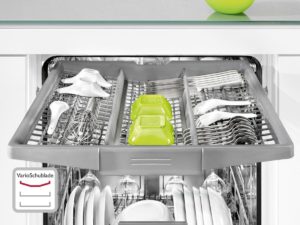
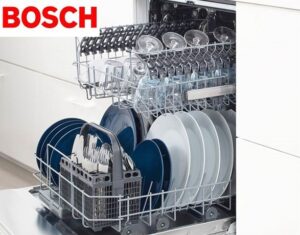
A standard dishwasher model consists of two baskets: an upper and a lower one, as well as a special tray for small cutlery, which is included as an additional part and is installed by the user for washing.
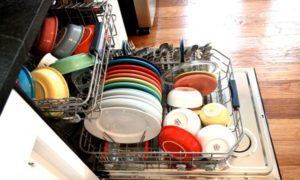
So, you've opened your dishwasher and see two shelves for loading dishes. The bottom shelf is designed for large workware, like pans, pots, and large platters. The top shelf, in turn, holds regular plates and cups, the kind we eat and drink from. How do you load them properly? Place the largest items on the sides, and the smaller ones in the center. Place the tray with forks, knives and spoons in the middle of the bottom shelf.
To avoid poor cleaning results, ensure all cups, mugs, and other recessed items are placed upside down in the machine, as water flows from the bottom up. If you place a cup upside down, only the outside will be cleaned, leaving the inside dirty. Also, avoid placing mugs on their sides, as this will leave detergent inside, requiring you to rinse the appliance by hand.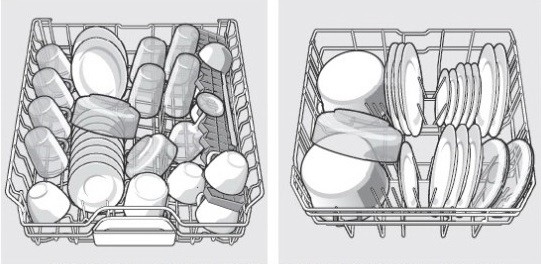
To avoid interfering with the proper operation of the dishwasher's internal components, all handles on pans, pots, and cups should not be positioned vertically, otherwise the unit will simply break.
If you see that the dishes are very dirty and you're worried that they won't wash properly, it's best to do the procedure in two stages: place all the items through one drawer to leave more space between them, which will allow them to wash better.
Items not suitable for dishwasher
Your dishwasher's manual will provide clear instructions on which items are safe to wash, which are not, and which are safe but not recommended. Generally, the items on this list apply to any model. Here are some items that are absolutely not suitable for the dishwasher:
- dishes with damage, visible or hidden;
- wooden items, including knives with wooden handles, cutting boards, and the like;
- Items prone to rust. Typically, these are dishes made of copper and tin alloys;
- glass and plastic tableware.
But you can wash it in the dishwasher, but you shouldn’t overuse it unless absolutely necessary.
- Tableware made of silver and aluminum.
- Faience.
- Crystal.
Regularly washing such materials in a dishwasher is only possible if your machine is equipped with special programs and modes, and a special, specialized detergent has been selected.
After washing, wait about 15-20 minutes before removing dishes. Otherwise, you risk burning yourself or breaking the appliance, as dishes are still too hot immediately after the cycle ends.
Also, remember that a dishwasher and a washing machine are completely different. Don't confuse them, or you risk damaging the machine by washing a towel in it, for example.
Pay attention to the choice of program
It's also worth remembering that different materials and types of dishes require different washing parameters. For example, there's a high-temperature cycle (up to 75 degrees Celsius), while there's a low-temperature cycle (30-40 degrees Celsius), which is designed for washing fragile crystal dishes.
Some models have a pre-soak function, but it's not cost-effective. It wastes a ton of water and energy. Instead, simply scrape off any food residue with a fork or knife, and soak pots and pans in the sink for a few minutes. Trust me, you'll save a lot!
The default wash cycle includes a pre-wash, main wash, rinse, and drying. However, this cycle is performed at high water and air temperatures, which is unsuitable for some types of dishes.
It is important to know what to wash dishes with.
All dishwasher detergents are divided into three types: powder, tablets, and capsules. The most common type is powder, which is poured into a special compartment. One tablespoon is sufficient.
Tablets and capsules are convenient because they contain not only the detergent itself, but also rinse aid and sometimes regenerating salt. This means you don't have to buy any additional accessories. The main thing is that the dishwasher has a built-in compartment for tablet detergent.
Important! Use the tablets correctly. Don't combine them with quick wash cycles. The product won't have time to dissolve and wash out of the dishes. This will result in the product being wasted, which is uneconomical!
Highly alkaline detergents are used to wash delicate dishes. They contain special enzymes that break down proteins, fats, polysaccharides—in short, everything that creates visible stains on dishes.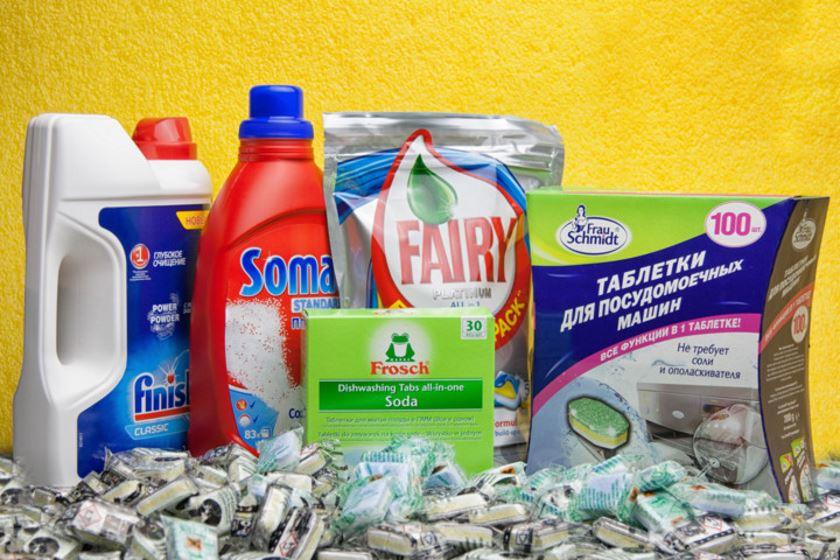
Mildly alkaline detergents are standard and suitable for all types of dishes. However, any such detergent should be used in conjunction with a rinse aid. Otherwise, traces of enzymes will remain on the dishes, which are hazardous to human health even in small quantities. One bottle of rinse aid is usually enough for 10-12 washes.
And remember: increasing the amount of detergent doesn't improve the cleaning process. Quite the opposite is true. Also, never add regular hand dishwashing detergent to your dishwasher; it won't work, and it will create a lot of foam, which can damage your appliance.
Much depends on the quality of the water
Regenerating salt was mentioned above. It's used to soften water. After all, the harder the water, the more stains remain on dishes and the less attractive they look.
In addition, dishwashers are not immune to the same problems that befall washing machines: the formation of scale and limescale on internal parts when regularly washed with hard water. Regenerating salt will help prolong the life of your unit.
Clean your "home helper"
To make your car last as long as possible, try to do the following from time to time:
- clean the filter (preferably after each thorough wash);
- wash loading baskets;
- After 15-20 cycles, add a degreaser to the machine. This will remove any grease that has settled on the internal parts of the machine.
It's a good idea to periodically run a cycle without dishes, adding citric acid or descaler to the machine. This procedure doesn't need to be repeated too often: once every 3-4 years is sufficient.
Interesting:



Readers' comments
Headings
Washing machine repair




For buyers




For users


Dishwasher




Add a comment