
What speed should I set my washing machine to?
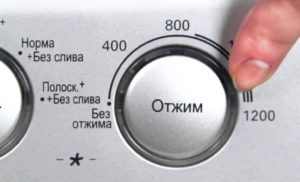 Modern washing machines impress with their speeds and power, but high ratings on the label logically increase the cost of the machine. This is especially true when it comes to spinning. Along with the usual 1000-1200 RPM spin cycles, there are also models capable of reaching 1800 and even 2000 RPM. But is this high speed really necessary? Doesn't it increase wear and tear on parts? Can all fabrics withstand such loads? Let's explore how to set your washing machine's spin cycle for a safe and efficient cycle.
What does the choice of speed depend on?
Most washing machines allow the user to manually adjust the spin speed, including disabling it completely. This is because the washing machine needs to be adjusted to the load in the drum. Cotton and blended fabrics can easily withstand a spin of 1000 rpm, while delicate fabrics such as silk, wool, and polyester will become deformed if the spin speed exceeds 400.
The user can independently adjust the number of spin revolutions depending on the type of fabric of the clothes being washed.
But the main boundaries are set by the manufacturer. The optimal maximum and minimum speed depends on the capabilities and power of the machine. We'll tell you further how to determine what your washing machine is capable of.
Speed capabilities of the machines
The spin class on the machine's label will help consumers determine how well it spins. There are seven classes: A, B, C, D, E, F, and G, with "A" being considered the best and "G" the worst. These classes are assigned based on two parameters: the residual moisture content of the laundry and the optimal RPM.
The first thing to consider is residual moisture. In other words, experts measure how dry the laundry is after the spin cycle. The calculation is simple: first, the items are weighed before washing, then after the drum has stopped spinning. Next, the smaller weight is subtracted from the larger weight, the result is divided by the dry weight, and multiplied by 100%. The resulting percentage indicates the dryness level of the fabric and determines the spin class:
- up to 45% – A;
- up to 54% – B;
- up to 63% – C;
- up to 72% – D.
Models in classes E, F, and G spin out approximately 15-20% of the residual moisture. Due to their low spin strength, these washing machines have almost completely been discontinued and are no longer available for sale.
But chasing machines with "A" or "B" ratings is pointless. The difference between the percentages only seems large, but in reality, the clothes are equally damp. The difference is only a few extra hours of drying time, while the washing quality remains the same. That's why you buy a washing machine.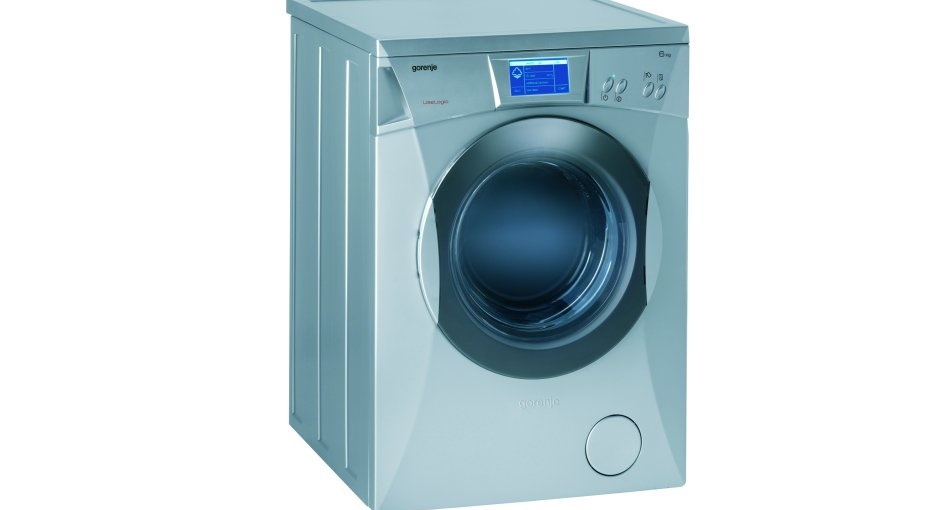
Spin efficiency is influenced not only by residual moisture but also by the maximum permissible RPM. This refers to how fast the motor spins the drum to extract moisture. The higher the RPM, the greater the speed and the closer you get to the coveted Class A spin performance. And if previously the mark of 1000-1200 spins was considered amazing, now some machines can accelerate to 2000. A prime example is the Gorenje WA 65205 model, which offers extremely powerful motor and drum performance.
It has been proven that the higher the spin speed, the less hardness salts remain in the fabric fibers and the softer the laundry becomes.
Another question is whether cosmic speeds are necessary, or is an average of 1000 rpm sufficient? Let's illustrate this with a diagram of the spinning process. It begins immediately after the rinse water is drained. After stopping, the motor begins to build power, gradually increasing speed. At the same time, the drum spins, and the laundry inside is pressed against the walls by centrifugal force. Moisture is expelled from the items and exits through the openings into the drum. The laundry dries, and the separated liquid gradually accumulates and is pumped into the sewer. Towards the end of the program, the speed reaches maximum and is held for 2-3 minutes, after which the system slows down. Thus, the specified 2000 rpm is reached for a couple of minutes.
Is a high spin speed really necessary?
It's a common belief that excessive RPMs affect the lifespan of a washing machine. More specifically, it's believed that if a machine can withstand high RPMs, its design and components are stronger and more reliable. However, experts now claim this is a myth.
Currently, no direct correlation has been established between the maximum speed rating and the reliability of household appliances. Even though high acceleration requires robust components, it's important to remember that this also increases the overall load and wear on the components. Therefore, less robust components in low-speed machines, which don't rotate at 2000 RPM, are no worse than their more advanced competitors. For example, units with a maximum speed of 600 RPM can operate reliably for 7-10 years.
Much depends on the manufacturer and the quality of the materials used. It is the brand that sets the period of trouble-free operation and undertakes warranty obligations.However, previously announced figures are subject to revision over time. A striking example is the company Ariston, which reduced the lifespan of its equipment from 10 to 7 years. No official announcement was made, and it was believed that the decision was influenced by consumer complaints and the company's desire to "hedge its bets." Most likely, this was due to the use of low-quality spare parts to reduce product costs and increase demand.
High-speed washing machines are prestigious and expensive, but their practicality is questionable. Typically, when wanting to dry laundry quickly, consumers will use a dryer or iron, while with standard hanging laundry, 20-30% humidity is insignificant.
Interesting:



5 reader comments
Add a comment
Headings
Washing machine repair




For buyers




For users


Dishwasher




And if it jumps on a wooden floor and nothing can be done about it, then I recommend reducing the speed for safe operation of the machine.
I don’t agree at all, I had a machine with 1200+ revolutions, the laundry wasn’t as damp as after 1000.
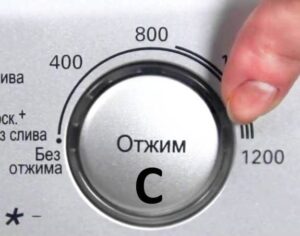
What should you do if you can’t reduce the speed of your washing machine and you need to spin it at 400?
My old LG washing machine—presumably a Korean-made one—would spin at 400 RPM, just like the new one (it's Russian-made) at 800 RPM. Now, water drips from the laundry at 400 RPM, at 800 RPM it's average, and at 1400 RPM it spins well. And for some reason, there's no 30-degree temperature setting. It's only 20, then 40, and then 60. It's inconvenient, as many labels recommend 30 degrees.
Do not spin.